
CRISPR and the Future of Gene Editing
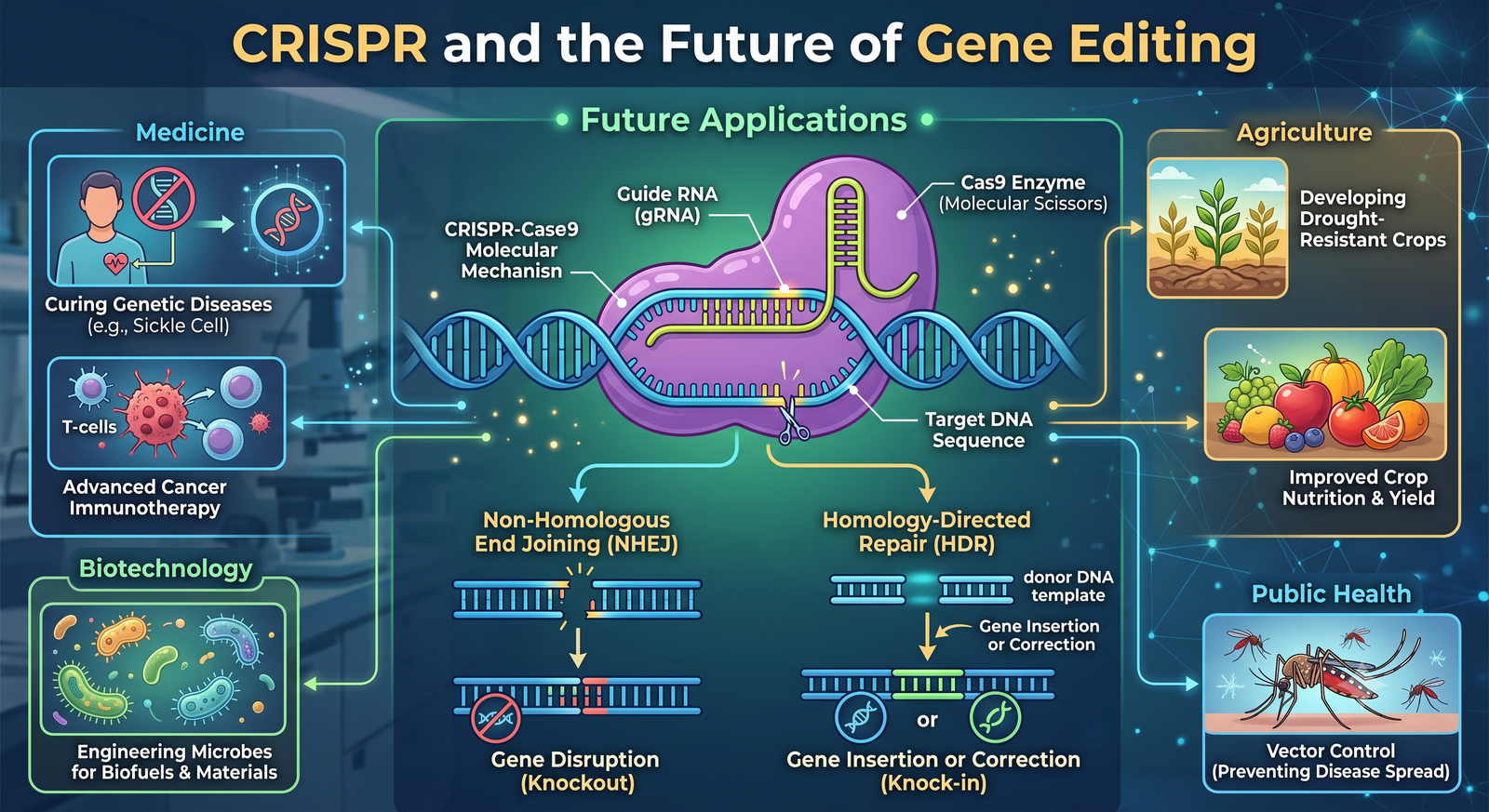
CRISPR-Cas9, often simply called CRISPR, has transformed biology since its development as a gene-editing tool in 2012. This molecular scissors can precisely cut and modify DNA, offering the potential to cure genetic diseases, improve crops, and even resurrect extinct species.
Medical Breakthroughs
Clinical trials using CRISPR to treat sickle cell disease and beta-thalassemia have shown remarkable results, with patients experiencing lasting improvements. Research is also underway targeting cancer, HIV, and rare genetic disorders.
Ethical Considerations
The power to edit human genes comes with profound responsibilities. The scientific community continues to debate the boundaries of genetic modification, particularly regarding heritable changes that would be passed to future generations.
Related Tools
Working on a science project? Check out our Science Calculators for free tools like the BMI Calculator, Unit Converter, and pH Calculator.
Discussion 0
Leave a CommentNo comments yet
Be the first to share your thoughts on this story!
Leave a Comment
Join the conversation and share your insights.