
The Science of Sourdough: A 6,000-Year-Old Recipe for Modern Times
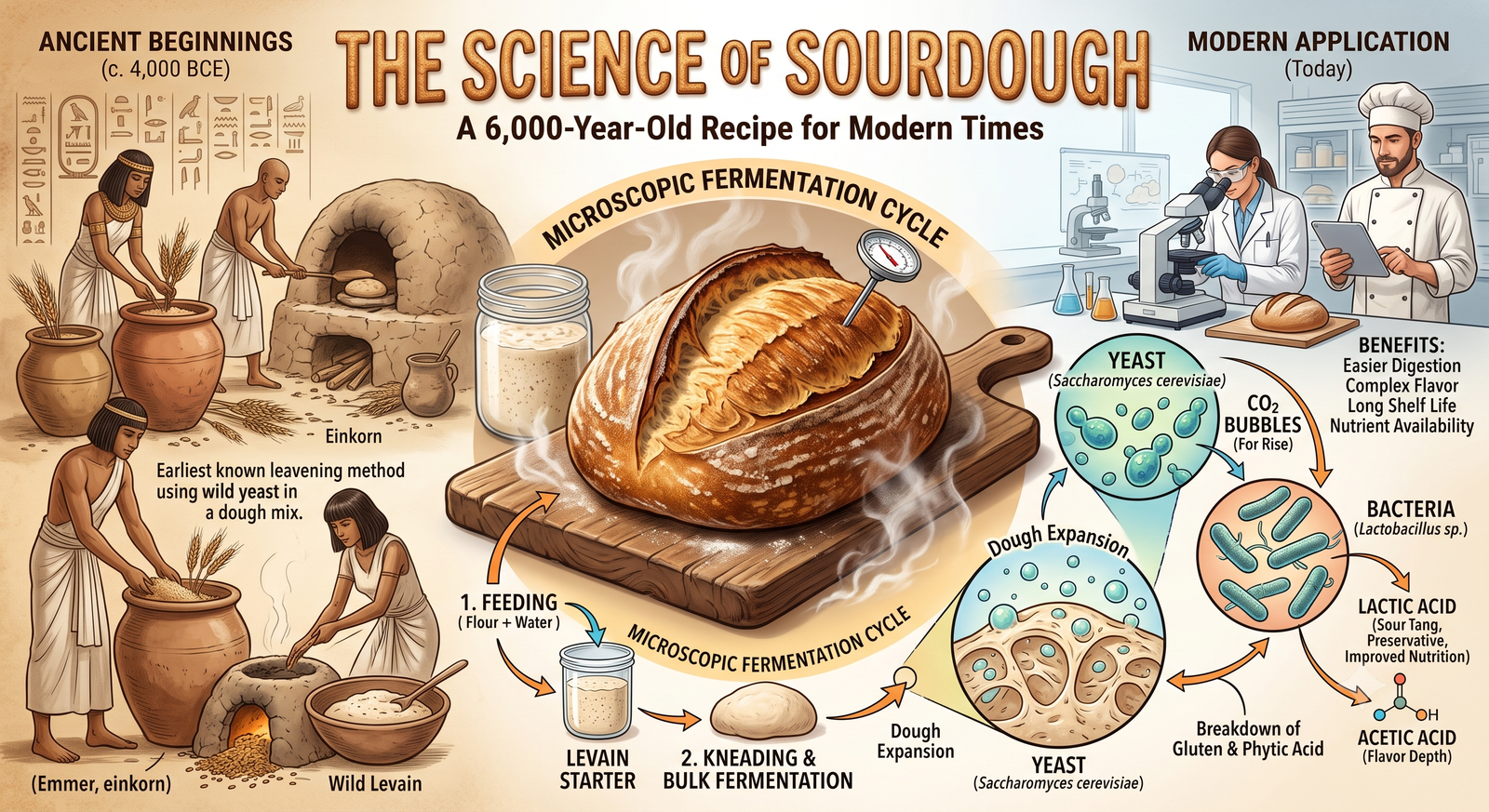
Sourdough bread is perhaps humanity's oldest form of leavened bread, dating back to ancient Egypt around 4,000 BC. Yet this ancient craft has experienced a remarkable renaissance in modern kitchens worldwide.
The Living Starter
At the heart of sourdough baking is the starter — a living culture of wild yeast and lactic acid bacteria. This symbiotic community, known as a SCOBY, ferments flour and water, producing the carbon dioxide that makes bread rise and the organic acids that give sourdough its distinctive tangy flavor.
Each starter develops its own unique microbial community, influenced by the local environment, the flour used, and the baker's routine. Some starters have been maintained for generations, becoming family heirlooms.
Health Benefits
Research has shown that sourdough fermentation breaks down gluten proteins, making the bread easier to digest. The long fermentation process also increases the bioavailability of minerals and produces beneficial compounds not found in conventionally leavened bread.
Discussion 0
Leave a CommentNo comments yet
Be the first to share your thoughts on this story!
Leave a Comment
Join the conversation and share your insights.