
Akhetaten: The Lost City of the Sun | Ancient Egypt
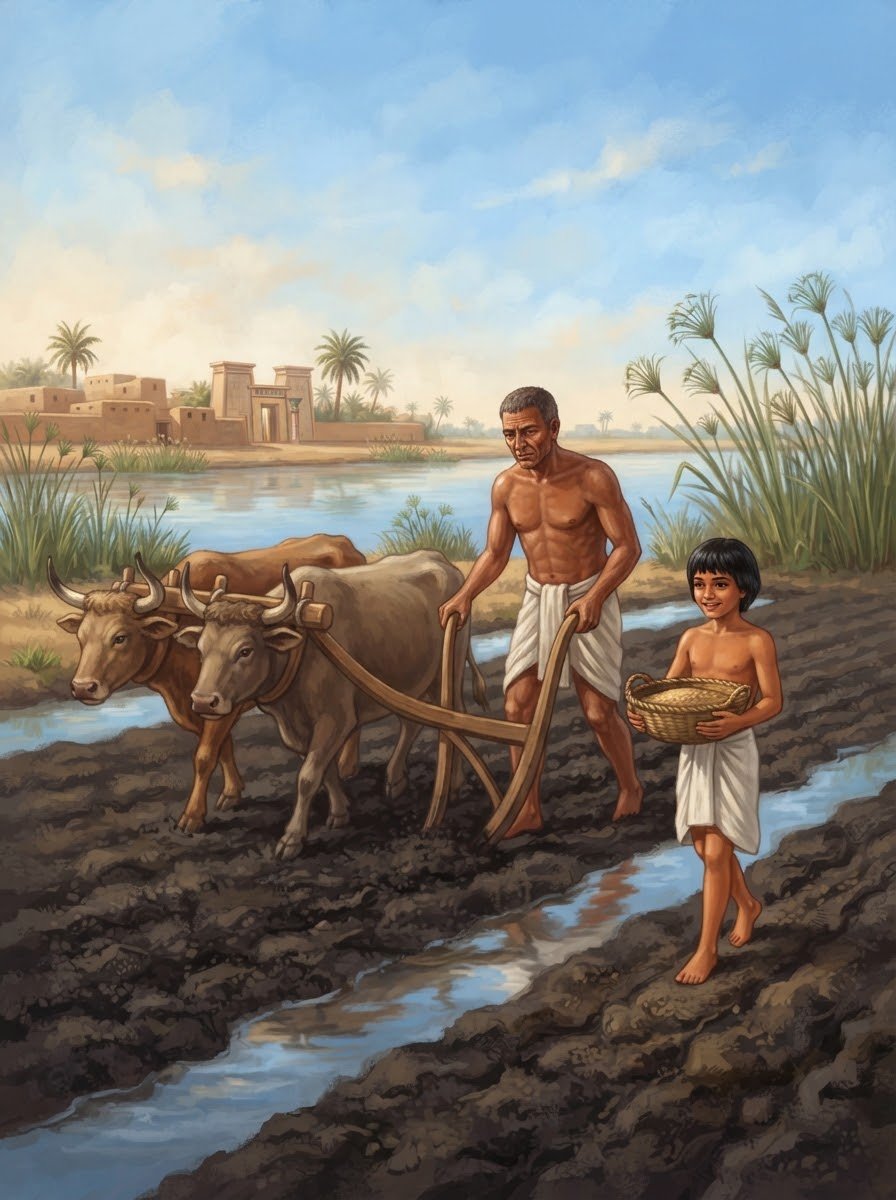
In the fourteenth century BCE, ancient Egypt was the most powerful kingdom in the world. Life revolved around the mighty Nile River, which flooded each year to create fertile black soil for crops. The Egyptian people worshiped many powerful gods, believing these deities controlled nature, weather, war, and the mysterious journey into the afterlife.
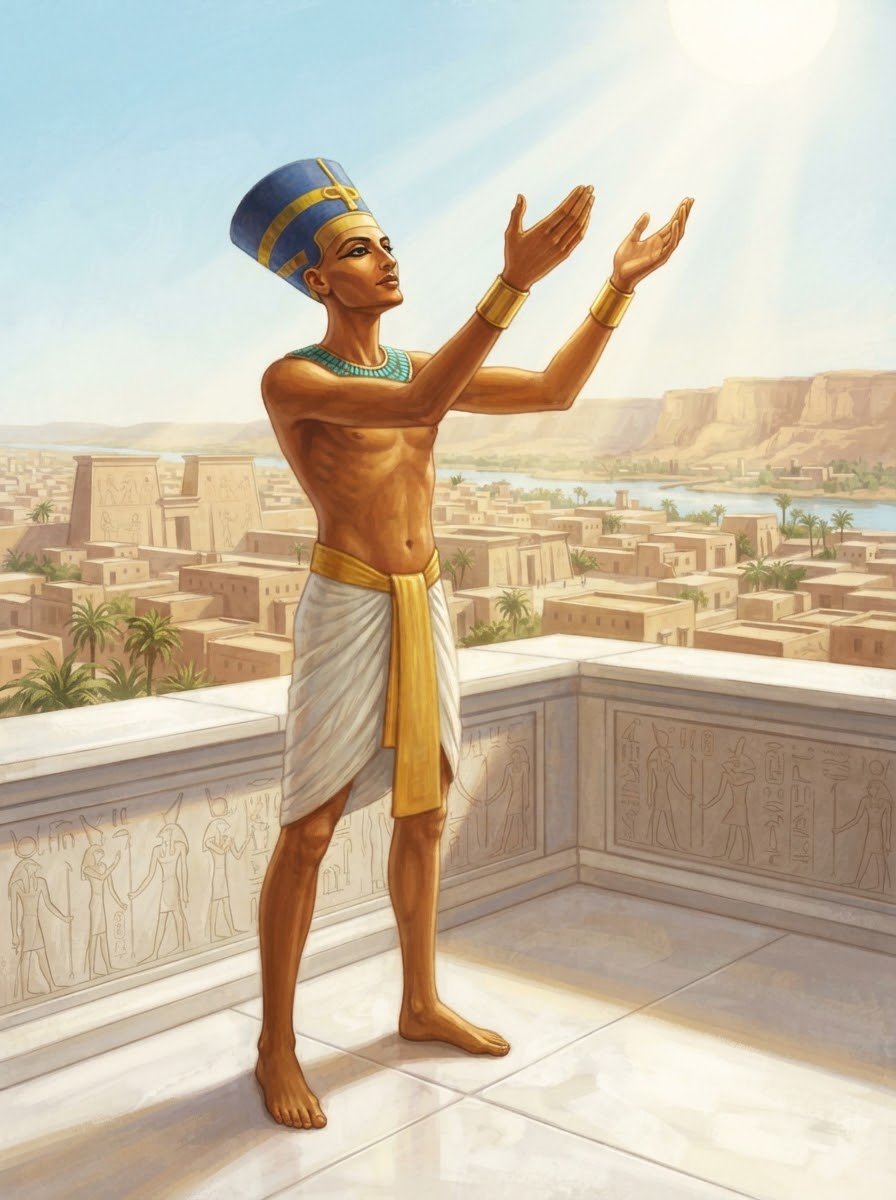
A young pharaoh named Amenhotep IV ascended the throne and changed Egyptian history forever. He declared that only one deity should be worshiped: the Aten, represented as a radiant sun disc. To honor this supreme god, the pharaoh abandoned his traditional birth name and called himself Akhenaten, meaning "the living spirit or servant of the Aten."
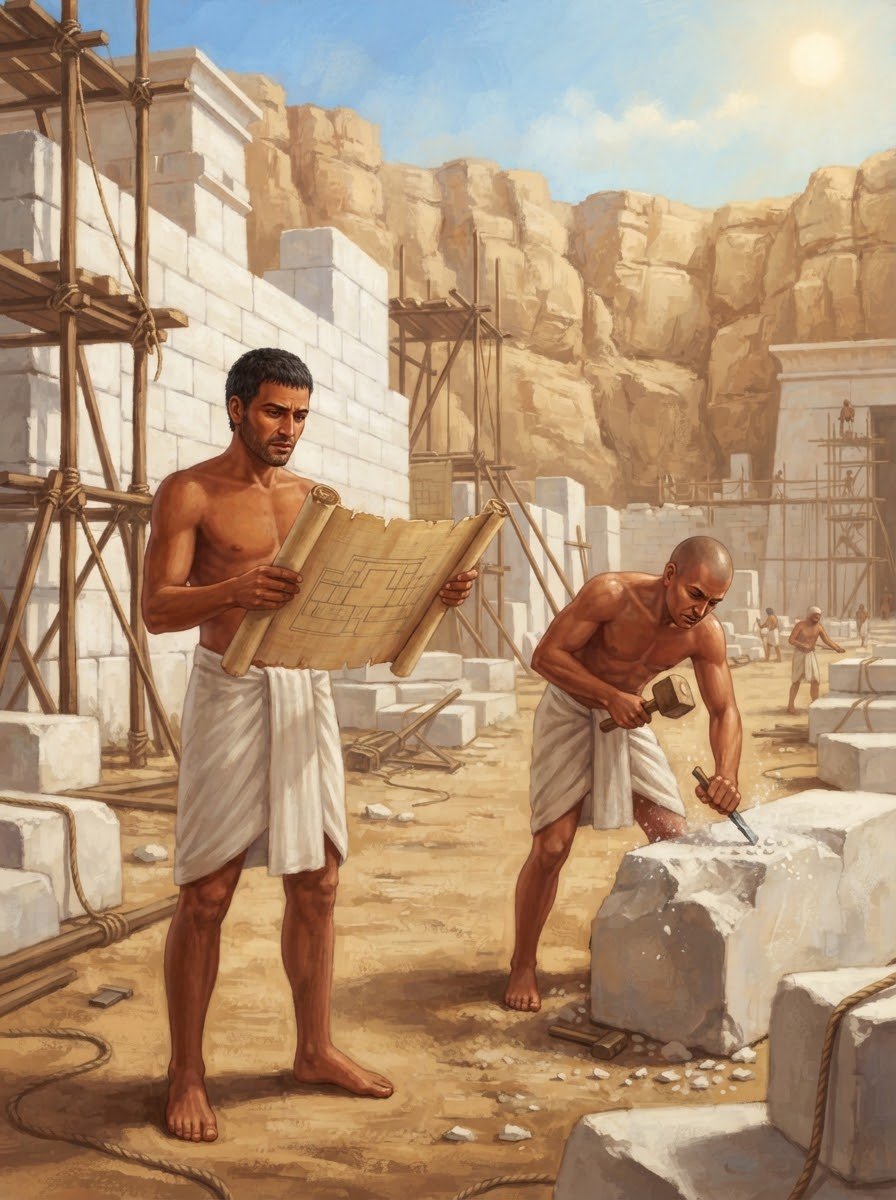
Dissatisfied with the traditional religious capital at Thebes, Akhenaten chose an untouched desert site surrounded by dramatic cliffs to build an entirely new royal city. He named it Akhetaten, which translates to "Horizon of the Aten." Thousands of stonemasons, builders, and architects gathered at modern-day Amarna to construct this glorious desert capital from pristine white limestone.
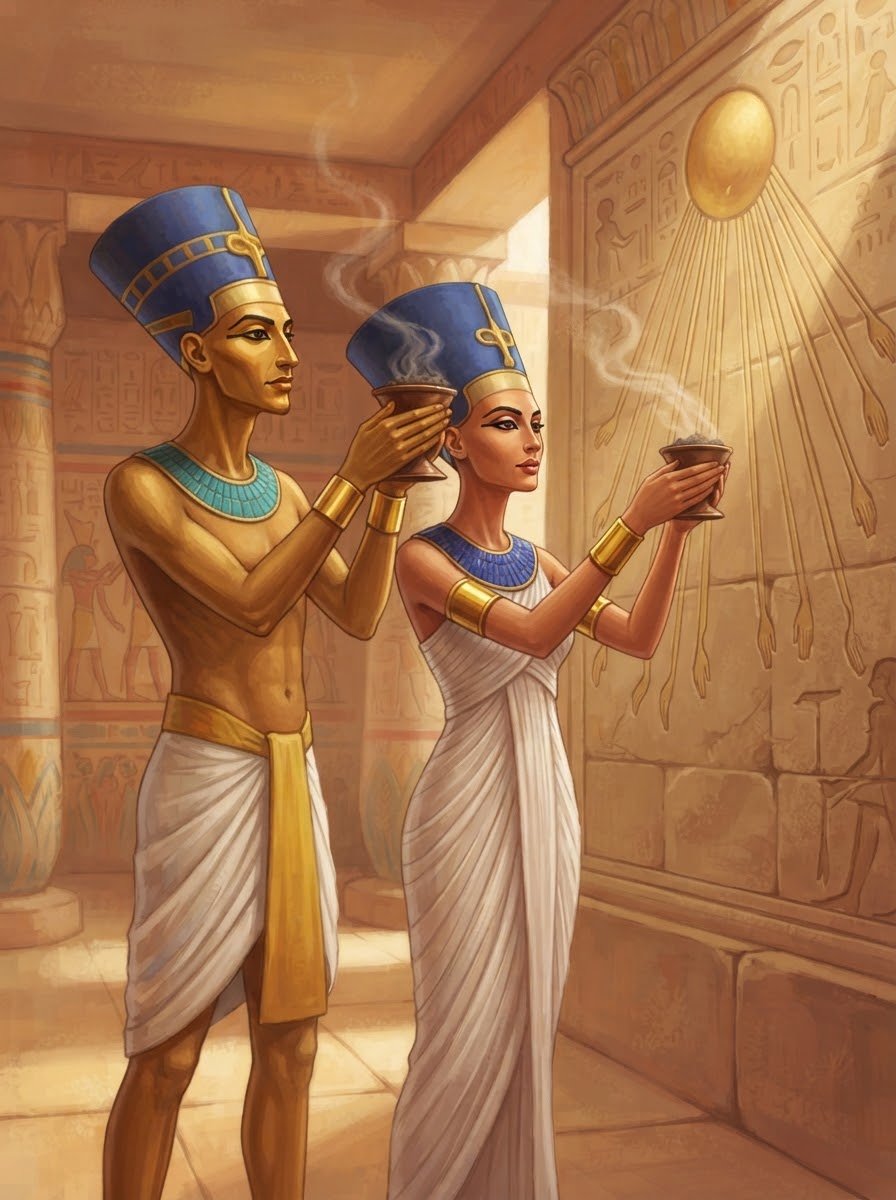
Unlike older Egyptian gods depicted with animal heads, the Aten was depicted purely as a shining golden disc. Its beaming rays stretched downward toward the earth, each ray ending in tiny human hands that offered symbols of life and protection to the pharaoh and his royal family. This dramatic art symbolized warmth, life, and continuous renewal.
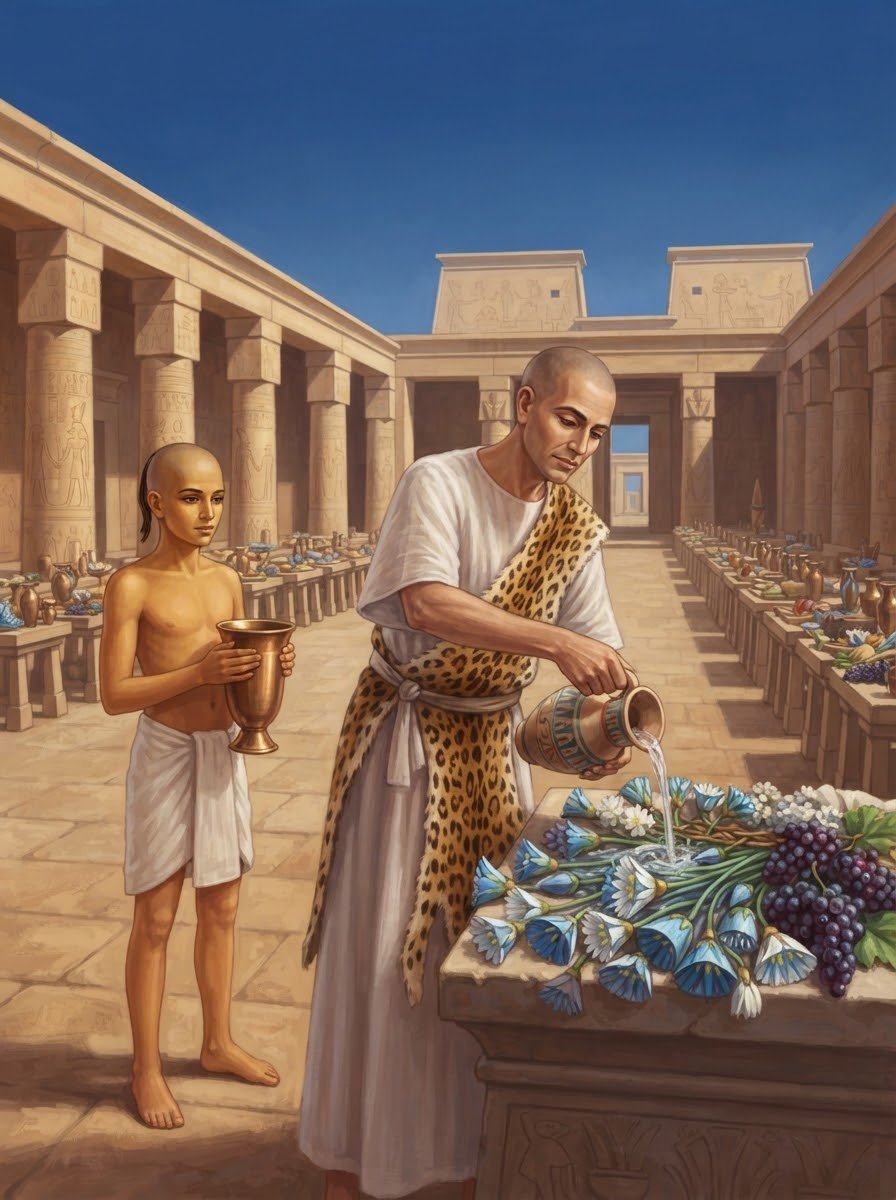
Traditional Egyptian temples were dark, mysterious halls illuminated only by flickering oil lamps. Akhenaten redesigned temple architecture entirely. The Great Aten Temple in Akhetaten possessed no roof at all. Instead, vast open-air courtyards held hundreds of stone altars, allowing brilliant sunlight to bathe the offerings of fresh food, colorful flowers, and fragrant incense all day long.
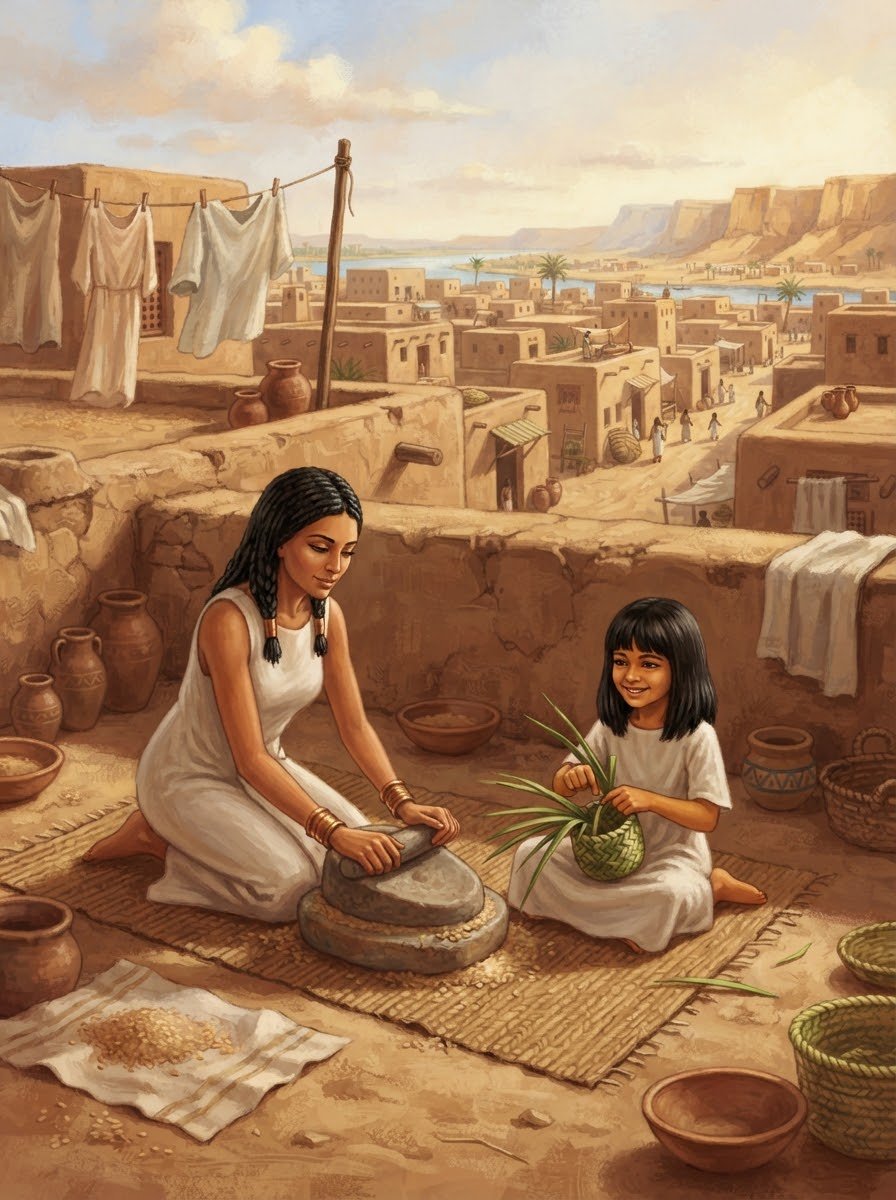
Over twenty thousand people moved to Akhetaten, filling the bustling streets with life. Families lived in sun-dried mudbrick homes featuring central living rooms and cool rooftop terraces. Ordinary citizens worked hard, enjoying meals of bread, fish, figs, and barley beer, while wearing lightweight linen garments perfectly suited to survive the intense Egyptian heat.
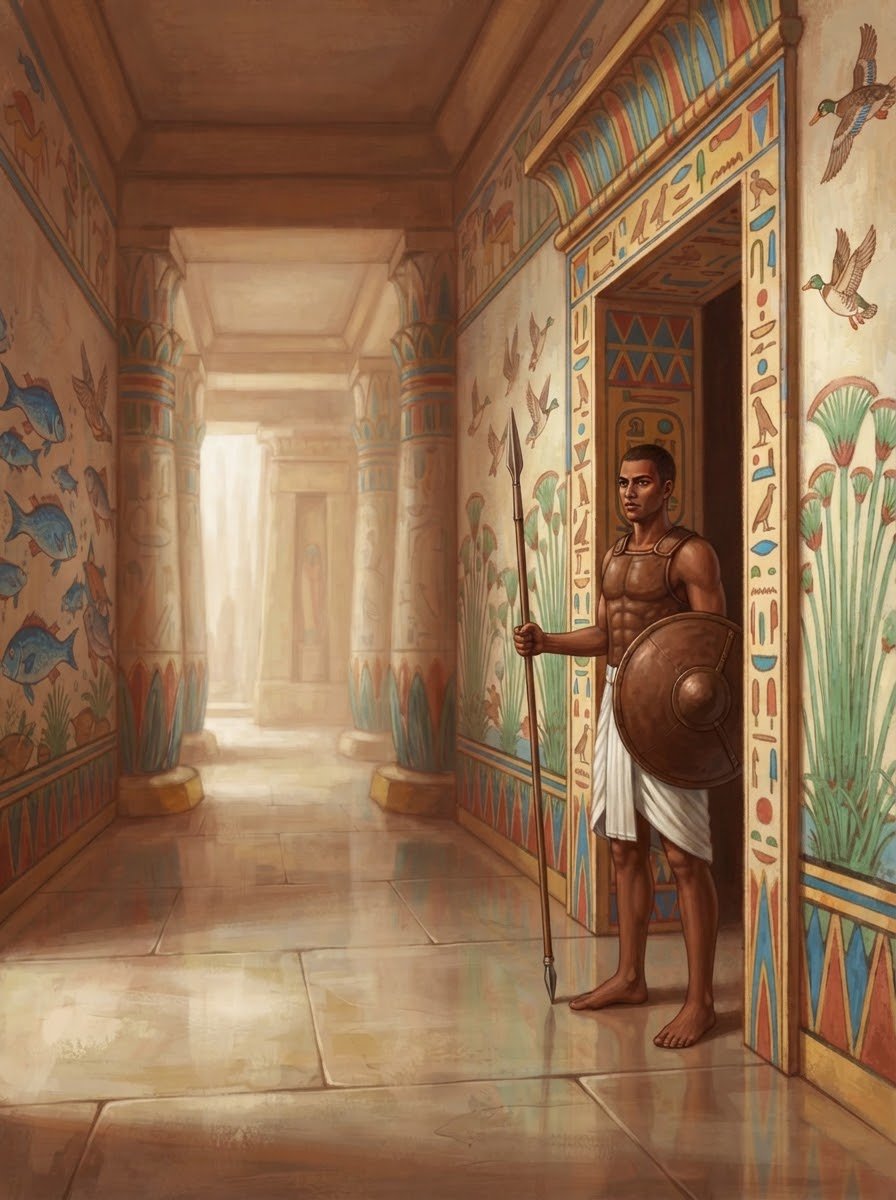
At the center of the capital stood grand royal palaces connected by an impressive covered bridge across the main avenue. Painted mudbrick walls showcased vibrant murals depicting swimming fish, flying birds, and lush papyrus reeds. Shaded courtyard gardens, cooling pools, and wide reception halls created a magnificent setting for royal receptions and administrative affairs.
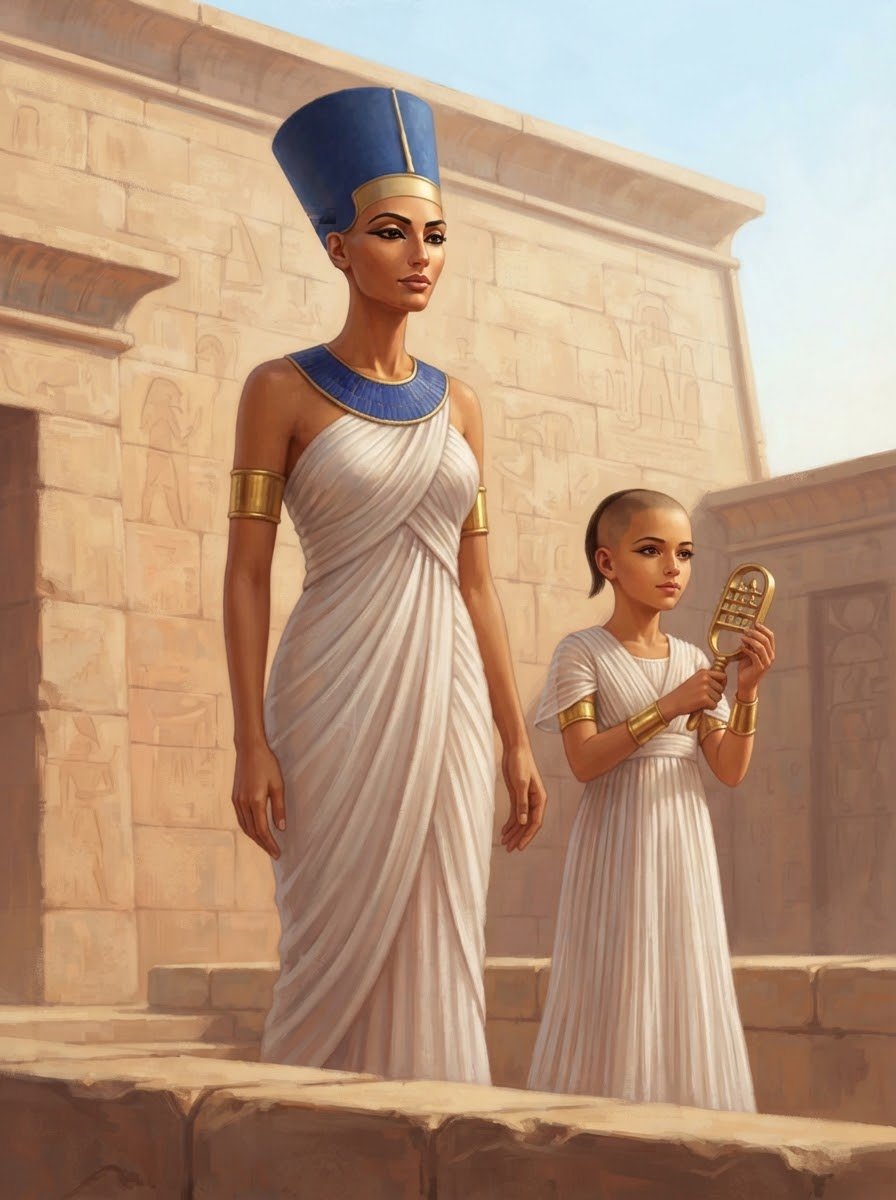
Queen Nefertiti reigned alongside Akhenaten as an extraordinarily powerful partner. Ancient carved reliefs show the royal couple riding golden chariots together, holding their daughters, and bestowing golden gifts upon loyal officials. Nefertiti played a vital public role in religious ceremonies, leading prayers under the bright sun as a true symbol of beauty and political authority.
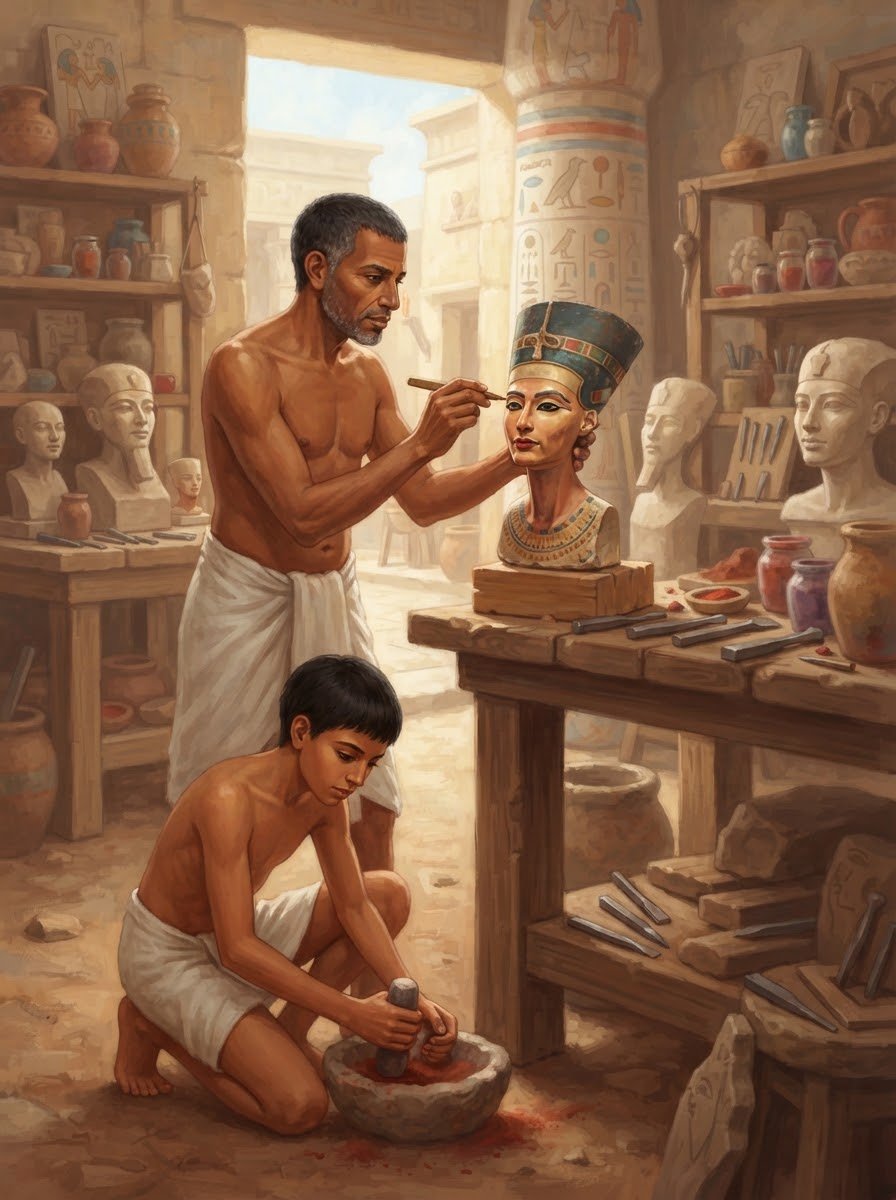
Akhenaten encouraged a revolutionary new style of Egyptian art that broke long-established artistic rules. Instead of rigid, ideal shapes, Amarna artists painted naturalistic, expressive figures with elongated heads, slender limbs, and soft curves. Master sculptors like Thutmose carved remarkably intimate, realistic portraits that captured human emotion, grace, and unique individual facial features.
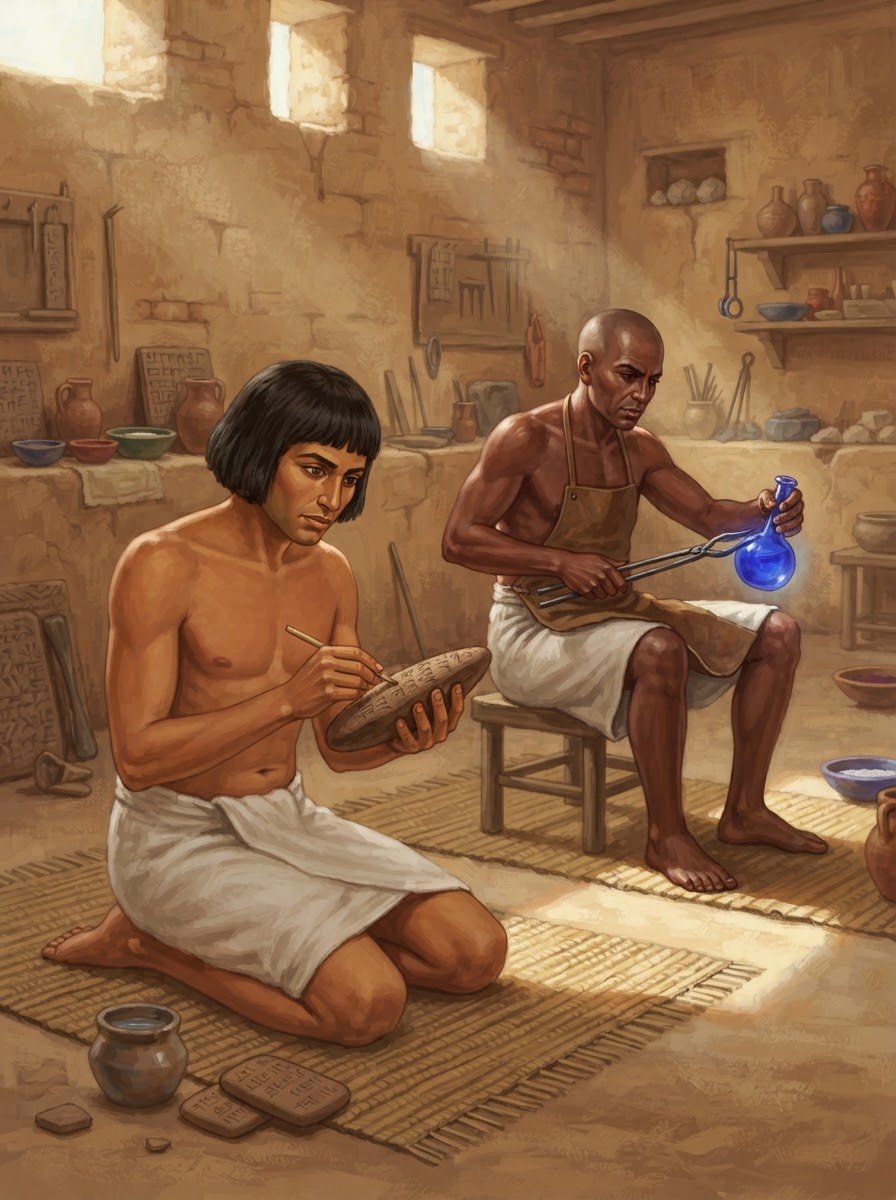
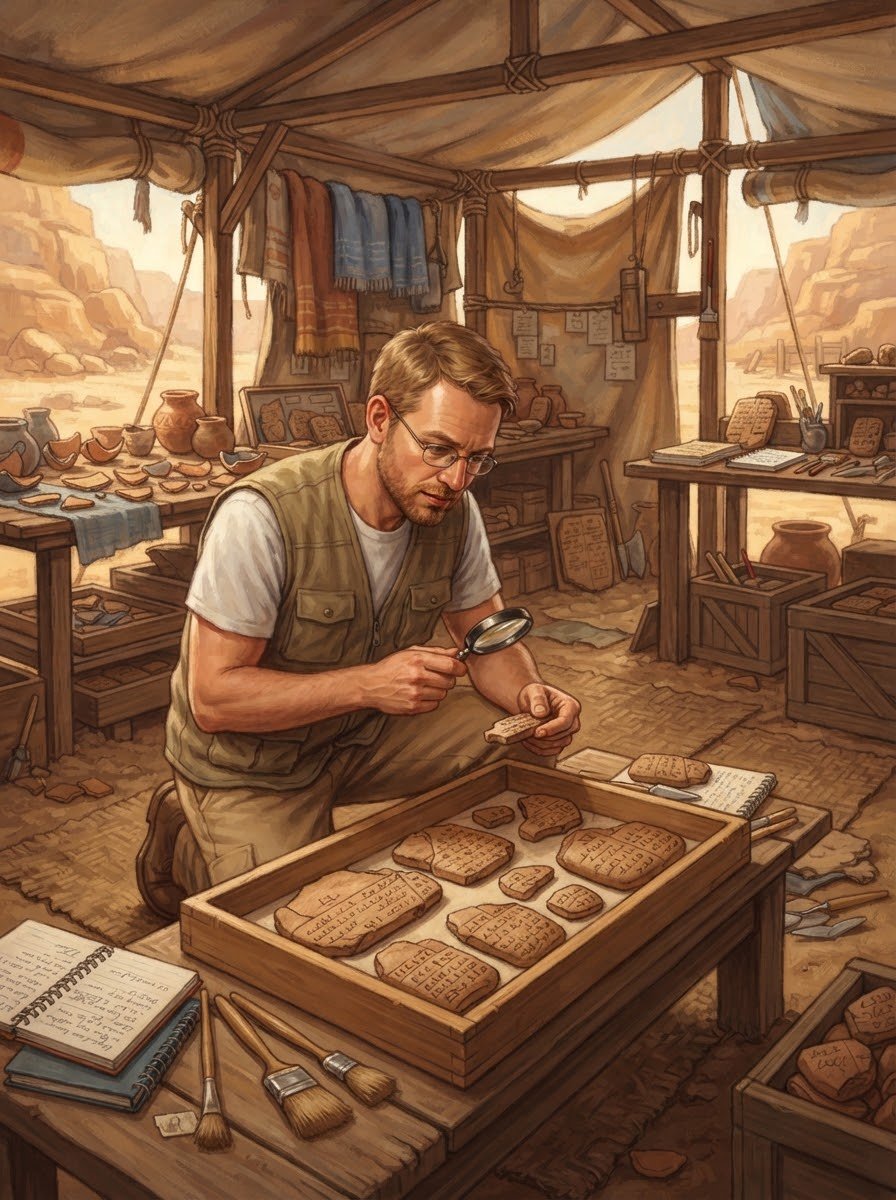
Behind the grand monuments lived thousands of skilled craftspeople, scribes, stonemasons, and laborers who built and maintained Akhetaten. Archeological excavations of their modest cemeteries reveal that their lives involved intense physical work and challenging conditions. Yet, their incredible craftsmanship created remarkable glass vessels, fine jewelry, detailed clay tablets, and exquisite stone carvings.
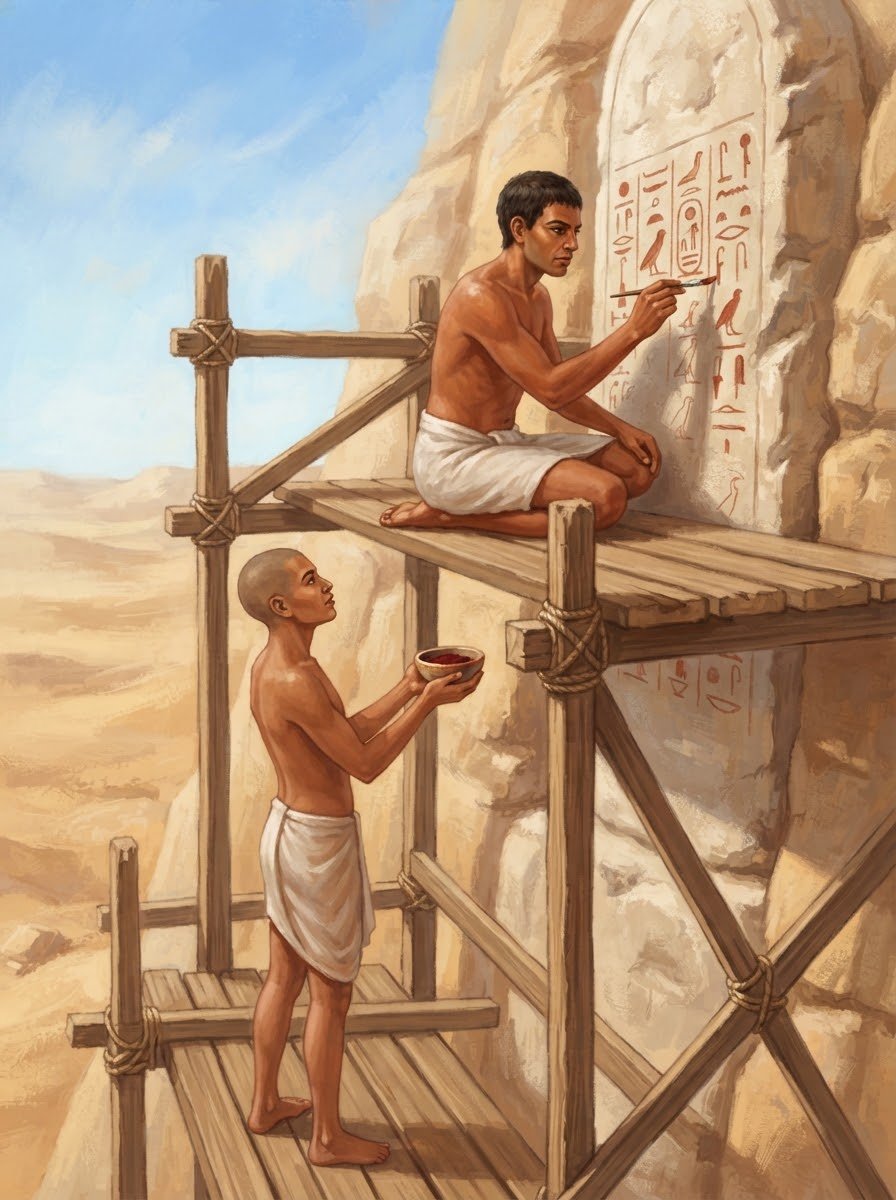
To mark the boundaries of his holy city, Akhenaten carved sixteen massive boundary stelae directly into the towering limestone cliffs. These giant stone monuments contained detailed royal decrees declaring that Akhetaten would forever belong to the Aten. The city also hid thousands of clay diplomatic letters, known today as the Amarna Letters.
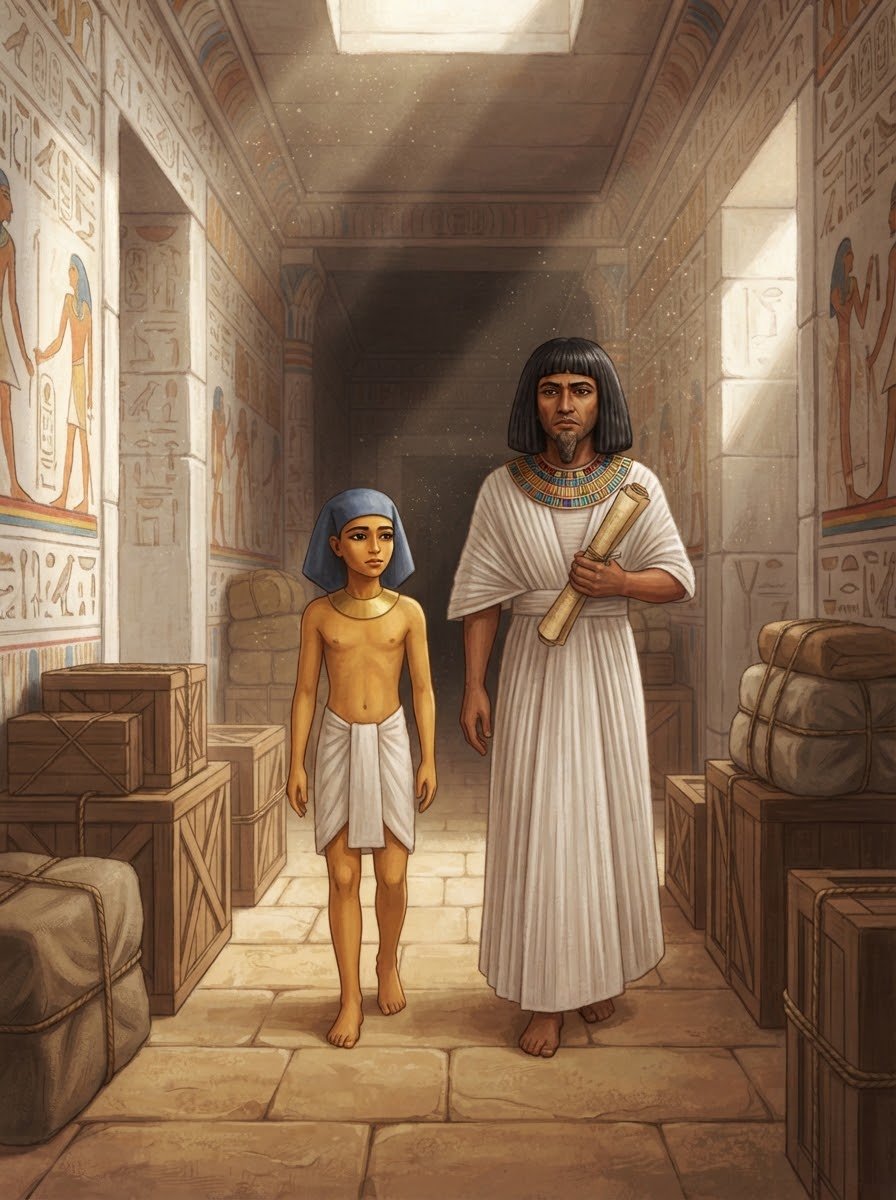
After seventeen years of rule, Akhenaten passed away, leaving his young successor Tutankhaten—later renamed Tutankhamun—to inherit the kingdom. Under pressure from powerful traditional priests and royal advisors, the court abandoned Akhetaten, returning the capital to Memphis and restoring the ancient gods. The brilliant sun city was quickly deserted and left completely empty.
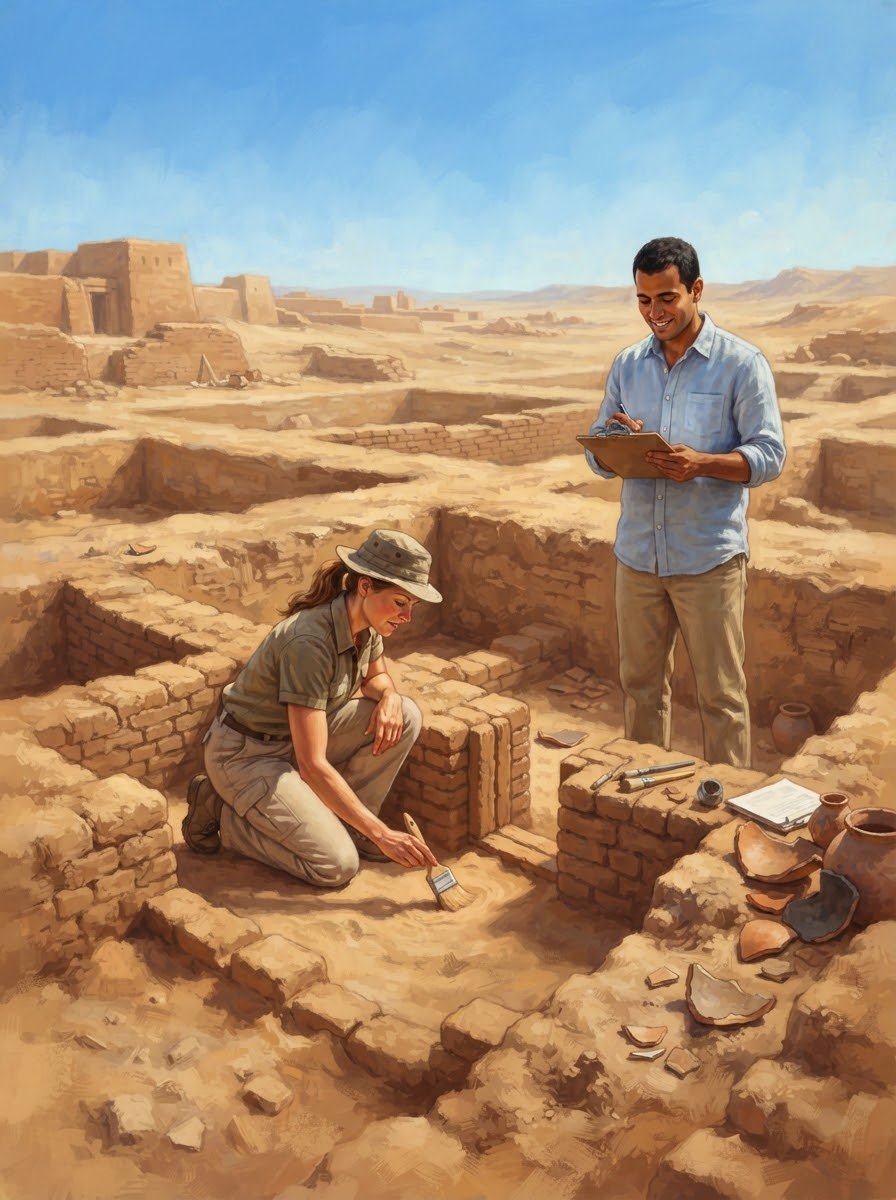
Over centuries, windblown sands swallowed the abandoned buildings, protecting the city's foundations from being built over by later rulers. Modern archaeologists excavating the site at Amarna have uncovered whole street layouts, workshops, and delicate artifacts. These remarkable dry desert sands preserved a unique snapshot of ancient Egyptian life frozen in time.
AKHETATEN FACT FILE
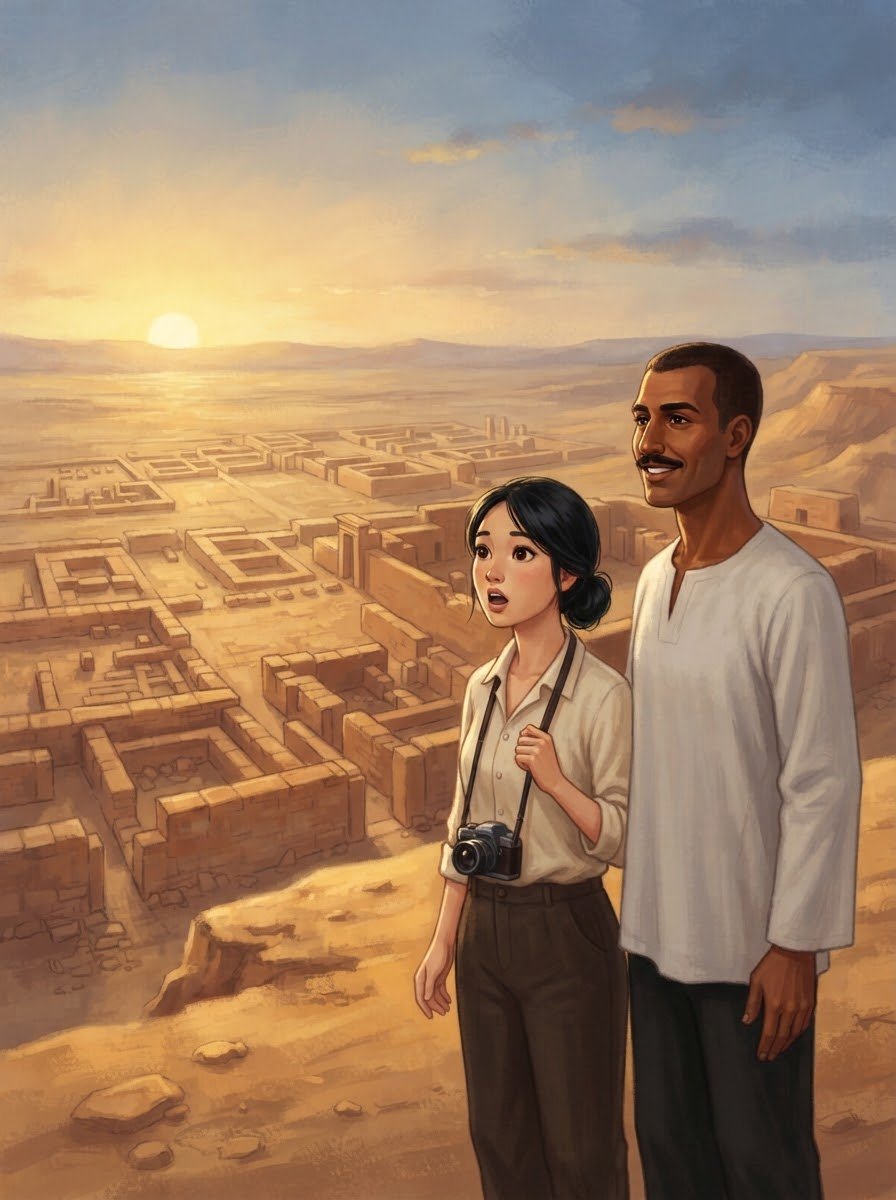
Although Akhetaten flourished for less than two decades, its remarkable legacy shines brightly through history. As a single-period site untouched by later ancient rebuilding, it offers archaeologists an unparalleled window into ancient Egyptian urban life, royal power, religious transformation, and artistic innovation. The short-lived city of the sun remains one of antiquity's greatest treasures.