
The Blue Whale: Giant of the Endless Ocean
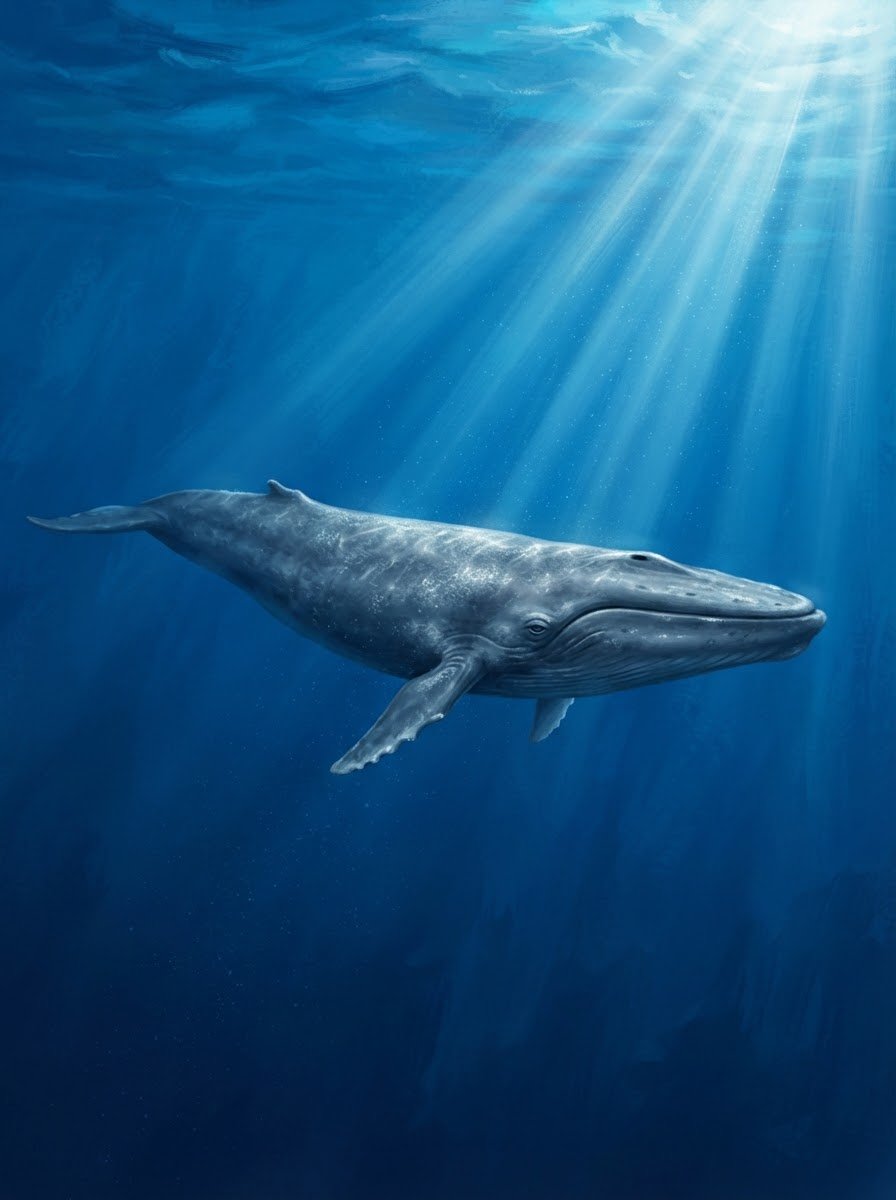 Chapter 1: A Shadow Beneath the Waves The scene opens in the deep, crystalline twilight of the tropical Pacific. Here, the water is a vibrant sapphire, sunlight piercing the surface in dancing shafts known as "God rays." In this vastness, a silhouette appears—a shape so immense it defies the scale of the landscape. This is Azure, a female blue whale (Balaenoptera musculus). At nearly 100 feet long, she is a living island. She glides with a slow, rhythmic beat of her massive flukes, her mottled blue-gray skin shimmering like hammered silver. Azure is a creature of extremes, a giant among giants, moving through a world where distance is measured in thousands of miles and depth in thousands of feet. Science Explained: Blue whales are the largest animals to ever exist on Earth, larger even than the biggest dinosaurs. Their size is maintained by the buoyancy of the water, which supports their massive weight—up to 190 tons—that would be impossible to sustain on land. Nature Fact: 1. A blue whale’s tongue weighs as much as an entire elephant. 2. Their heart is the size of a bumper car. 3. Their blood vessels are so wide a human child could swim through them. Transition: But Azure is not alone in this vast blue; a new life is about to begin.
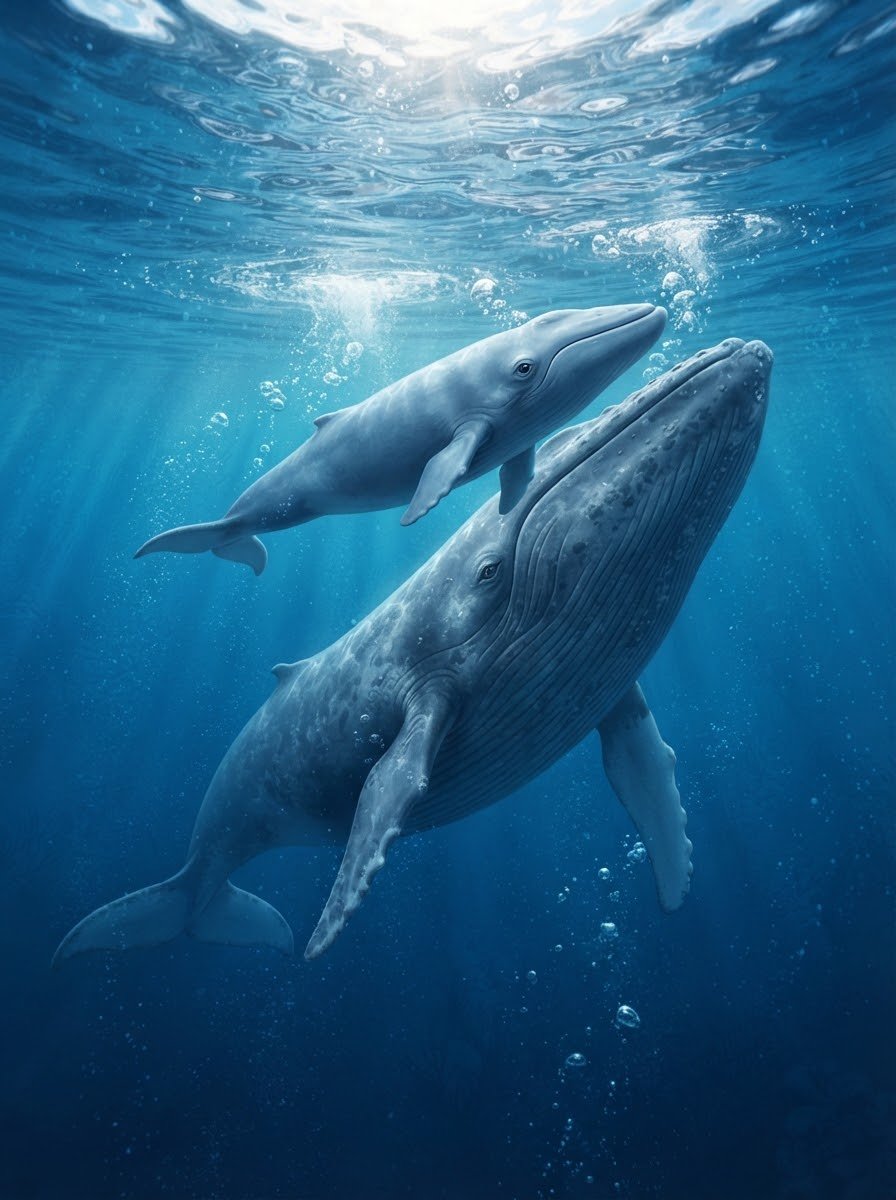
Chapter 2: Born into a Blue World & Chapter 3: Milk for a Growing Giant In the warm, calm waters near the equator, Azure’s calf, Ceti, is born. Tail-first to prevent drowning, the twenty-five-foot-long calf is nudged to the surface by Azure for his very first breath. As he breaks the surface, his twin blowholes erupt in a spray of mist. Life for Ceti is a race against time and temperature. He lacks the thick blubber of his mother, so he must eat. Azure’s milk is the consistency of soft butter, containing nearly 50% fat. Ceti consumes over 50 gallons of it every day, gaining ten pounds every hour. This rapid growth is essential; they must soon leave these warm, nutrient-poor waters for the frozen bounty of the south. Science Explained: Cetacean birth is unique because the calf is usually born tail-first. This ensures the calf doesn't attempt to breathe underwater before its head clears the surface. The high fat content in whale milk allows calves to develop a thick insulating layer of blubber quickly. Nature Fact: 1. A blue whale calf can gain 200 pounds in a single day. 2. At birth, a calf is already longer than a professional transport van. 3. The bond between mother and calf is the strongest social tie in the blue whale's world. Transition: As Ceti grows, he must master the art of moving through his liquid home.
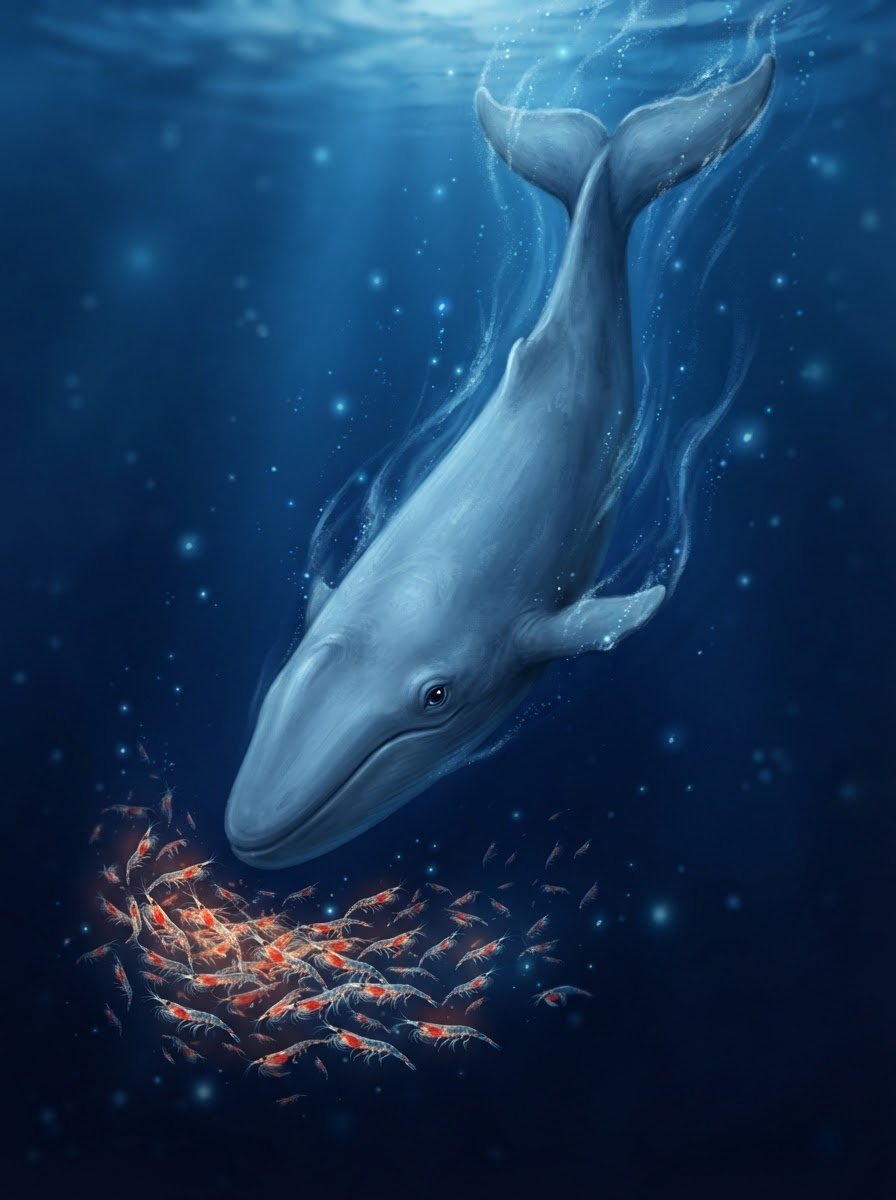
Chapter 4: Learning the Rhythm of the Ocean & Chapter 5: The Ocean’s Invisible Harvest Ceti practices the mechanics of the deep. He learns to arch his back and drive his flukes downward to dive, feeling the pressure increase as the light fades to indigo. He watches Azure, mimicking her grace. But even a giant needs fuel, and the tropical waters are a desert. Azure’s instincts are pulling them toward the Southern Ocean. Their target is the "invisible harvest": krill. These tiny, shrimp-like crustaceans are the foundation of the entire Antarctic food web. To find them, Azure and Ceti must navigate thousands of miles across the open sea, following ancient chemical and magnetic maps. Science Explained: Blue whales are "baleen whales" (Mysticeti). Instead of teeth, they have fringed plates of baleen made of keratin—the same material as human fingernails—used to filter food from the water. Nature Fact: 1. A single blue whale can eat up to 4 tons of krill in one day. 2. There are more krill by weight on Earth than any other animal species. 3. Krill travel in "swarms" so dense they can be seen from space. Transition: The journey is long, and the feeding process is one of the most violent and energetic acts in nature.
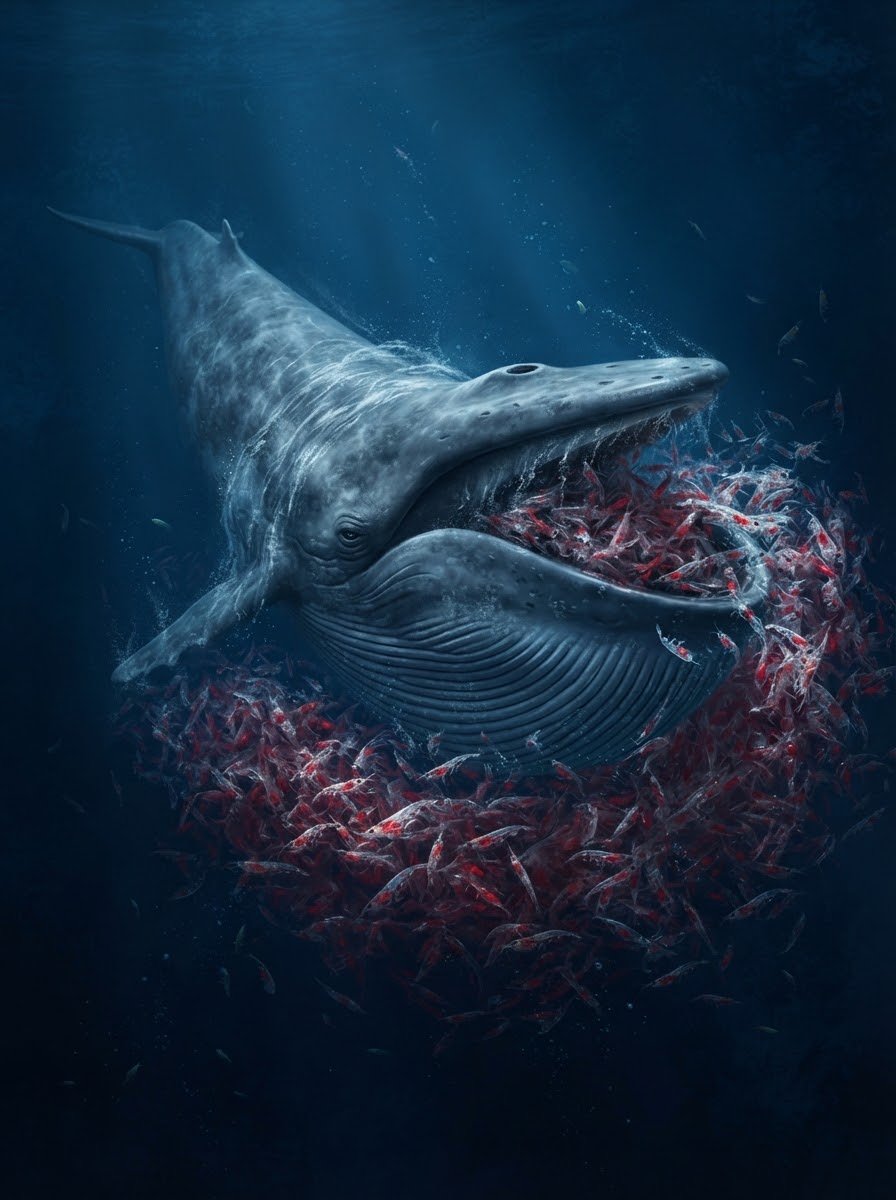
Chapter 6: The Lunge That Feeds a Giant & Chapter 7: Built for the Vast Blue They reach the cold, nutrient-rich waters near the ice shelf. Azure detects a dense swarm of krill. She dives, accelerating to high speed. Suddenly, she opens her mouth. Her "ventral pleats"—grooves running from her chin to her navel—expand like an accordion. In seconds, she engulfs a volume of water equal to her own body weight. As she closes her mouth, the water is forced out through her baleen plates, trapping the krill inside. This "lunge feeding" requires immense energy, but the reward is millions of calories. Her streamlined body, shaped like a sleek submarine, allows her to move with minimal drag despite her size. Science Explained: Lunge feeding is the largest biomechanical event on Earth. The whale’s lower jaw is unattached to the skull by bone, allowing it to swing open at nearly a 90-degree angle. Nature Fact: 1. A blue whale has 300 to 400 baleen plates on each side of its mouth. 2. The ventral pleats allow the throat to expand to four times its resting width. 3. Despite their size, blue whales can swim at speeds of up to 30 mph when threatened. Transition: While feeding sustains the body, sound sustains the soul and the connection between whales.
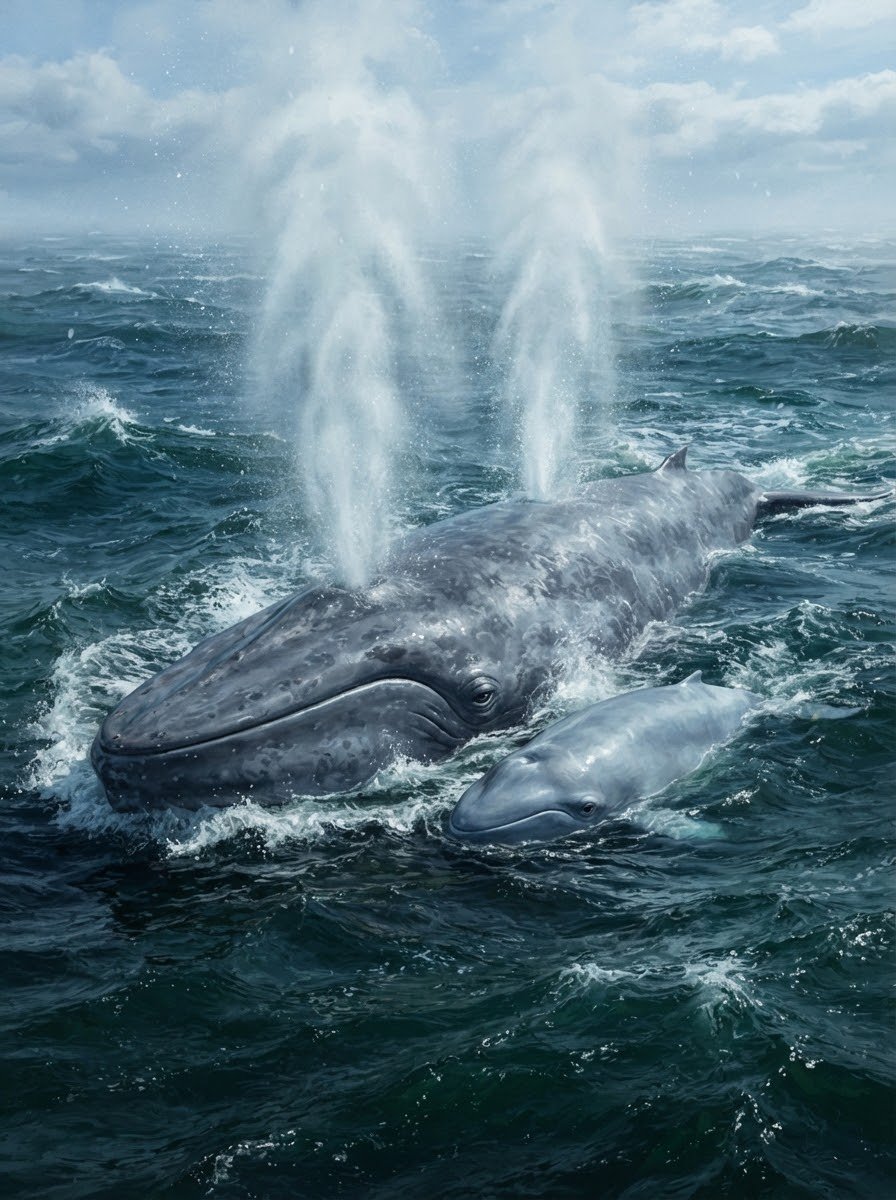
Chapter 8: Breathing at the Edge of the Sky & Chapter 9: Songs Across the Dark Azure and Ceti surface together. Their blowholes—two massive nostrils atop their heads—open wide. The exhaled air, pressurized and warm, hits the cold sea air, creating a vertical spout of mist thirty feet high. They take several deep breaths, recharging their blood with oxygen stored in their specialized muscle proteins. Beneath the surface, the ocean is a symphony of sound. Azure lets out a low-frequency moan. It is deeper than a bass guitar, a sound so powerful it can travel for hundreds of miles through the "SOFAR channel," a layer of water that acts as an acoustic waveguide. She is calling to other giants, checking the path ahead. Science Explained: Blue whales are the loudest animals on Earth. Their calls can reach 188 decibels—louder than a jet engine—allowing them to communicate across entire ocean basins. Nature Fact: 1. A whale's spout is not water, but a mix of mucus and warm air condensing. 2. Blue whales have a "slow" heart rate during dives, sometimes beating only twice per minute. 3. Their songs are so low-frequency they are mostly below the range of human hearing. Transition: But the "Long Blue Road" they travel is becoming increasingly crowded and dangerous.
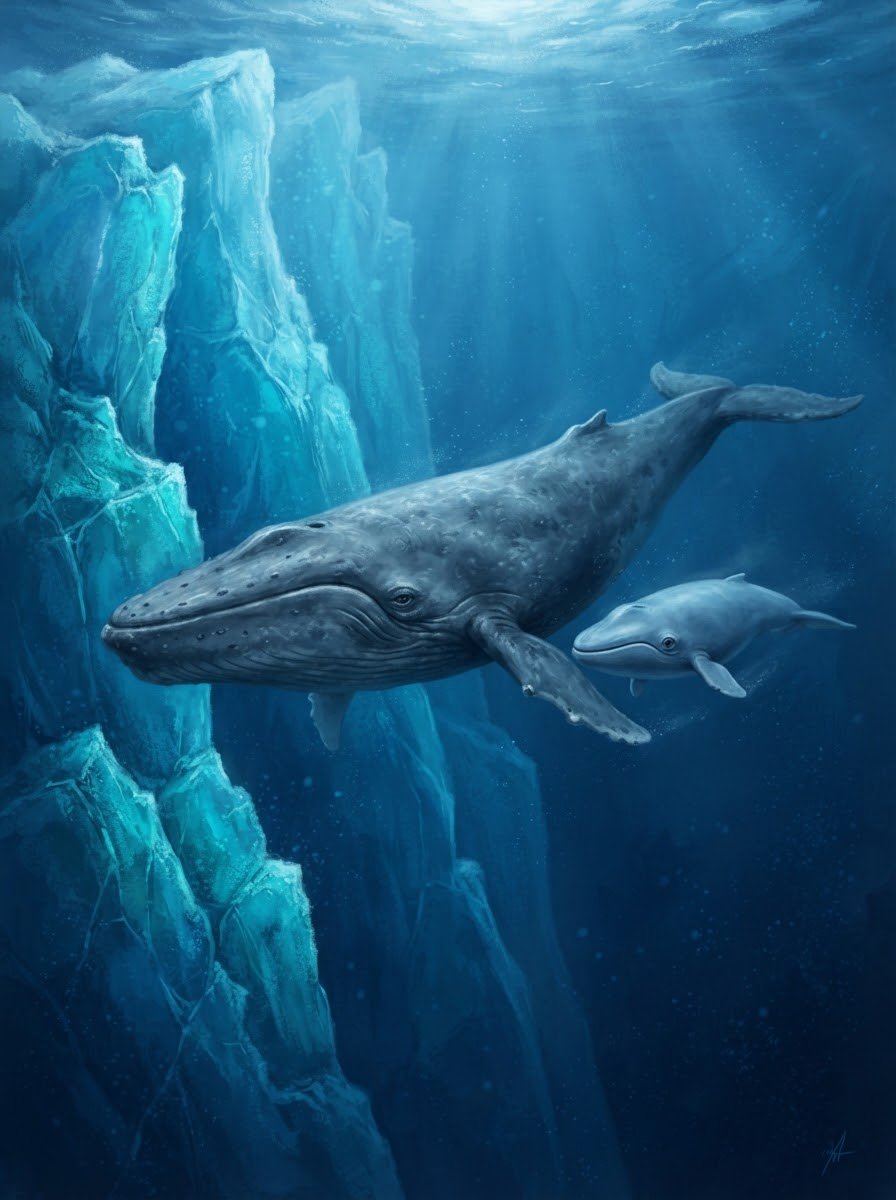
Chapter 10: The Long Blue Road & Chapter 11: A Calf’s First Challenges The migration is a test of endurance. Azure guides Ceti through the Roaring Forties, where the winds are fierce and the waves tower like mountains. Ceti is no longer the helpless calf of the tropics; he is now fifty feet long and learning to navigate using the Earth's magnetic field and the low-frequency "maps" of the seafloor topography. He encounters his first iceberg—a floating fortress of white and turquoise. He must learn to avoid the crushing ice and the Orcas that patrol the edges of the pack ice. His blubber is thick now, protecting his internal organs from the freezing Antarctic temperatures. Science Explained: Blue whales migrate to polar regions in summer to feed and return to tropical regions in winter to breed. This cycle allows them to take advantage of seasonal "blooms" of food while keeping calves in safe, warm nurseries. Nature Fact: 1. Some blue whales travel over 10,000 miles in a single year. 2. They can hold their breath for up to 30 minutes, though most feeding dives are shorter. 3. Icebergs can extend hundreds of feet below the surface, posing a collision risk. Transition: However, the most significant dangers are not made of ice, but of steel and sound.
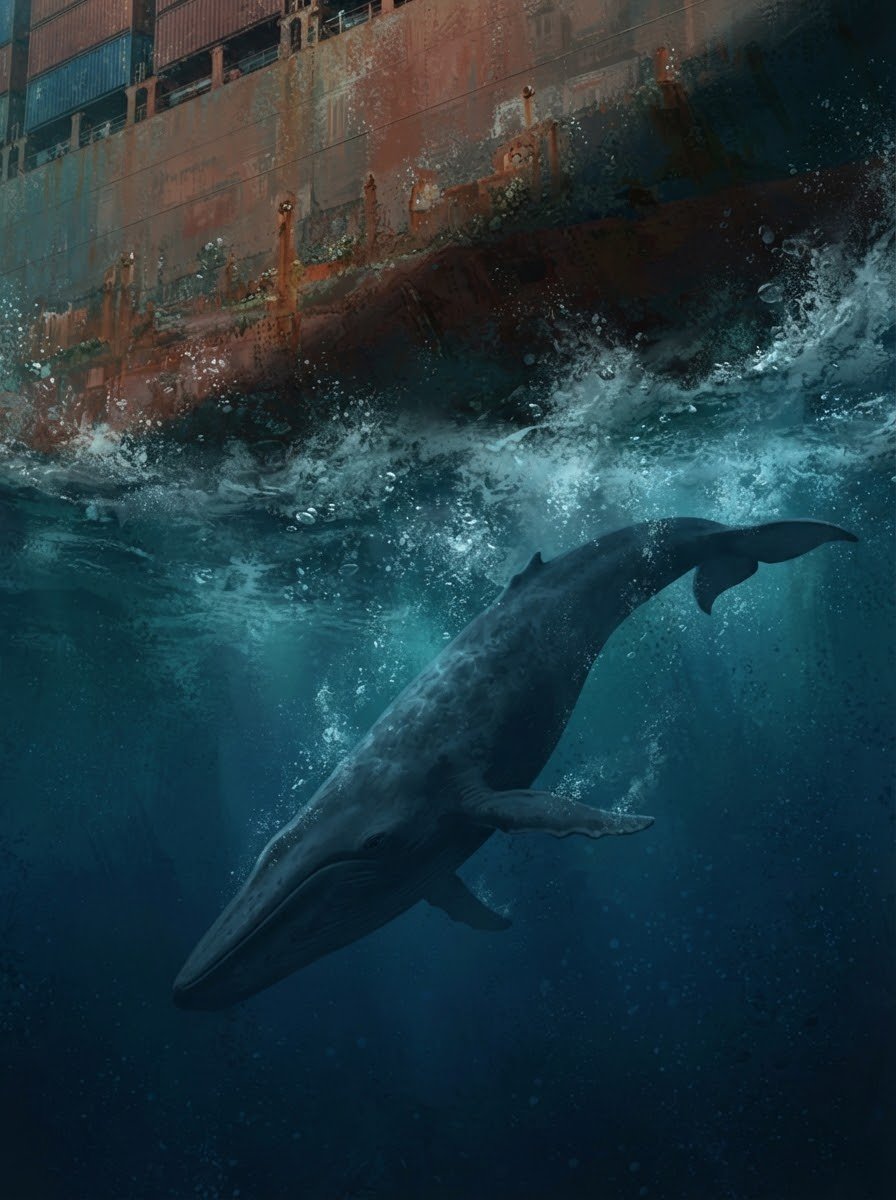
Chapter 12: The Ocean Is Not Always Gentle & Chapter 13: Giants and the History of Whaling As they cross a major shipping lane, a low, rhythmic thrumming fills the water. It is the sound of a container ship. For a blue whale, this noise is deafening, masking the calls of other whales and causing confusion. Suddenly, the massive hull of a ship looms above. Azure dives deep, pulling Ceti with her, narrowly avoiding a "ship strike"—one of the leading causes of death for whales today. This modern danger is a echo of the past. In the 20th century, industrial whaling nearly wiped blue whales from the Earth, killing over 300,000. Today, they are protected, but the scars of the "Whaling Era" remain in their small population numbers. Science Explained: Ocean noise pollution from shipping, sonar, and oil exploration can disrupt whale communication, leading to stress and beaching. Ship strikes are often fatal because whales may not hear the ship's approach until it is too late. Nature Fact: 1. Before whaling, there were an estimated 250,000 blue whales; today, there are roughly 10,000–25,000. 2. Blue whales were too fast for early whalers and only became targets with the invention of steam ships and harpoon guns. 3. Entanglement in "ghost" fishing gear is another major threat to their survival. Transition: To save them, we must first understand them, using technology to bridge the gap between our worlds.
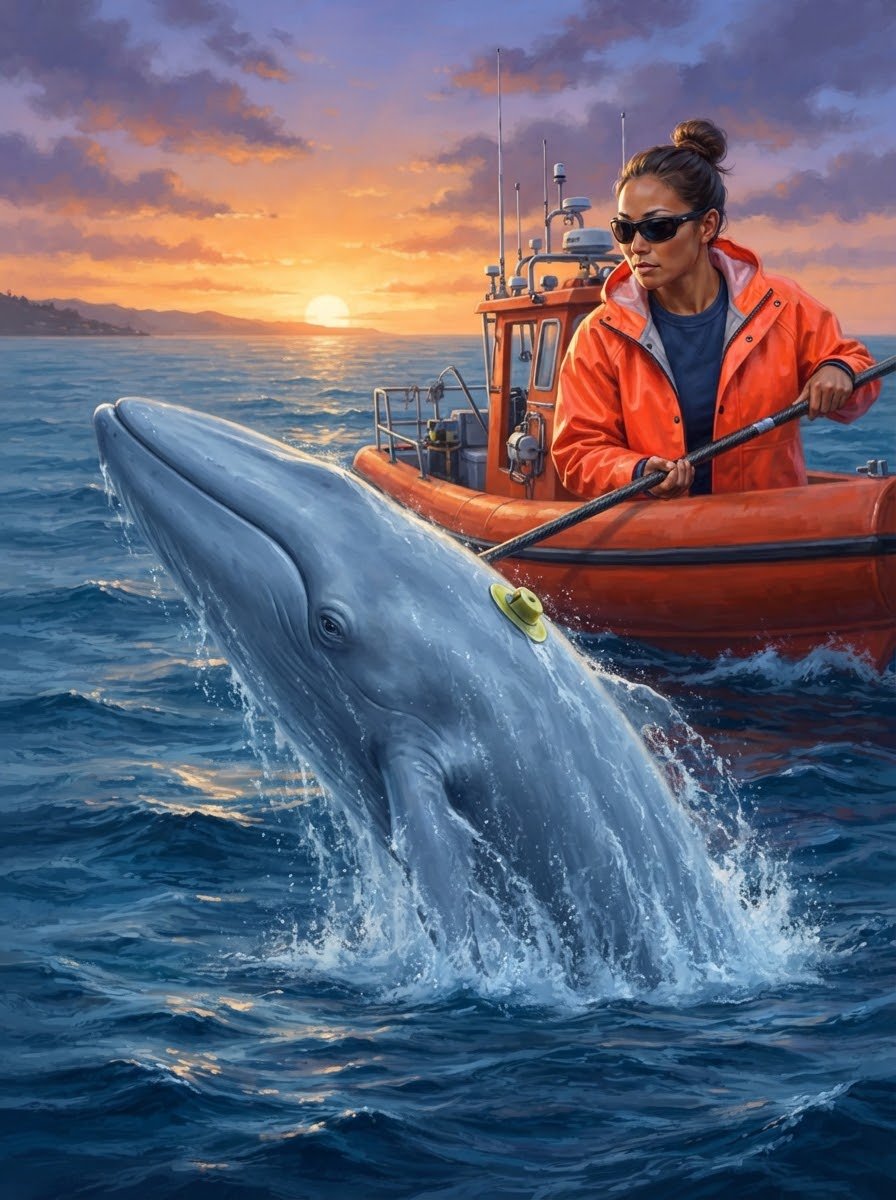
Chapter 14: Scientists Listening to the Blue & Chapter 15: The Endless Ocean In the distance, a small research boat bobs on the waves. Scientists use a long pole to attach a non-invasive suction-cup tag to Ceti’s back. This tag is a "window" into his life, recording depth, speed, and the sounds he hears. Thousands of miles away, hydrophones on the seafloor listen to Azure’s song. This data helps create "Blue Corridors"—protected lanes where ships must slow down. As Azure and Ceti turn back toward the tropics, they leave a legacy of hope. The ocean is vast, and though challenges remain, the recovery of the blue whale is a testament to what happens when the world chooses to protect its giants. Science Explained: Marine biologists use satellite tags to track migration patterns and biopsy darts to study genetics and stress hormones. This research is vital for creating Marine Protected Areas (MPAs). Nature Fact: 1. Satellite tags can stay on a whale for several months before falling off harmlessly. 2. Drones, or "Snotbots," are used to collect whale breath for DNA and hormone analysis. 3. Blue whales can live for 80 to 90 years, with some reaching over 100. Transition: Their journey continues, a never-ending cycle in the heart of the endless ocean.
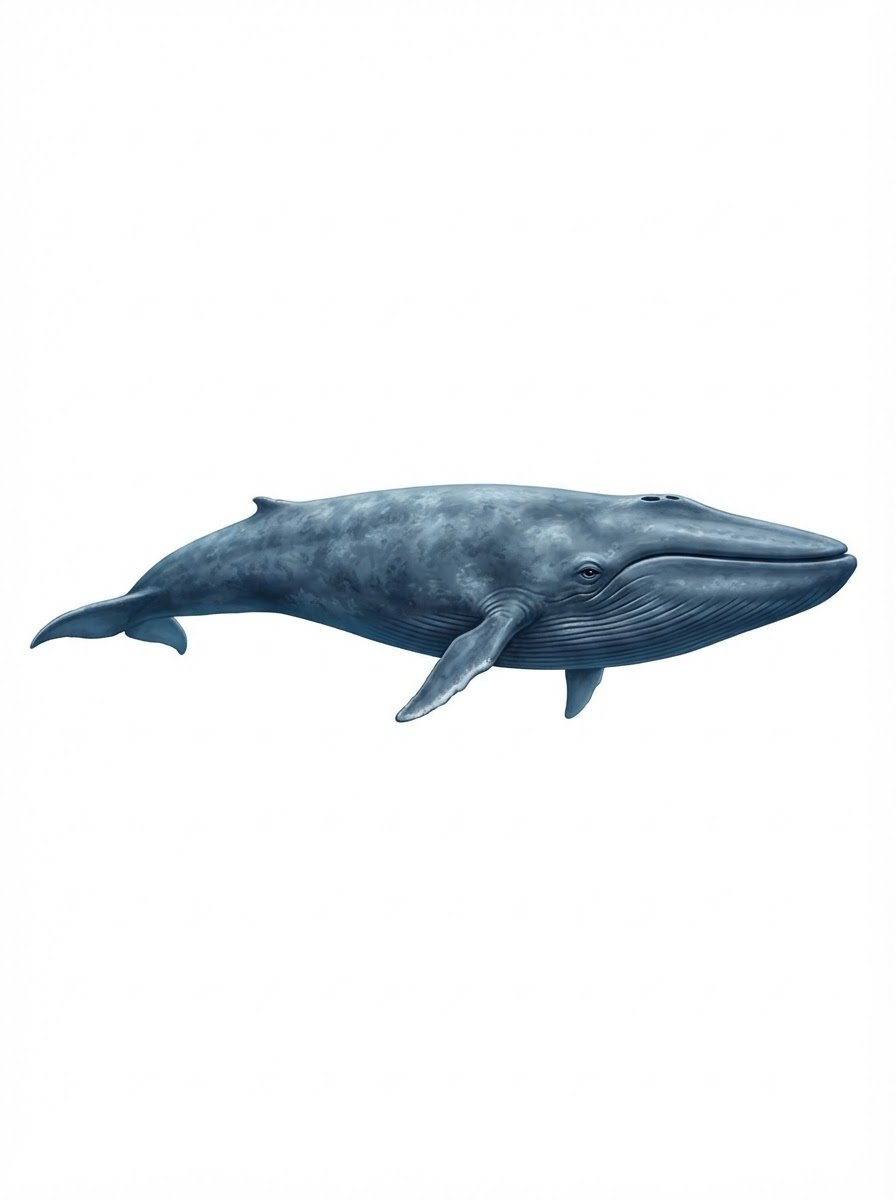
Blue Whale Field Guide & Life Cycle Species Profile: Balaenoptera musculus. Identification: Mottled blue-gray skin, small dorsal fin located far back on the body, wide U-shaped snout. Diet: Almost exclusively krill (euphausiids). Habitat: All the world’s oceans except the Arctic. The Life Cycle: