
THE INDUS VALLEY CIVILIZATION
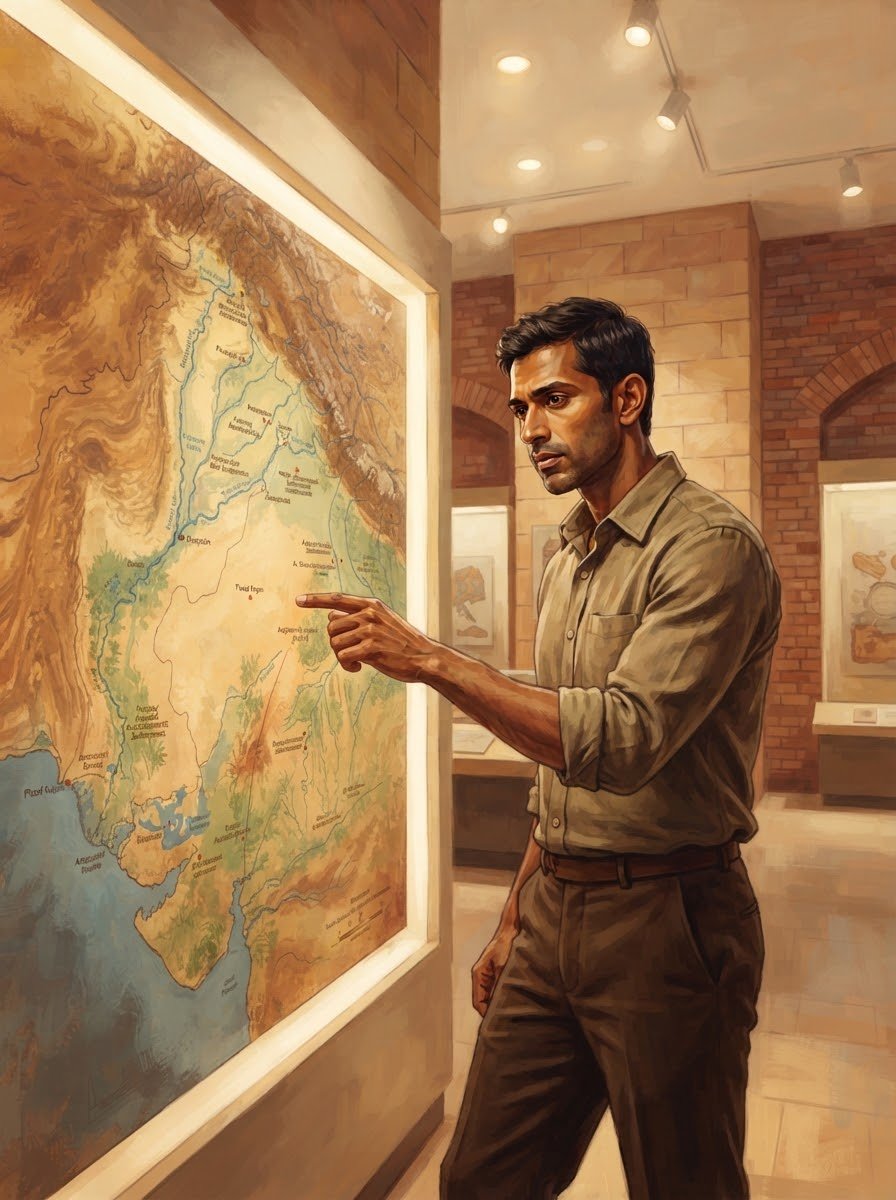
Around 2600 BCE, thriving human societies transformed fertile river valleys into bustling centers of agriculture and trade. In South Asia, the mighty Indus and ancient Ghaggar-Hakra rivers deposited rich silt across vast floodplains. Here, alongside Mesopotamia and ancient Egypt, a unique network of planned, interconnected communities flourished under the nourishing warmth of seasonal monsoons.
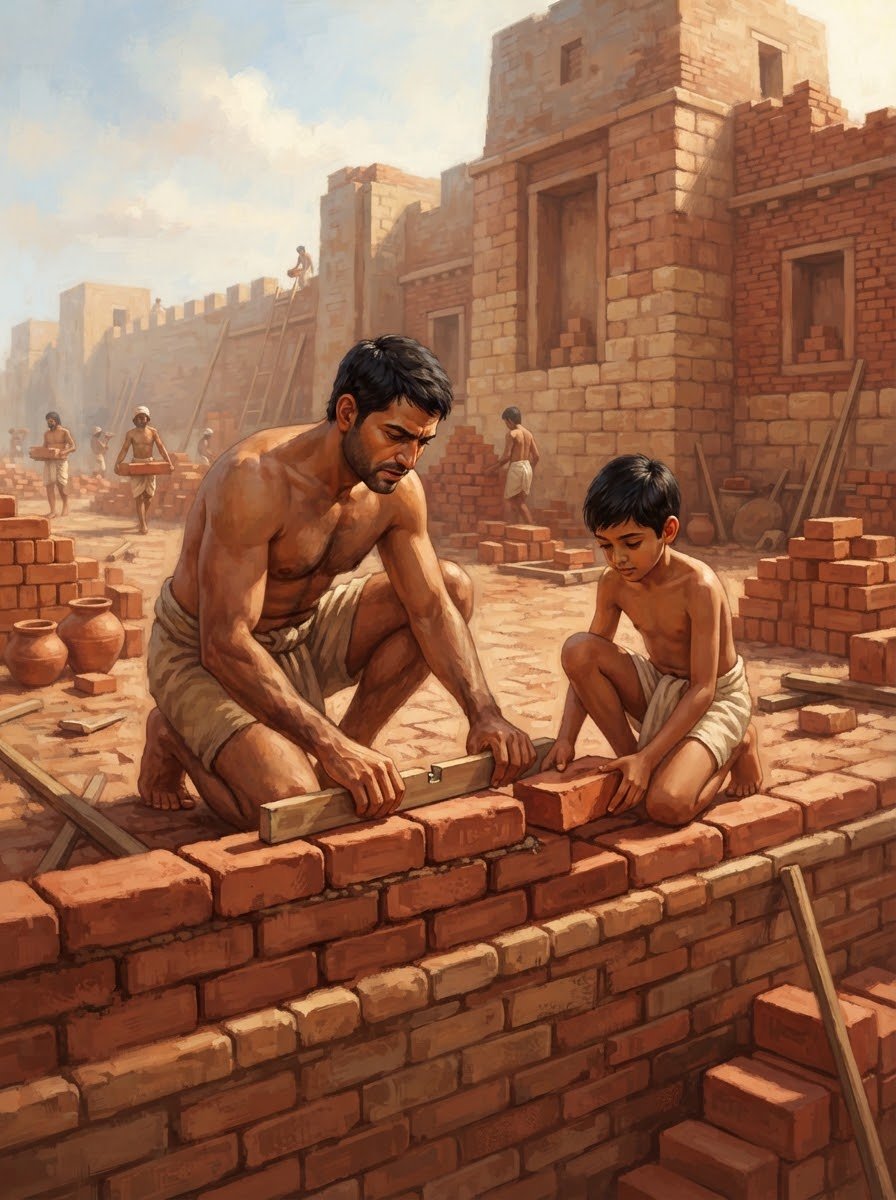
Over centuries, small farming villages grew into large, sophisticated urban centers like Harappa and Mohenjo-daro. Driven by thriving agriculture and skilled trade, Indus builders planned their cities on raised mud-brick platforms for flood protection. Remarkably, millions of standardized baked bricks were manufactured in precise 1:2:4 ratios, creating unified architectural foundations across hundreds of miles.
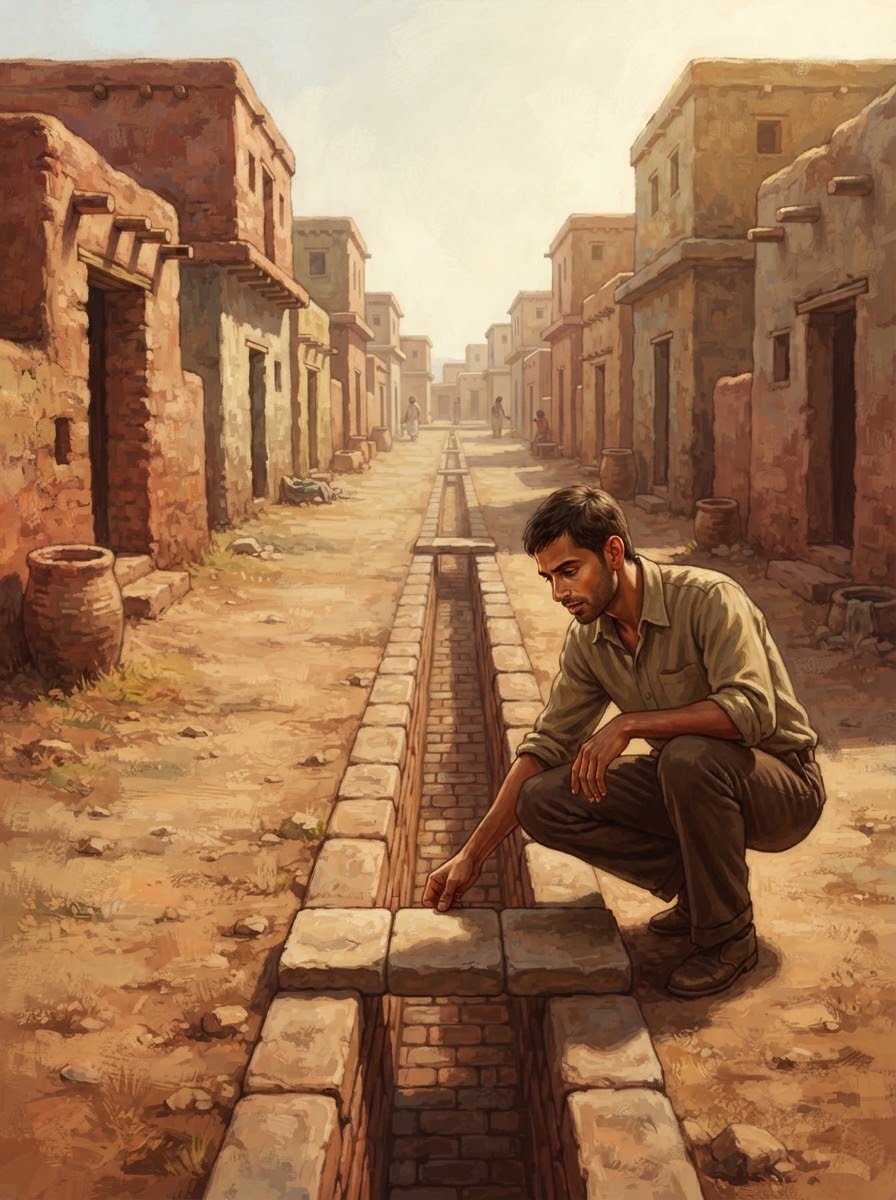
Walking through Mohenjo-daro reveals an extraordinarily organized city. Straight streets aligned to cardinal directions formed a clean grid pattern, catching natural breezes. Multistory baked-brick houses featured peaceful inner courtyards and private wells. Beneath the avenues ran covered brick drainage channels, creating one of the ancient world’s most advanced municipal sanitation systems for public hygiene.
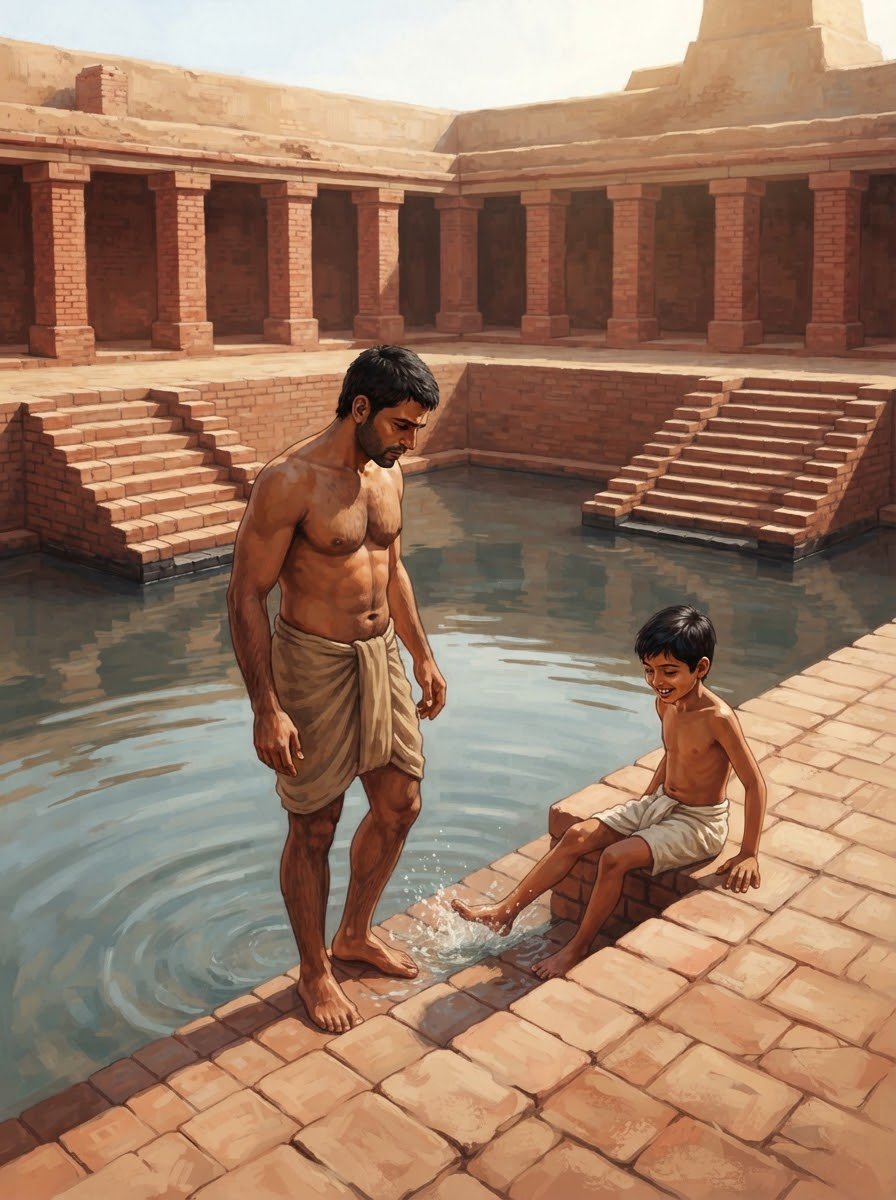
At Mohenjo-daro’s center sat the Great Bath, a stunning feat of Bronze Age hydraulic engineering. Built with watertight brick masonry sealed by natural bitumen, this impressive basin featured broad entry steps and pillared side corridors. Archaeologists believe this sacred pool was used for communal ritual washings and spiritual gatherings rather than simple public bathing.
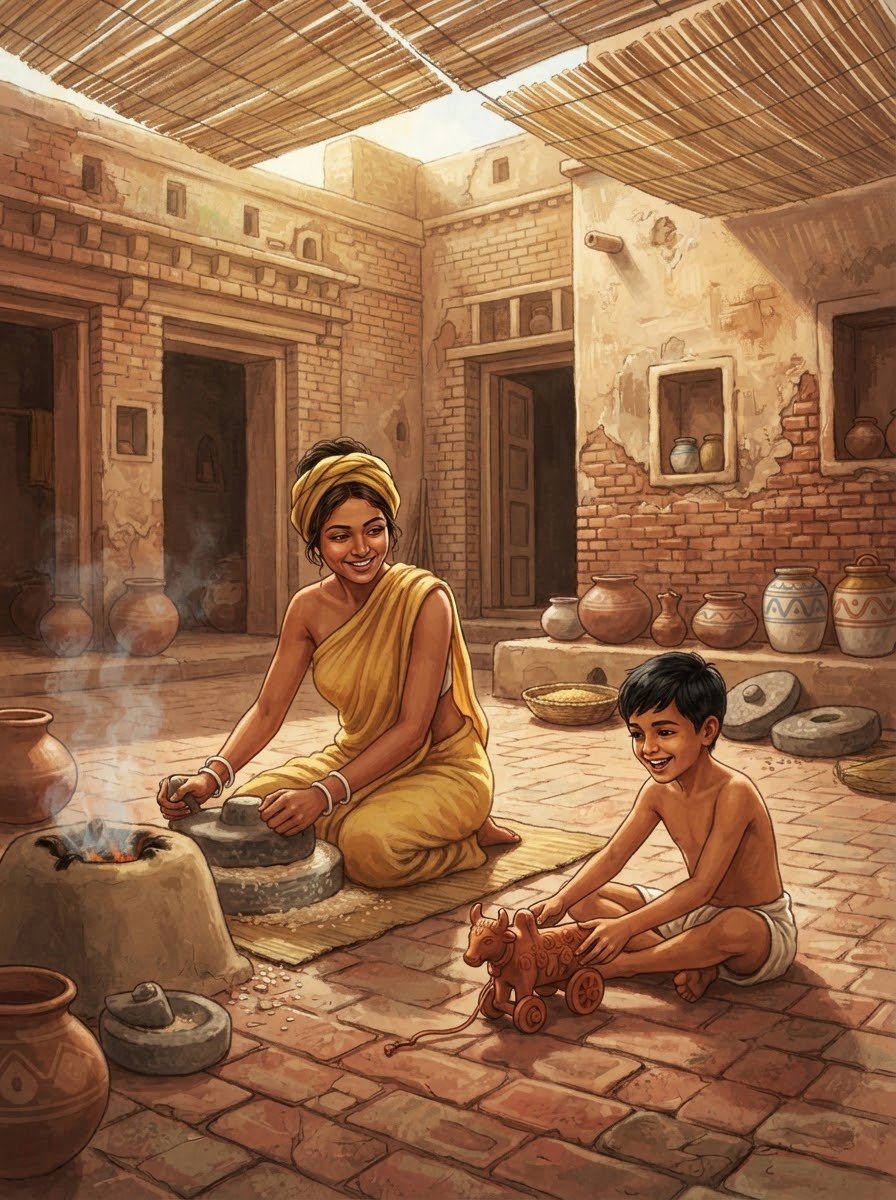
Daily life in an Indus home revolved around domestic warmth and craftwork. In shaded courtyards, family members ground cultivated wheat and barley, baked flatbreads, and spun fine cotton thread. Nearby, children played with terracotta whistles and small pull-along clay carts. Neighborhood wells provided clean water, nurturing vibrant communities built upon daily cooperation and quiet industry.
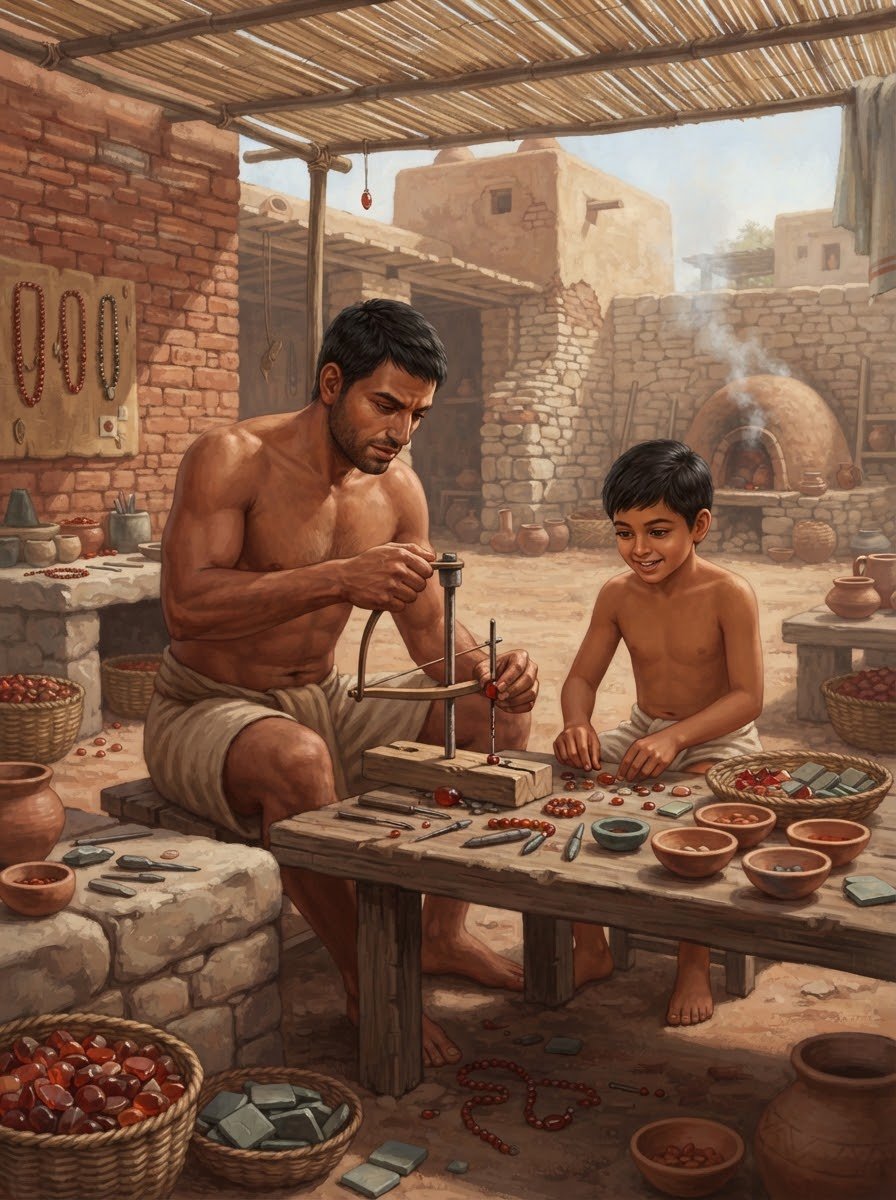
Indus craftspeople possessed remarkable skill in metallurgy, stone carving, and ceramic arts. Master artisans shaped wheel-turned pottery painted with elegant motifs, drilled delicate red carnelian beads, and cast detailed bronze objects. They also carved soft steatite stone into square seals featuring intricate animal reliefs, demonstrating an artistic tradition renowned throughout the ancient world.
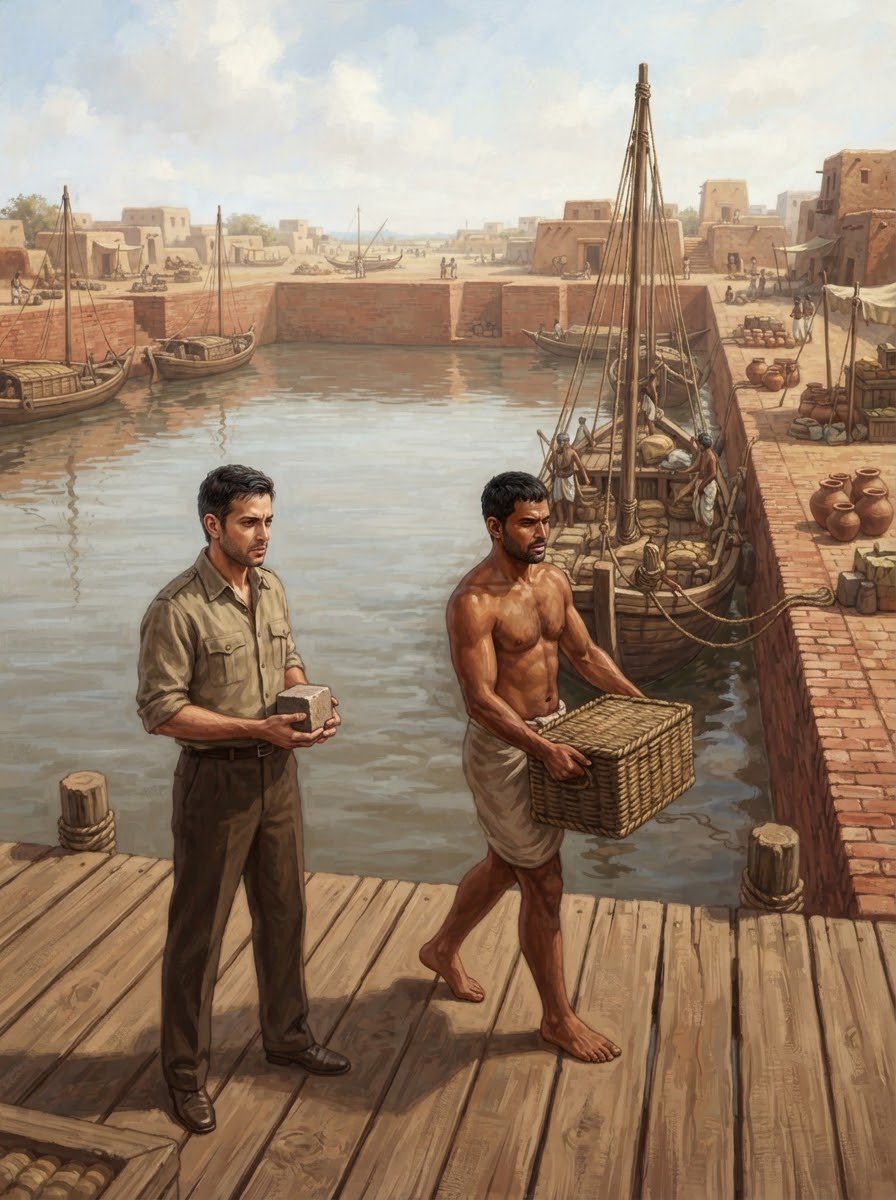
Commerce flourished across land and sea. Bullock carts moved grain and timber across countryside roads, while wooden riverboats carried goods along the Indus waterway. Indus merchants established long-distance maritime trade routes reaching ancient Mesopotamia. To maintain fair commerce, traders used standardized cubical stone weights made of chert, ensuring precise measurements for every transaction.
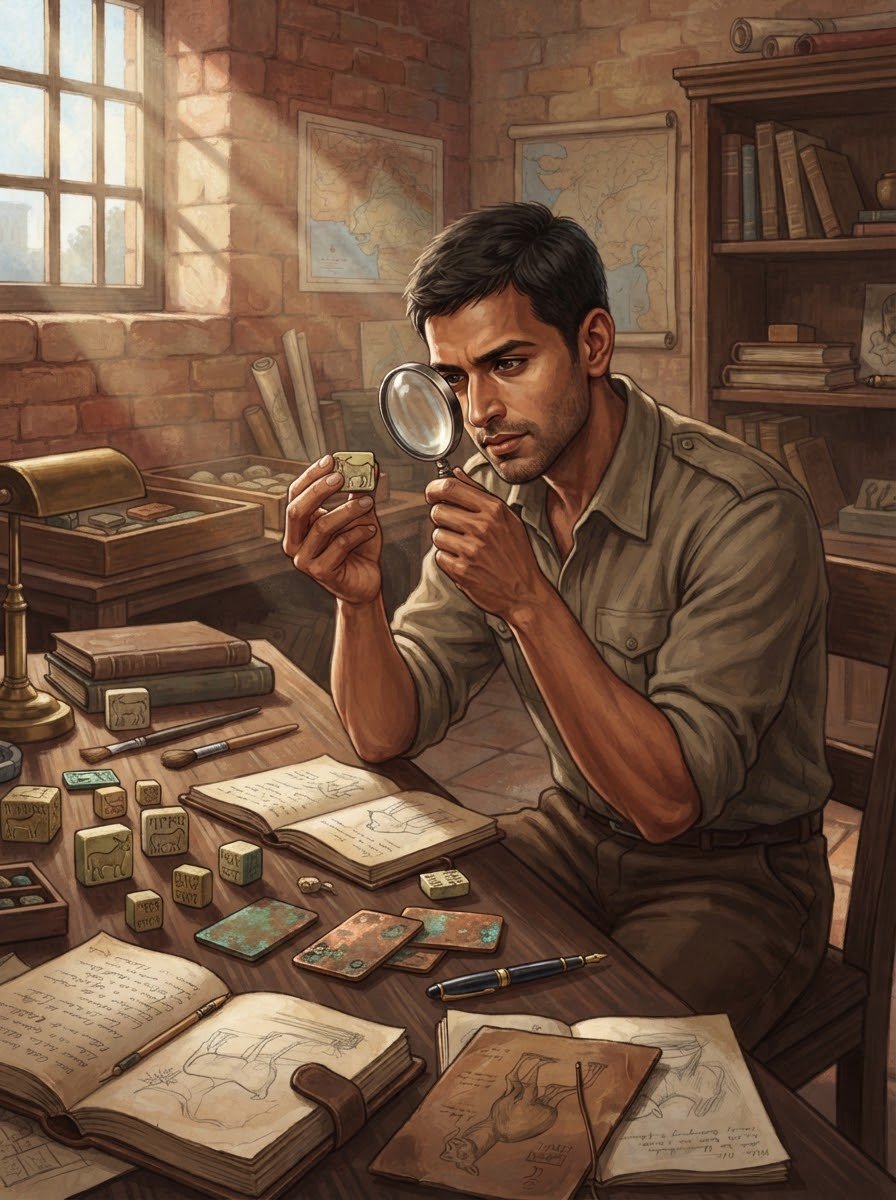
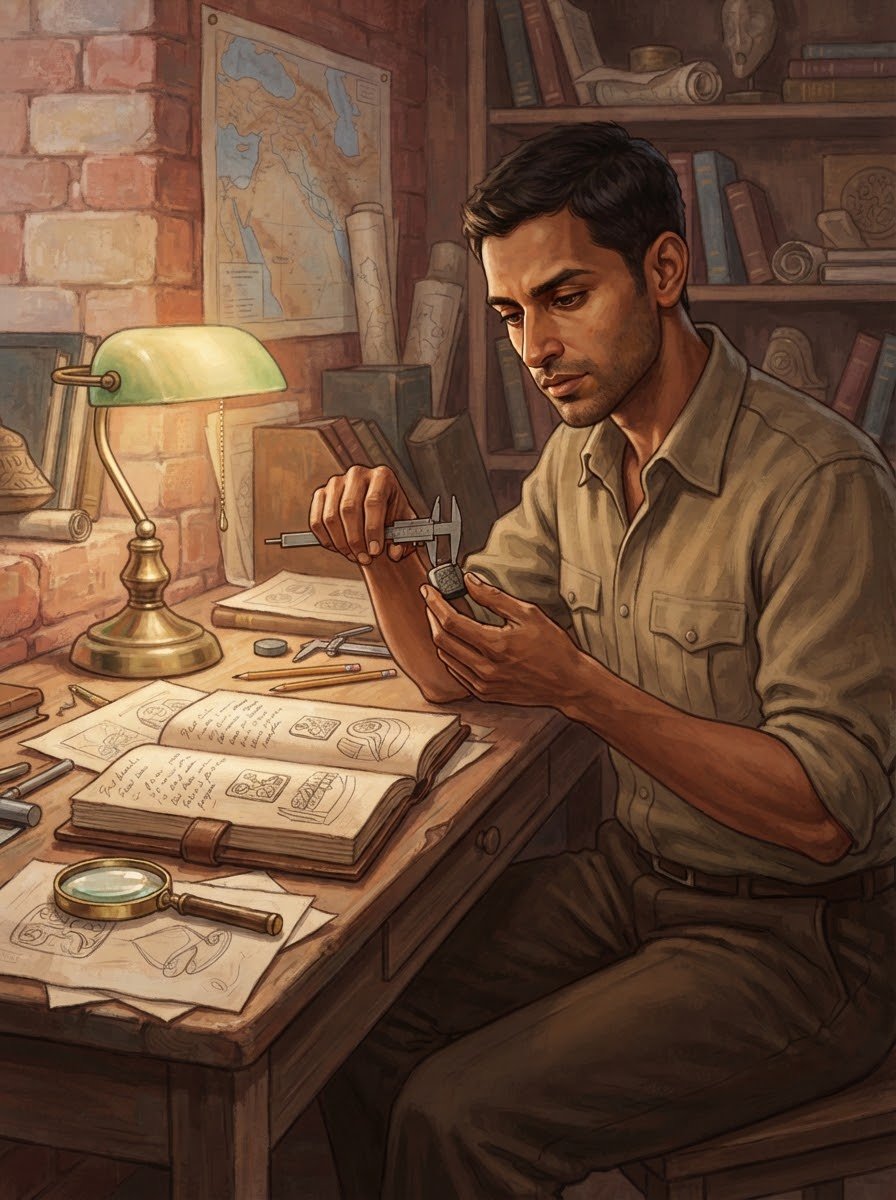
Among the most intriguing puzzles of history is the Indus script. Discovered on steatite seals, copper tablets, and pottery, the writing consists of over four hundred distinct symbols paired with carved animals. Because no bilingual translation key exists, the script remains undeciphered, leaving scholars to debate whether it represents language, merchant symbols, or family names.
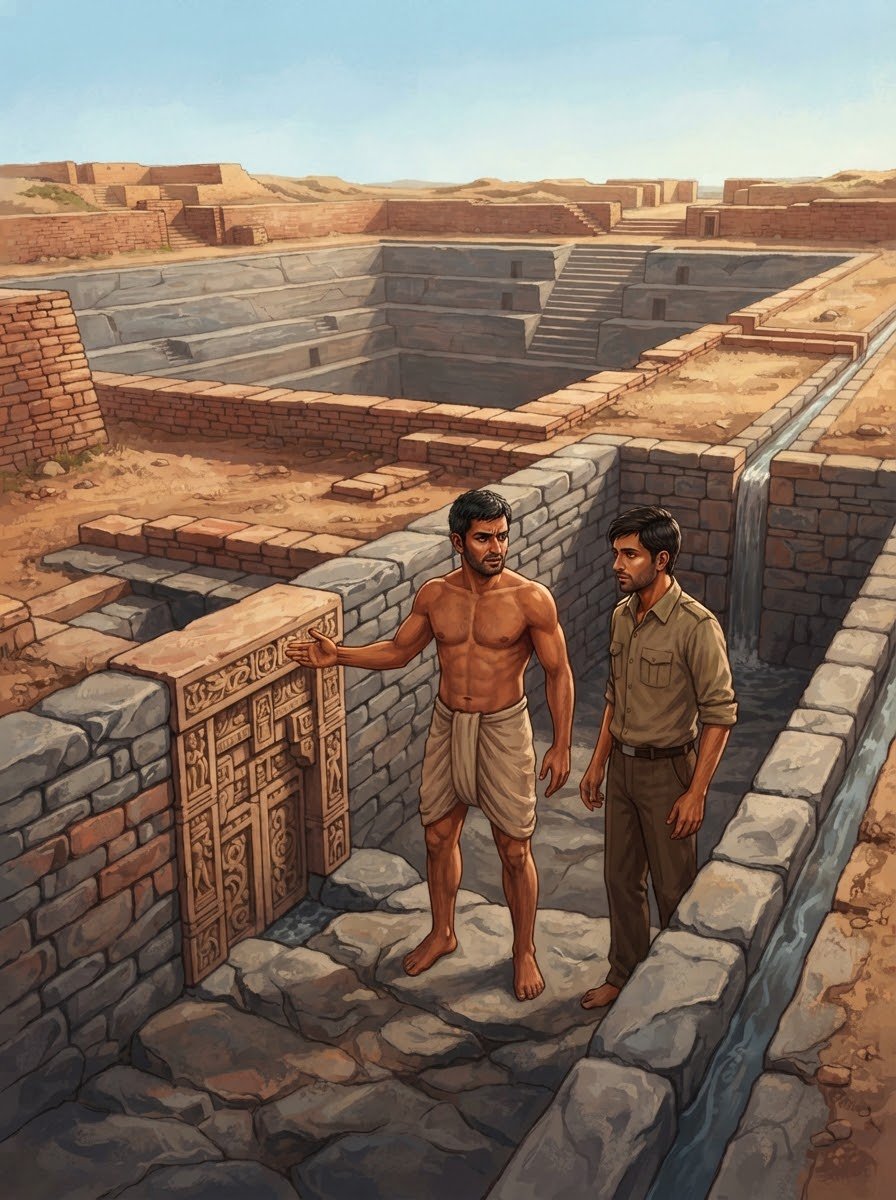
Indus engineers excelled at environmental adaptation and urban hydraulic planning. In dry regions like Dholavira, skilled builders constructed massive stone-cut reservoirs directly into bedrock to harvest monsoon rainwater. Connected by stone sluice gates and settling basins, these sophisticated water management systems protected citizens against seasonal droughts and supplied clean water across sprawling urban sectors.
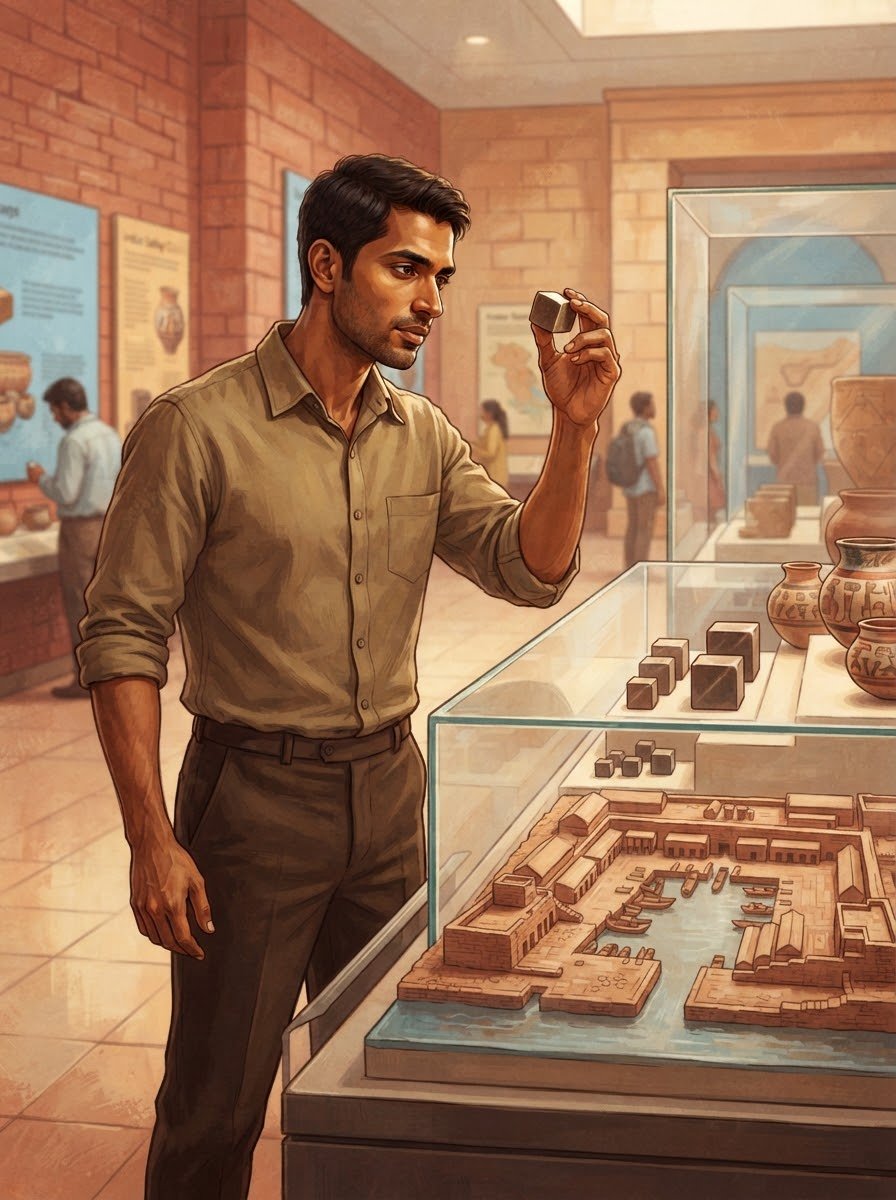
Rather than a single empire, the Indus world was a network of unique regional hubs. Harappa excelled in granaries and craft manufacturing, while Mohenjo-daro led in civic architecture. Dholavira showcased stone water reservoirs, Lothal built a massive brick tidal dockyard for sea trade, and Kalibangan revealed early plowed fields, highlighting rich cultural diversity.
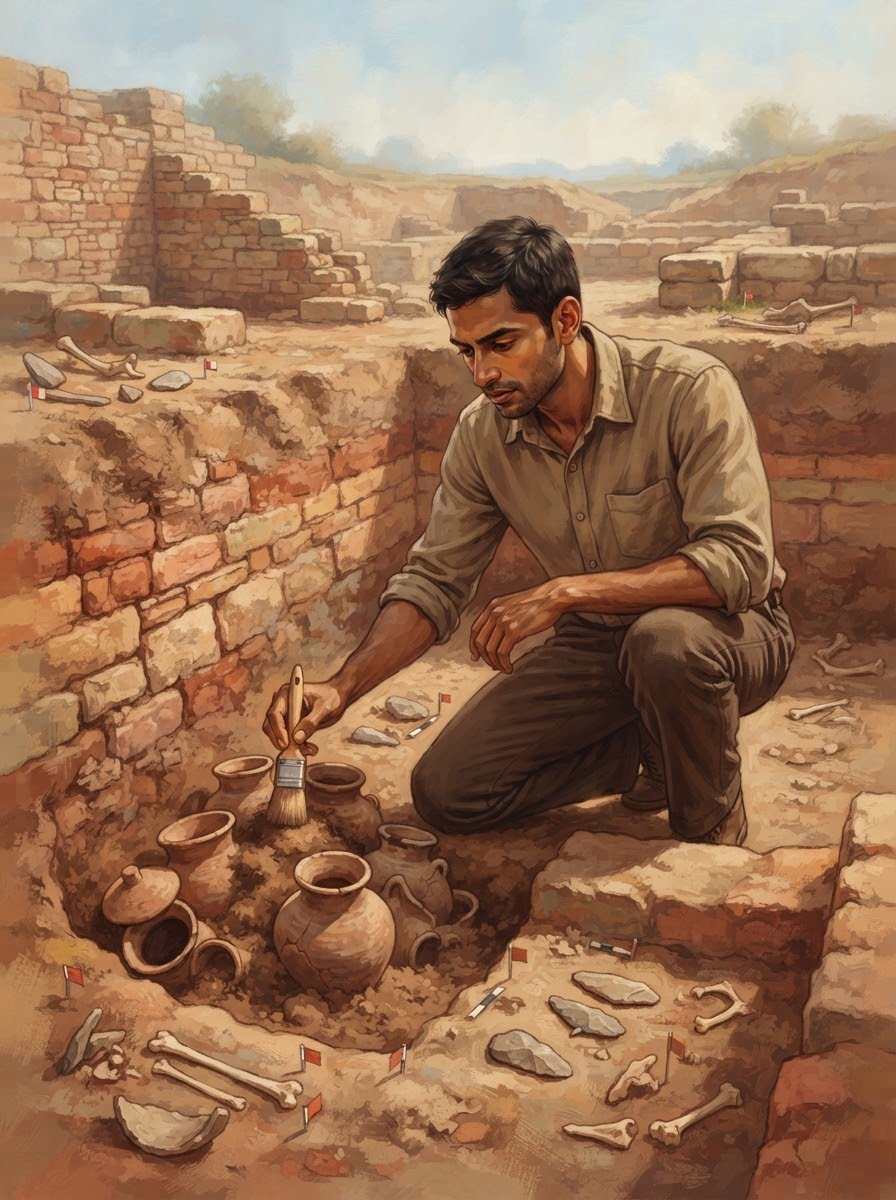
Behind the impressive brick walls lived skilled farmers, artisans, builders, and traders. Unlike ancient Egypt or Mesopotamia, excavations have revealed no grand royal palaces, massive monuments, or violent war depictions. Simple burial goods suggest a remarkably egalitarian society, organized around community cooperation, civic administration, and shared urban responsibilities rather than absolute monarchs.
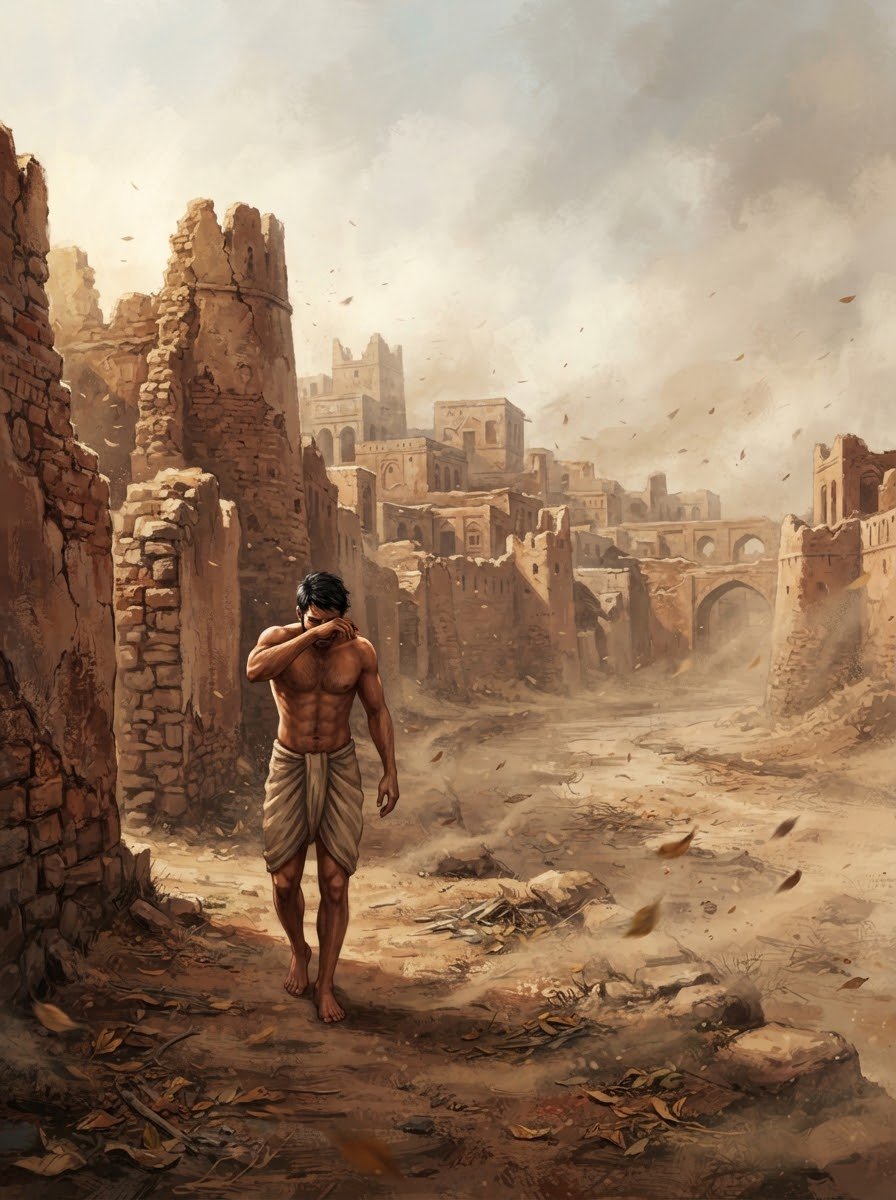
Around 1900 BCE, major Indus cities began a gradual transformation. Shifting monsoon patterns caused crucial rivers like the Ghaggar-Hakra to dry, while the Indus River altered its course. Rather than a sudden military invasion, climate shifts and changing trade routes prompted populations to migrate southeastward, adapting peacefully from urban centers to rural agricultural life.

Separating archaeological facts from popular myths reveals the true genius of the Indus people. Evidence proves their decline was a slow adaptation to environmental changes, not sudden destruction by invaders. Furthermore, no powerful kings or grand temples ruled these cities; instead, advanced civic organization and enduring cultural traditions continued to shape South Asian heritage.
INDUS VALLEY CIVILIZATION FACT FILE
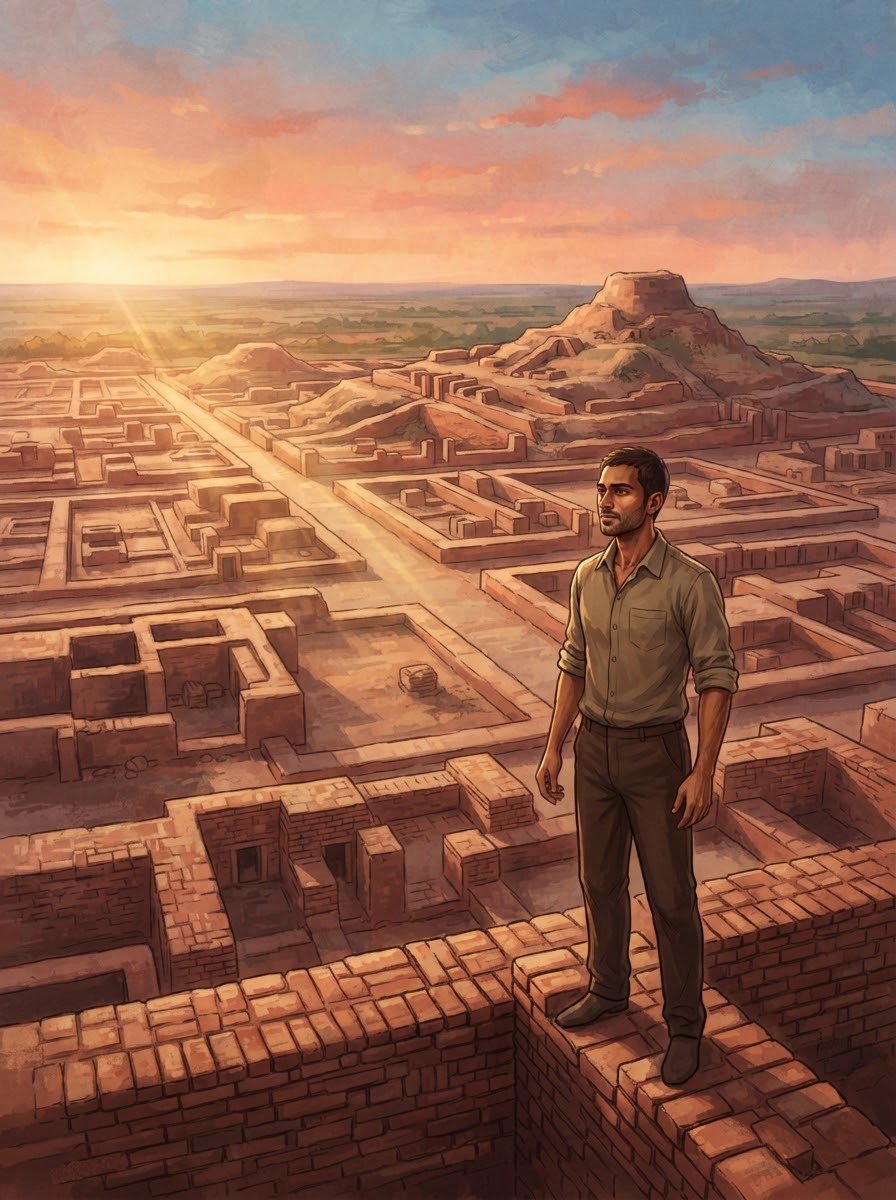
The legacy of the Indus Valley Civilization lives on as a shining beacon of human ingenuity and peaceful civic planning. Without building colossal monuments or waging grand wars, the Indus people created a harmonious, organized society. As modern discoveries continue, these ancient brick ruins offer timeless clues to humanity's shared story and innovative past.