
The Secret Life of Honeybees
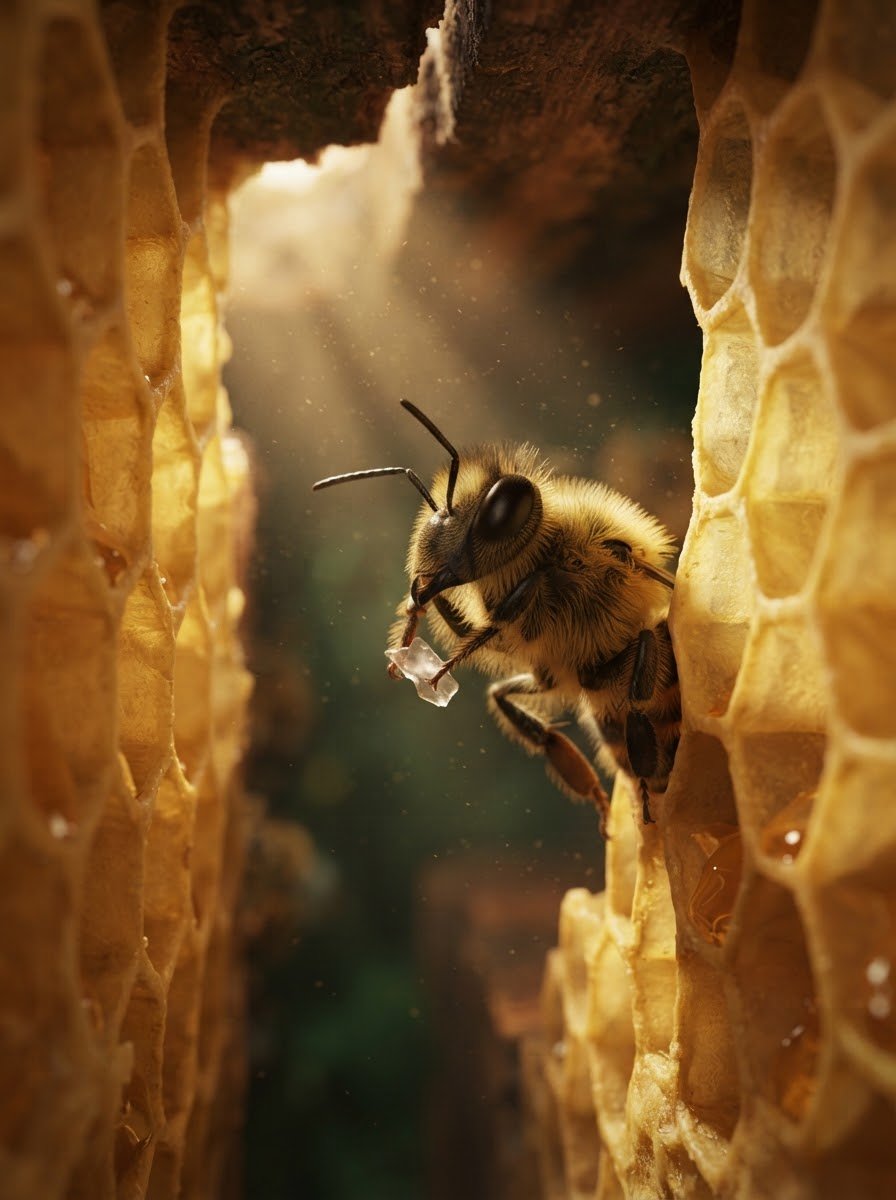
Story Overview & Species Guide Within the hollow of an ancient oak lies a hidden metropolis, home to fifty thousand European honeybees (Apis mellifera). This is a society of absolute cooperation, where no individual is a leader, yet every task is executed with mathematical precision. Chapter 1: The Golden Cathedral. Mellis, a young worker bee, clings to the vertical face of a wax comb. These hexagonal cells are engineering marvels, using the least amount of wax to provide the greatest storage strength for honey and larvae. To maintain this architecture, the colony acts as a single living organism, regulating its internal temperature to a constant 35°C (95°F) through collective shivering or fanning.
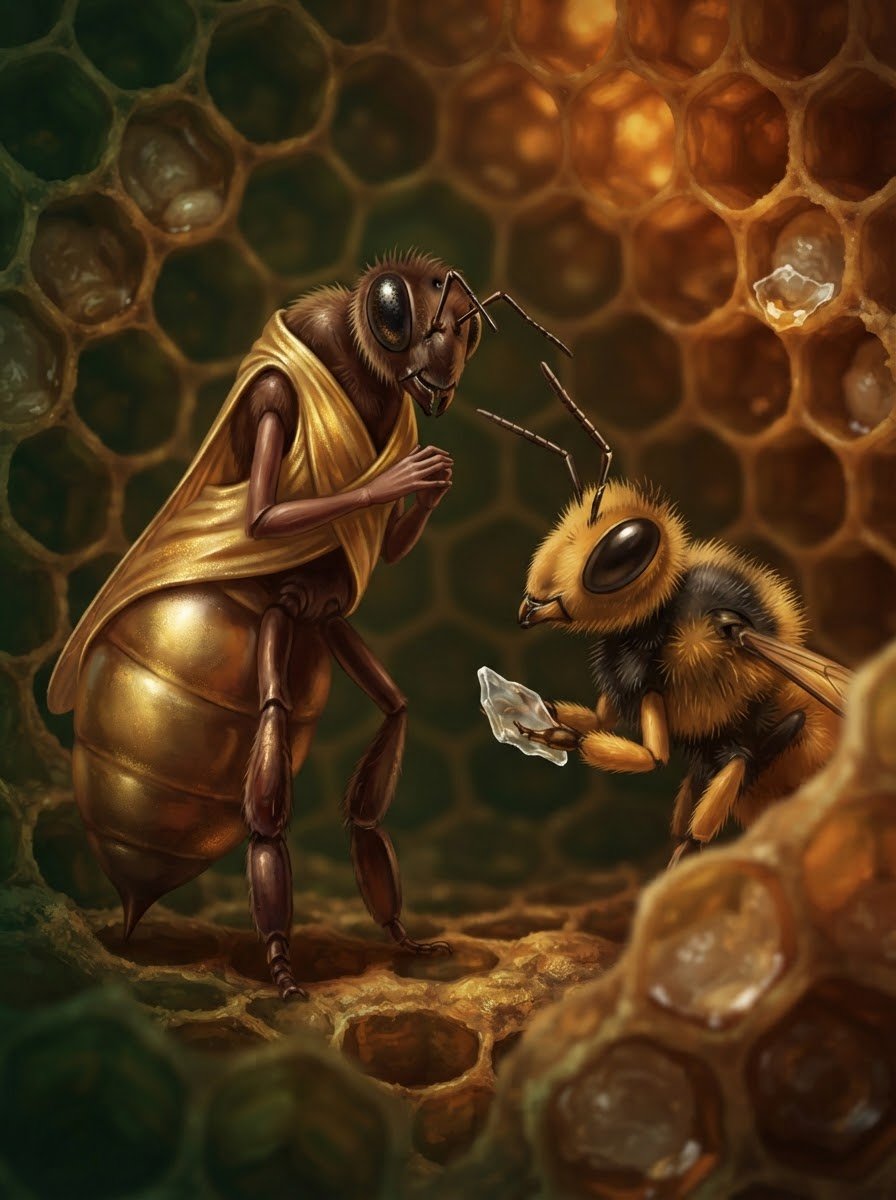
Chapter 2: The Living Heart & Chapter 3: Chemical Whispers. At the center of the hive dwells Cybele. She is the Queen, but she is not a monarch issuing decrees. She is the reproductive heart and the chemical anchor of the colony. Mellis and her sisters surround Cybele in a "court," grooming her and touching her with their antennae. As they do, they pick up her Queen Mandibular Pheromone (QMP). This chemical signal flows through the hive like a silent language, informing every bee that their mother is healthy and the colony is whole. This decentralized communication ensures that even without a "boss," every bee knows her place in the cycle of life.
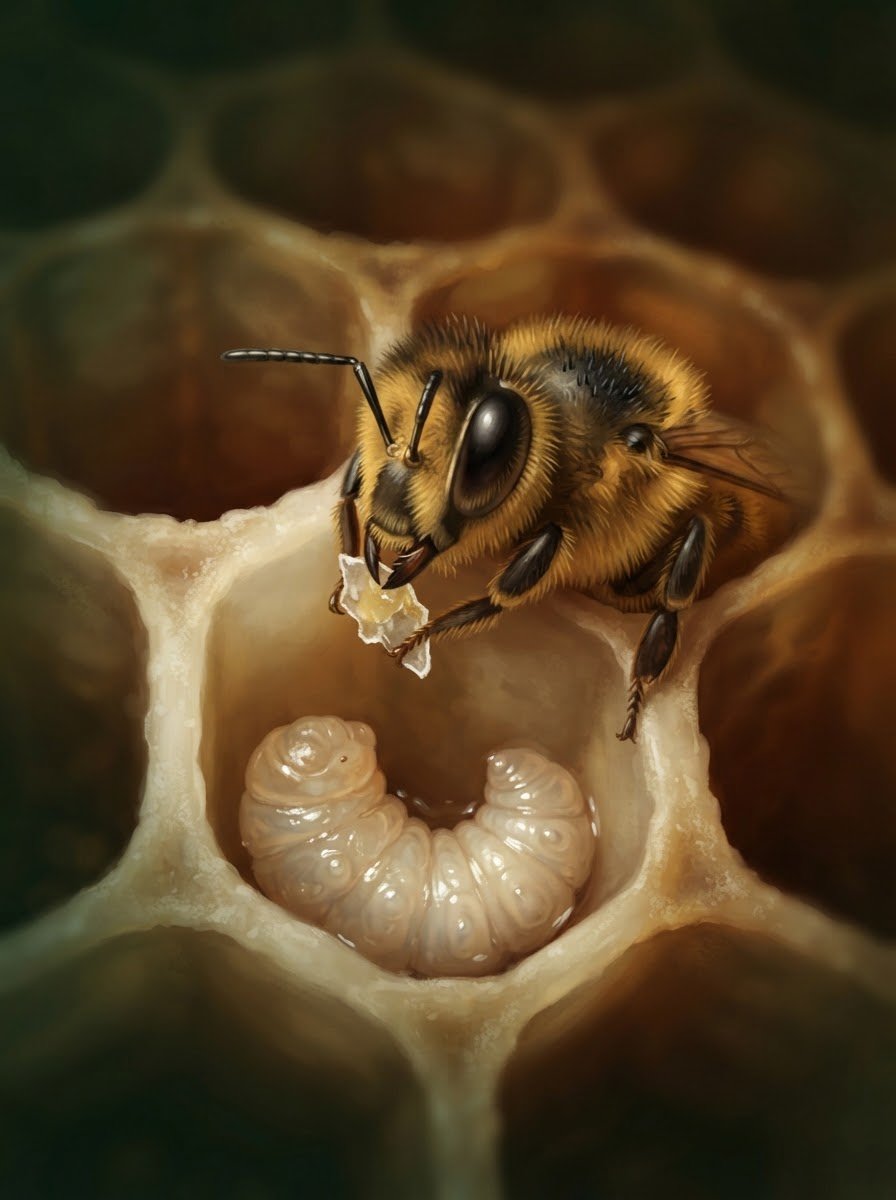
Chapter 4: The Cycle of Life & Chapter 5: The Nursery. The future of the hive begins as a tiny, rice-like egg laid by Cybele. Mellis has now graduated to the role of a nurse. She leans into a brood cell where a larva—a small, white, C-shaped creature—awaits. If this larva is destined to be a worker, Mellis feeds it "bee bread," a mixture of pollen and honey. However, if the colony needs a new queen, the nurses provide a steady diet of "royal jelly," a nutrient-rich secretion that triggers a royal transformation. Within these cells, the larvae will spin silken cocoons and pupate, their bodies melting and reforming into the complex machinery of an adult bee.
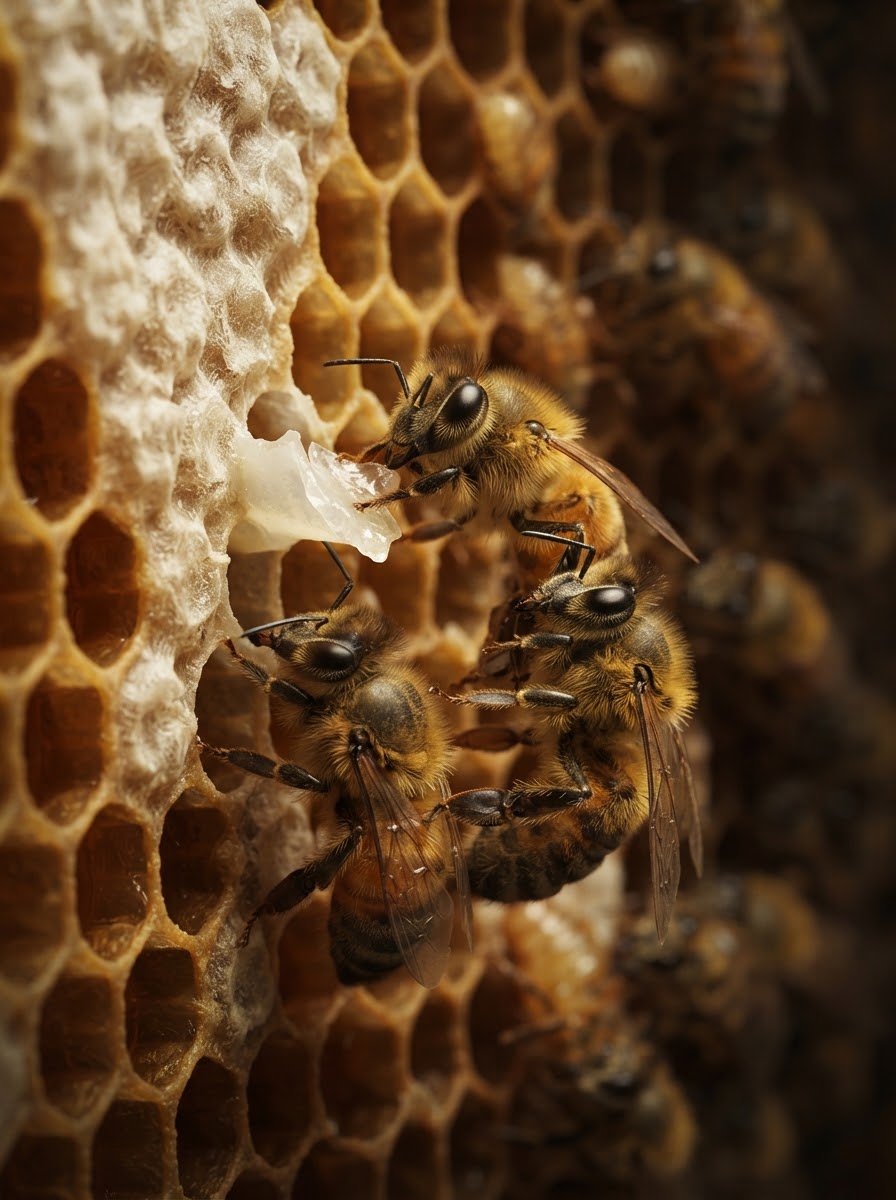
Chapter 6: The Builders & Chapter 7: The Breath of the Hive. As Mellis grows older, her wax-producing glands activate. She joins Astra, an experienced builder, on the edge of a new comb. They hang in "festoons," living chains of bees that measure the space with their bodies. Mellis flakes tiny scales of clear wax from her abdomen, chews them until they are pliable, and adds them to the structure. Nearby, other workers act as a biological air conditioning system. By anchoring themselves to the entrance and beating their wings in unison, they create a powerful draft that pulls fresh air through the labyrinth, whisking away carbon dioxide and excess moisture.
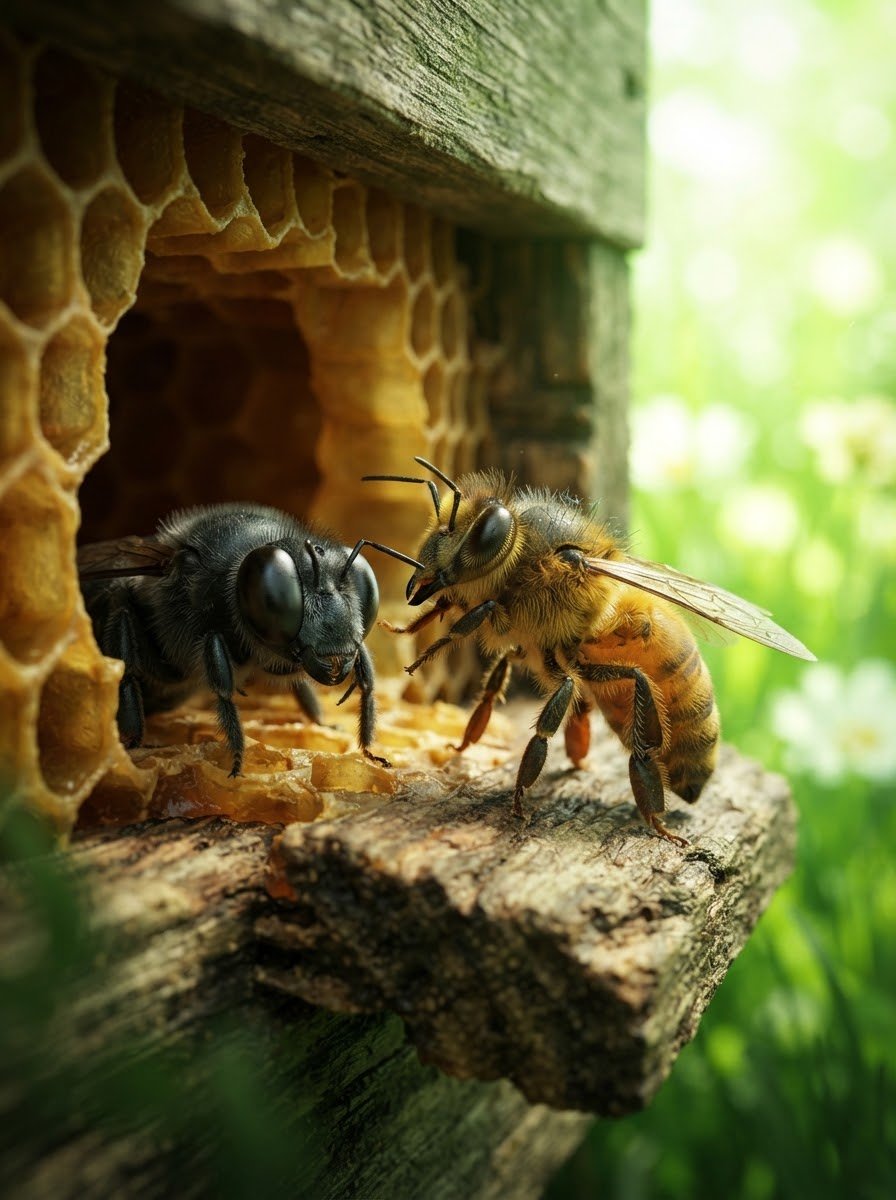
Chapter 8: The Drones of Summer. In the height of the season, a different kind of bee appears: the Drone. Zephyr is a male bee, larger and more robust than the workers, with massive compound eyes that meet at the top of his head. Zephyr does not forage, clean, or sting. His sole purpose is to fly to "Drone Congregation Areas" in hopes of mating with a virgin queen from another colony. Astra nudges Zephyr toward the exit, ensuring he is fed and ready for his flight. Drones represent the colony's genetic contribution to the wider world, though their stay is temporary; when autumn chills the air, the workers will no longer support them.
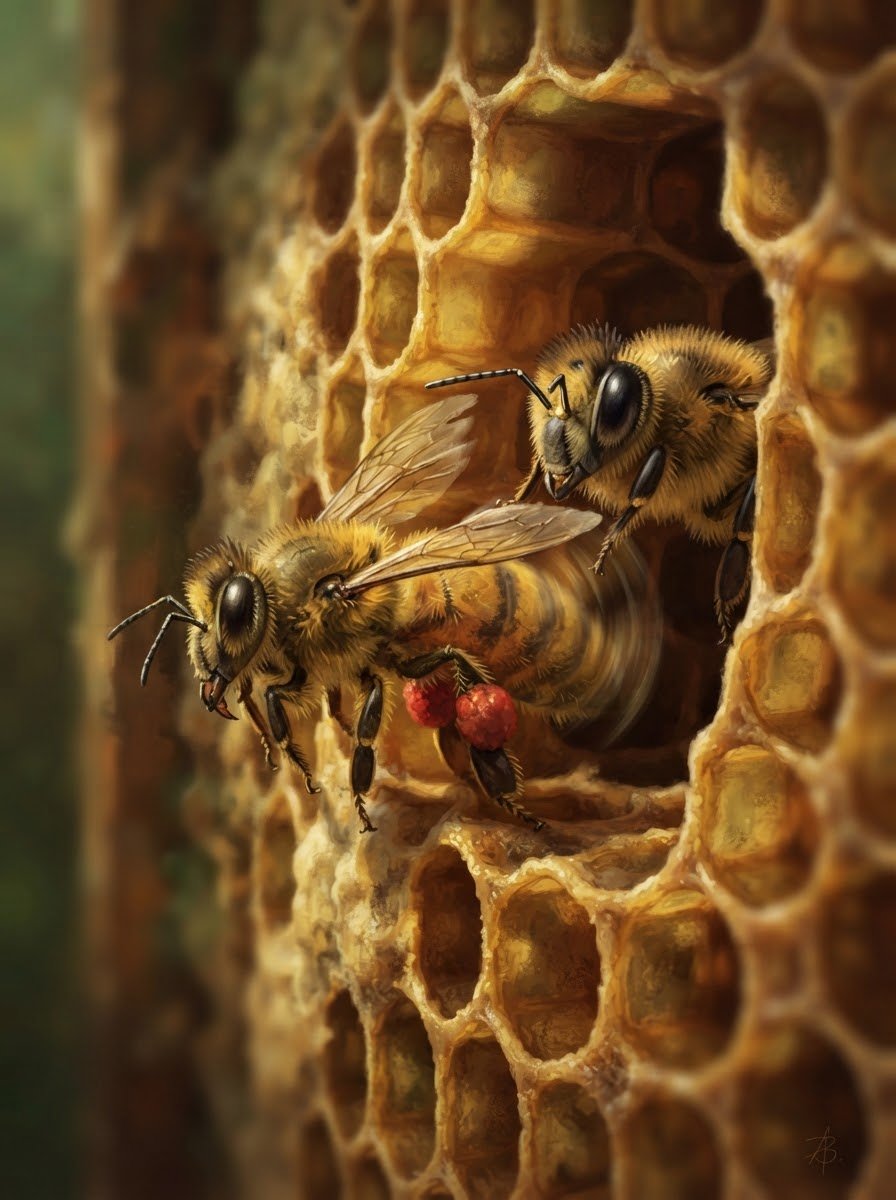
Chapter 9: The Waggle Dance. Astra returns to the hive, her body dusted with crimson pollen. To tell Mellis and the others where to find a rich patch of clover, she performs the "Waggle Dance." She runs in a figure-eight pattern, vibrating her abdomen during the central "straight run." The angle of her run relative to vertical tells the bees the direction of the flowers relative to the sun, while the duration of the waggle tells them the distance. Mellis follows Astra closely, her antennae picking up the scent of the clover and the vibrations of the comb, translating the code into a mental map of the landscape.
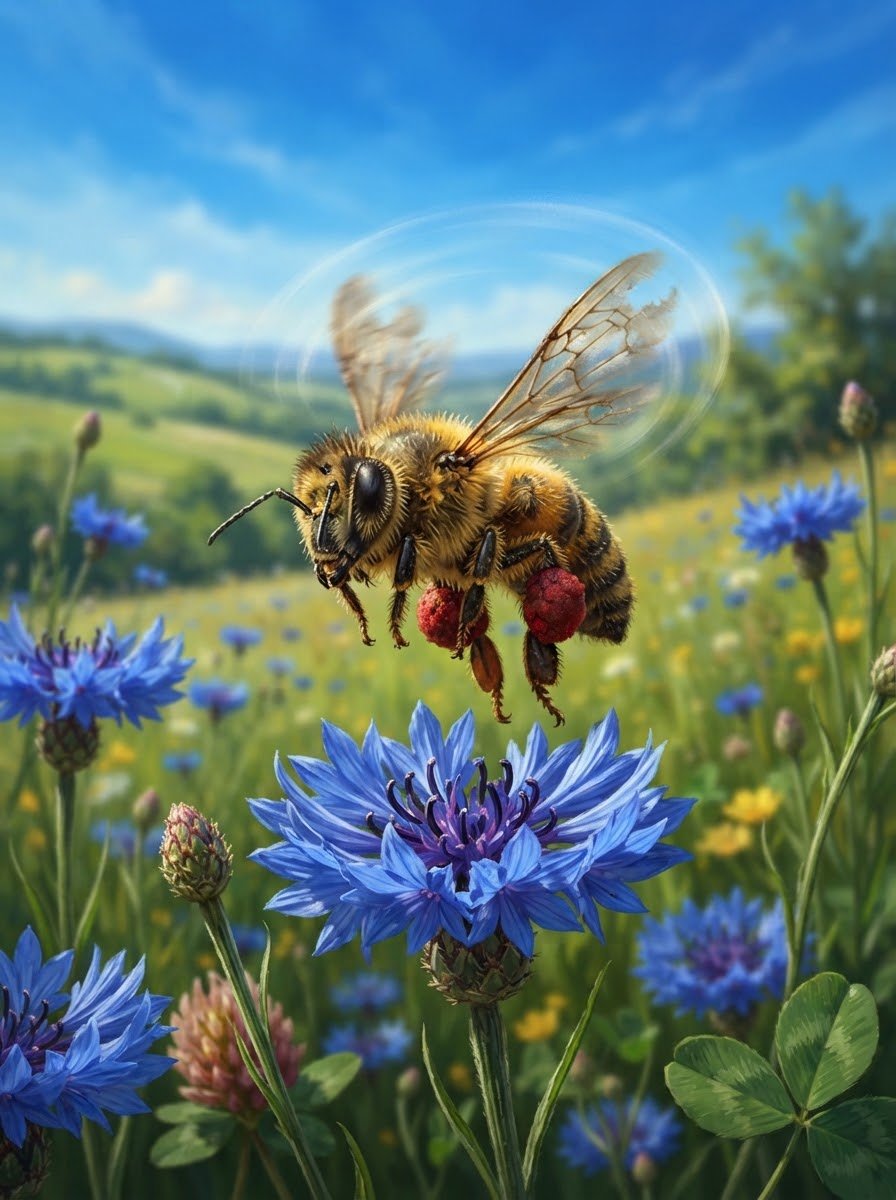
Chapter 10: The Great Harvest & Chapter 11: Ecological Architects. Now a seasoned forager, Astra soars into the meadow. She lands on a vibrant blue cornflower, her long tongue reaching deep for nectar. As she drinks, thousands of pollen grains stick to her fuzzy body. When she flies to the next blossom, she inadvertently transfers this pollen, enabling the plants to reproduce. This is the honeybee's greatest gift to the planet: pollination. One-third of the food humans eat depends on this accidental service. Astra fills her "honey stomach" and her pollen baskets, becoming a bridge between the botanical world and the survival of her sisters.
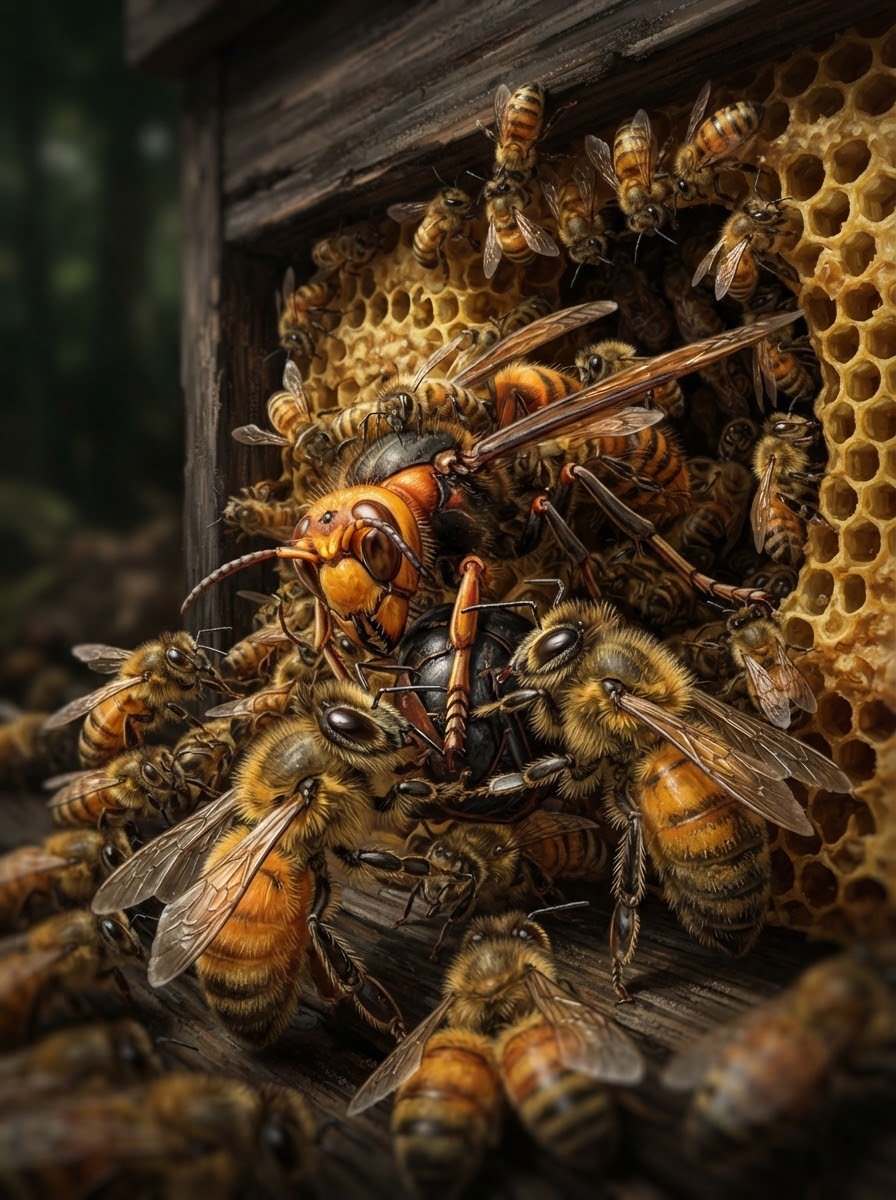
Chapter 12: The Fortress Defended. The peace is shattered when a Giant Hornet scouts the entrance. It is a titan compared to the bees, intent on raiding the hive for protein. Astra and Mellis do not flee; they signal a "shimmering" alarm. Dozens of bees rush the intruder. Because their stings cannot pierce the hornet's armor, they use a different tactic: "heat-balling." They swarm the hornet, forming a dense sphere and vibrating their flight muscles. This raises the temperature inside the ball to a level the bees can survive, but the hornet cannot. Through collective sacrifice and heat, the predator is neutralized.
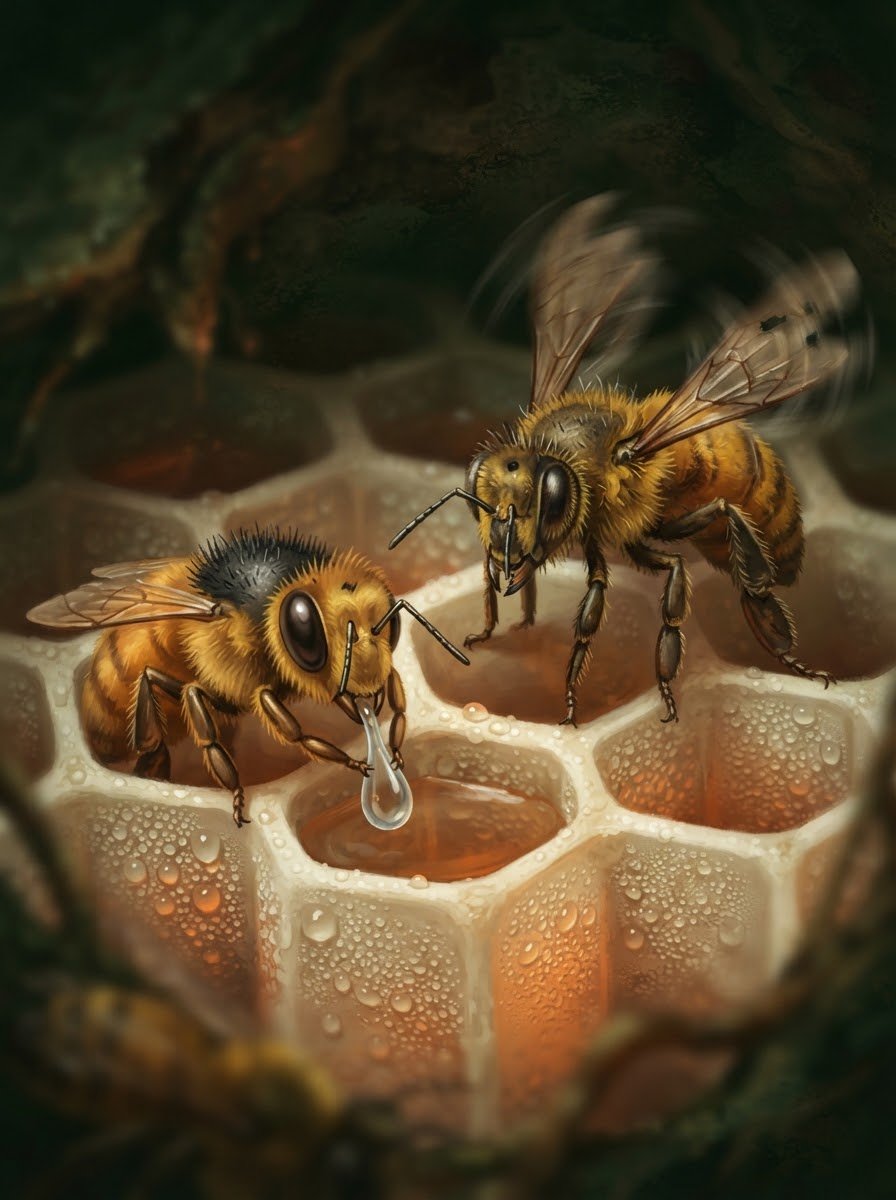
Chapter 13: The Heatwave & Chapter 14: Survival through Dearth. In late summer, a brutal heatwave strikes, and the flowers wither—a nectar dearth. The hive risks melting and the brood risks starving. Mellis and Astra work in shifts. Mellis flies to a nearby stream, bringing back droplets of water in her stomach. Back at the hive, she spreads the water over the cells while Astra fans her wings at the entrance. This evaporative cooling lowers the temperature, saving the larvae. They share their remaining honey stores through trophallaxis, passing food from mouth to mouth, ensuring that even in times of scarcity, no bee hungers while another has plenty.
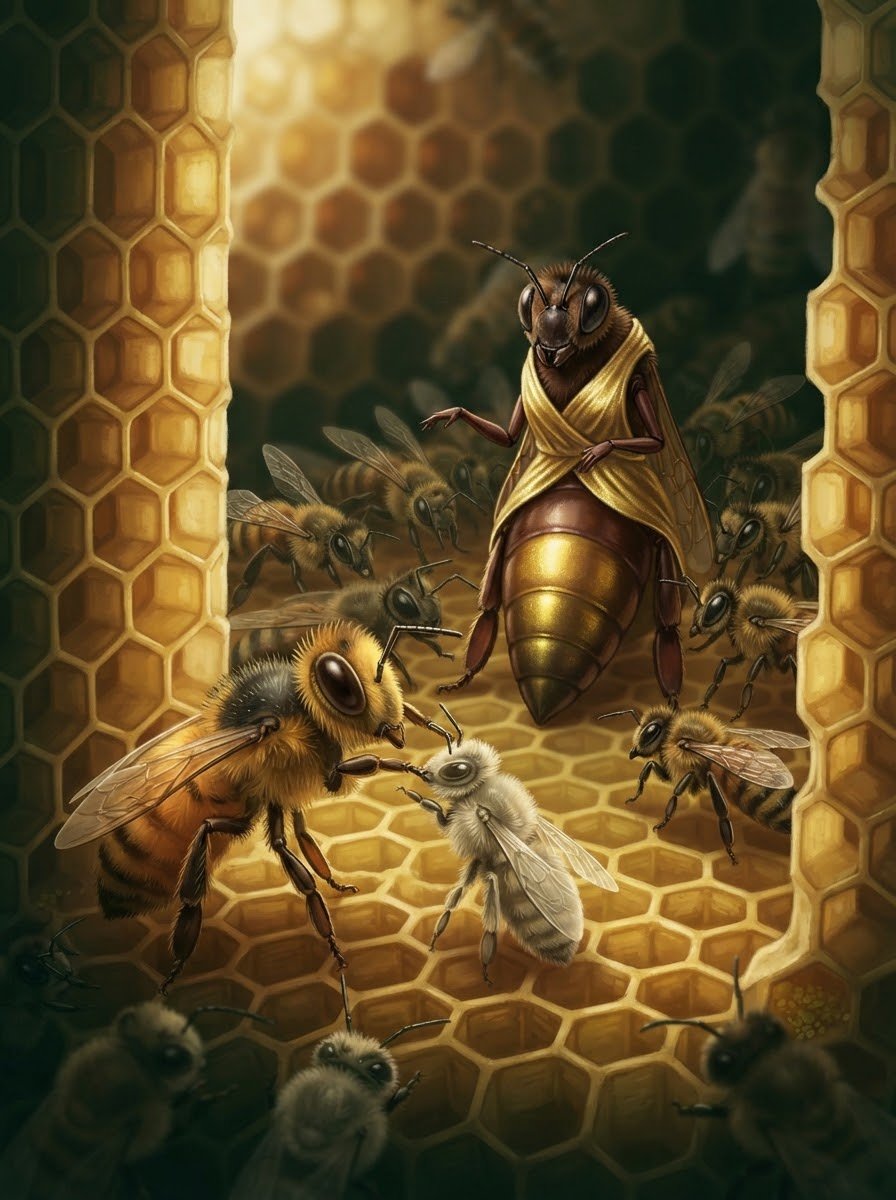
Chapter 15: The Strength of the Many. As the sun sets, the hive settles into a rhythmic hum. Cybele continues to lay eggs, the invisible thread connecting the generations. Mellis, now an elder, grooms a newly emerged worker. The colony has survived heat, predators, and hunger, not through the orders of a leader, but through the instinctual, decentralized cooperation of thousands. They are a superorganism, a masterpiece of nature where the strength of the many outweighs the power of the one.