
GIANT OF THE FROZEN WORLD: WOOLLY MAMMOTH
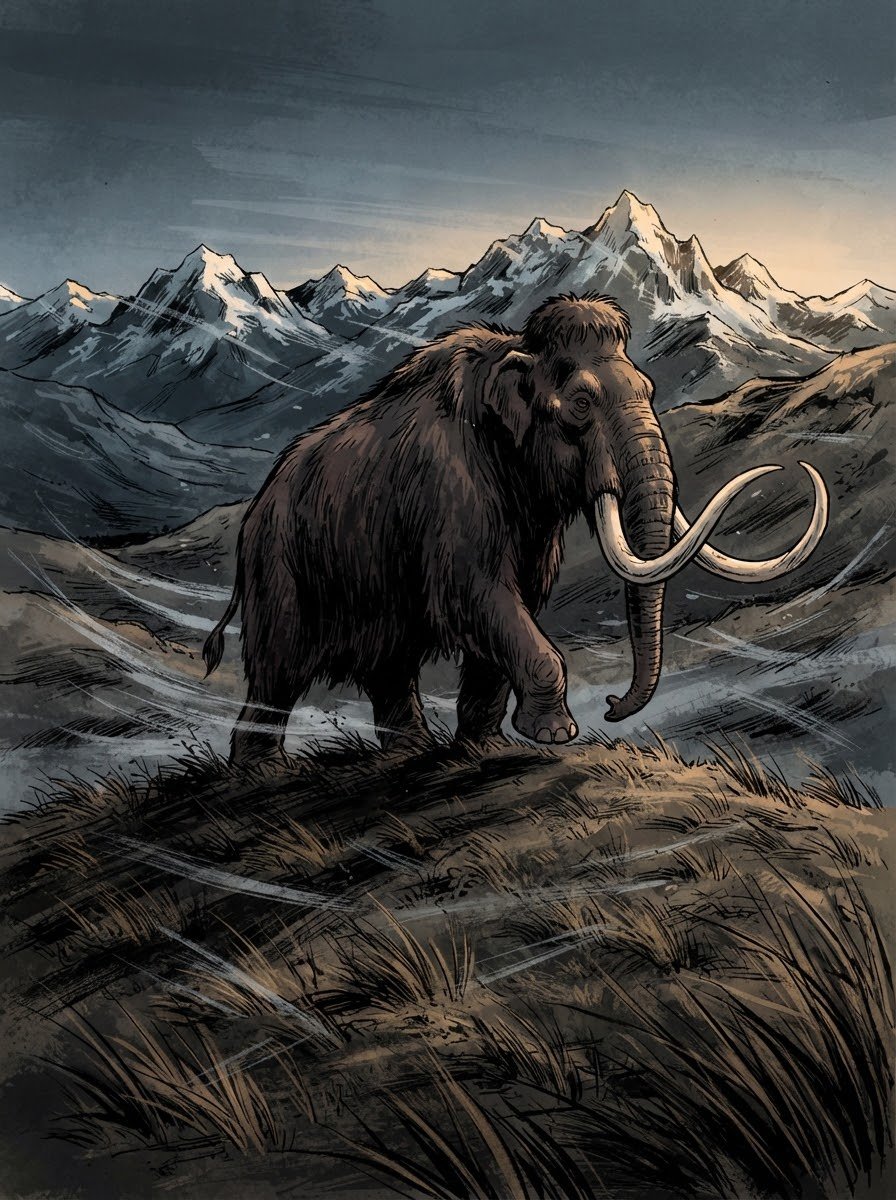
Giant of the Frozen World During the Pleistocene Epoch, vast icy winds swept across the northern hemisphere, giving rise to a legendary titan of the ice age: Mammuthus primigenius, the woolly mammoth. Journey back over twenty thousand years into a lost biome where giant herds ruled an expanse stretching across Europe, Asia, and North America.
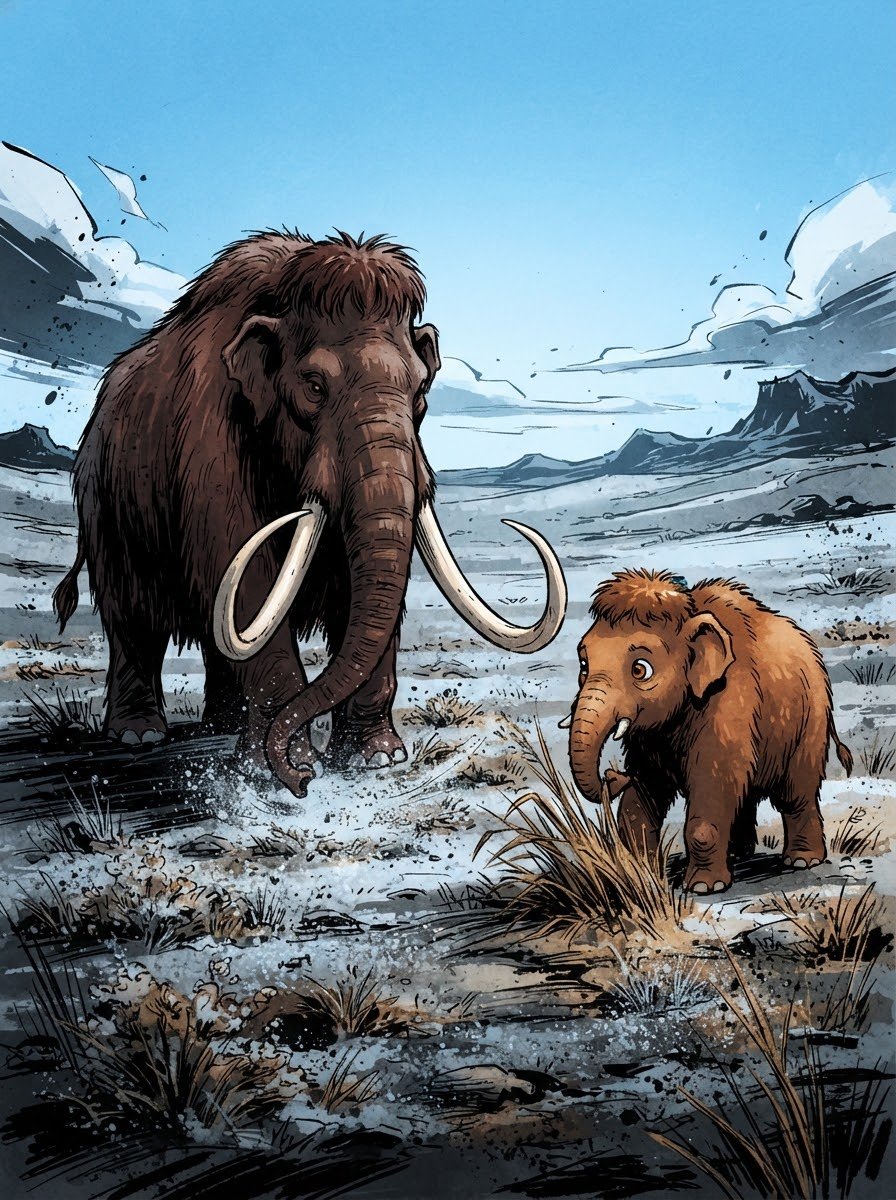
A World of Cold and Grass Contrary to popular belief, the mammoth did not roam endless deserts of thick blue ice. Instead, it thrived across the Mammoth Steppe—a vast, dry hyper-biome dominated by rich herbs, sagebrush, and nutrient-dense grasses. Fueled by dry sunshine and low humidity, this cold grassland stretched continuously from Western Europe across Eurasia, crossing the Bering Land Bridge into Alaska and Canada.
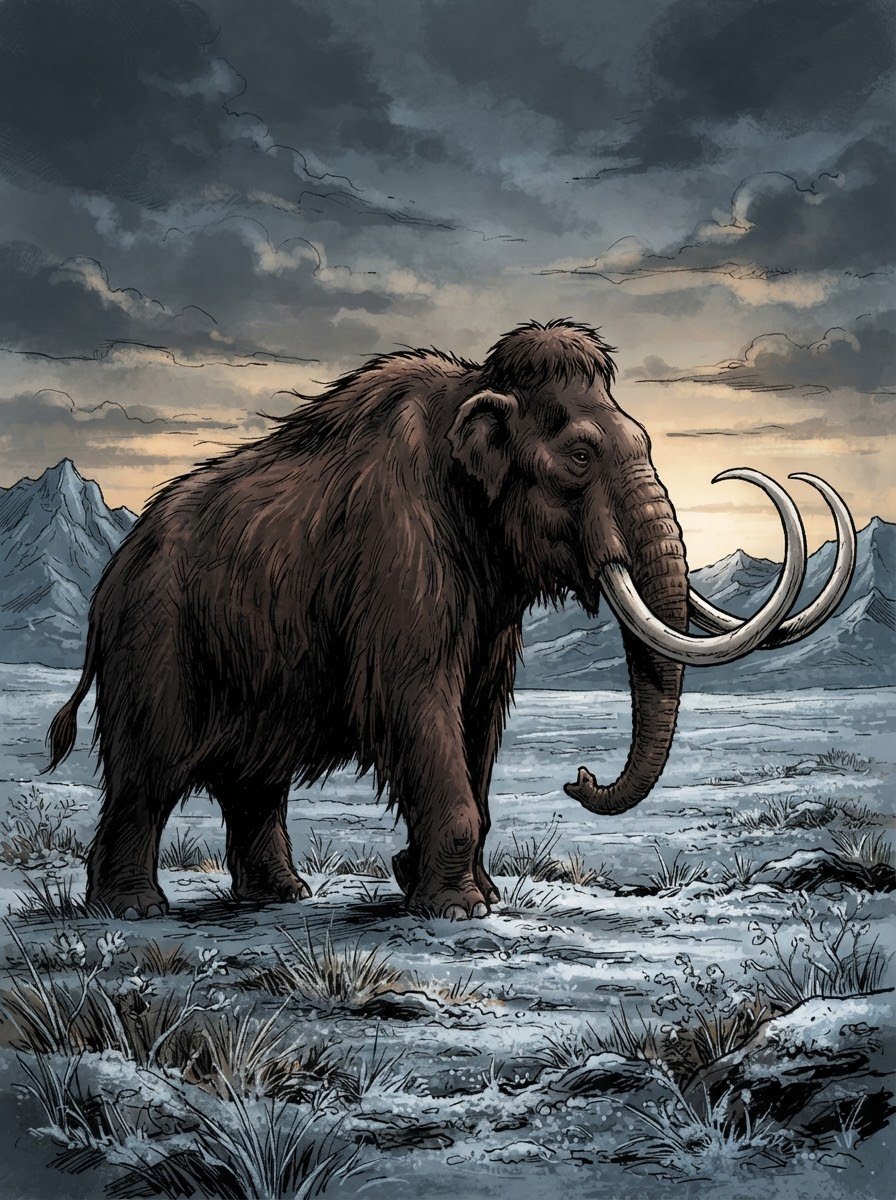
Meet the Woolly Mammoth Standing up to eleven feet tall at the shoulder and weighing over six metric tons, an adult woolly mammoth was a masterwork of natural adaptation. Elora, a matriarch leading her family group, moves across the plains with measured, rhythmic power. Every feature of her body evolved to endure winter temperatures dropping below minus fifty degrees Celsius.
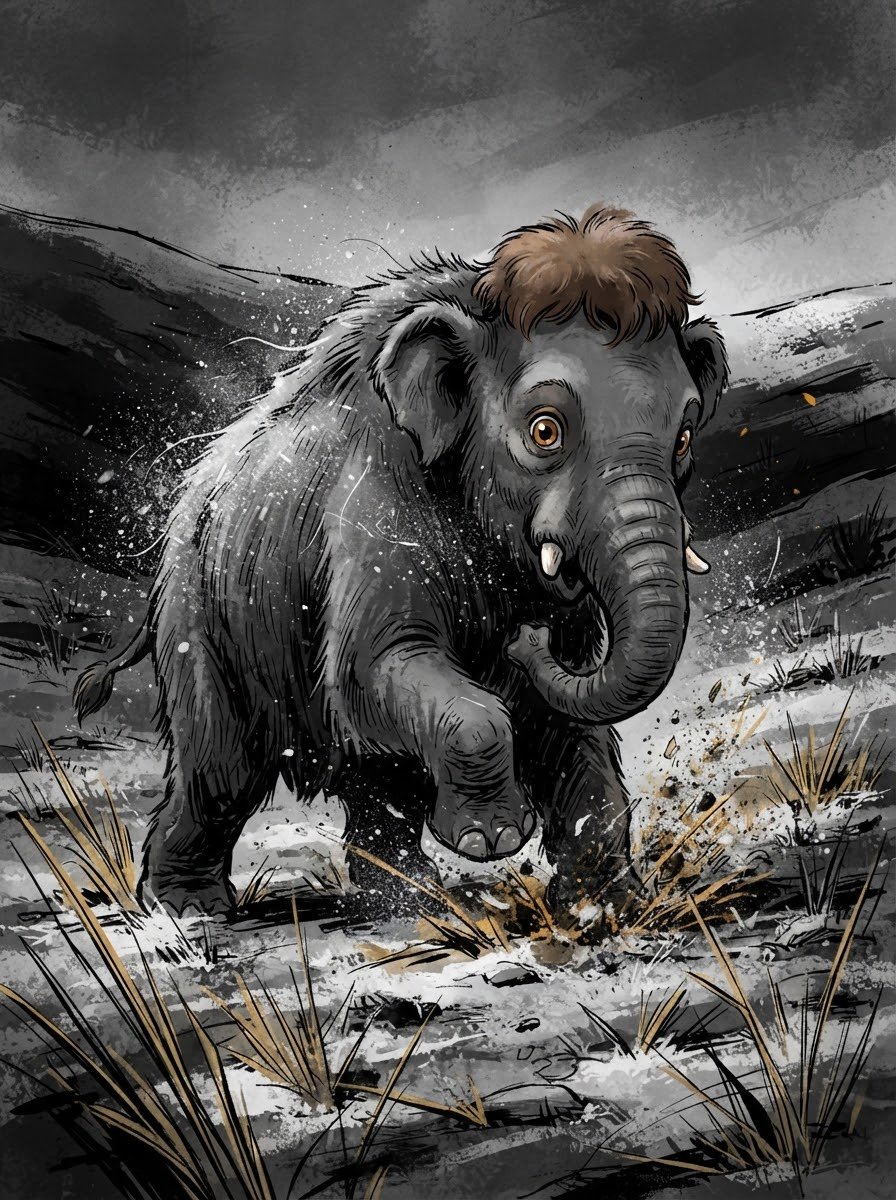
Built for the Cold To survive lethal arctic winds, young Boreal relies on an extraordinary insulation system. A two-layer coat protects his body: an outer layer of coarse guard hairs reaching nearly a meter in length, and a soft, dense undercoat of fine wool that traps body heat. Beneath his thick skin lies a ten-centimeter layer of subcutaneous fat acting as both energy fuel and thermal barrier.
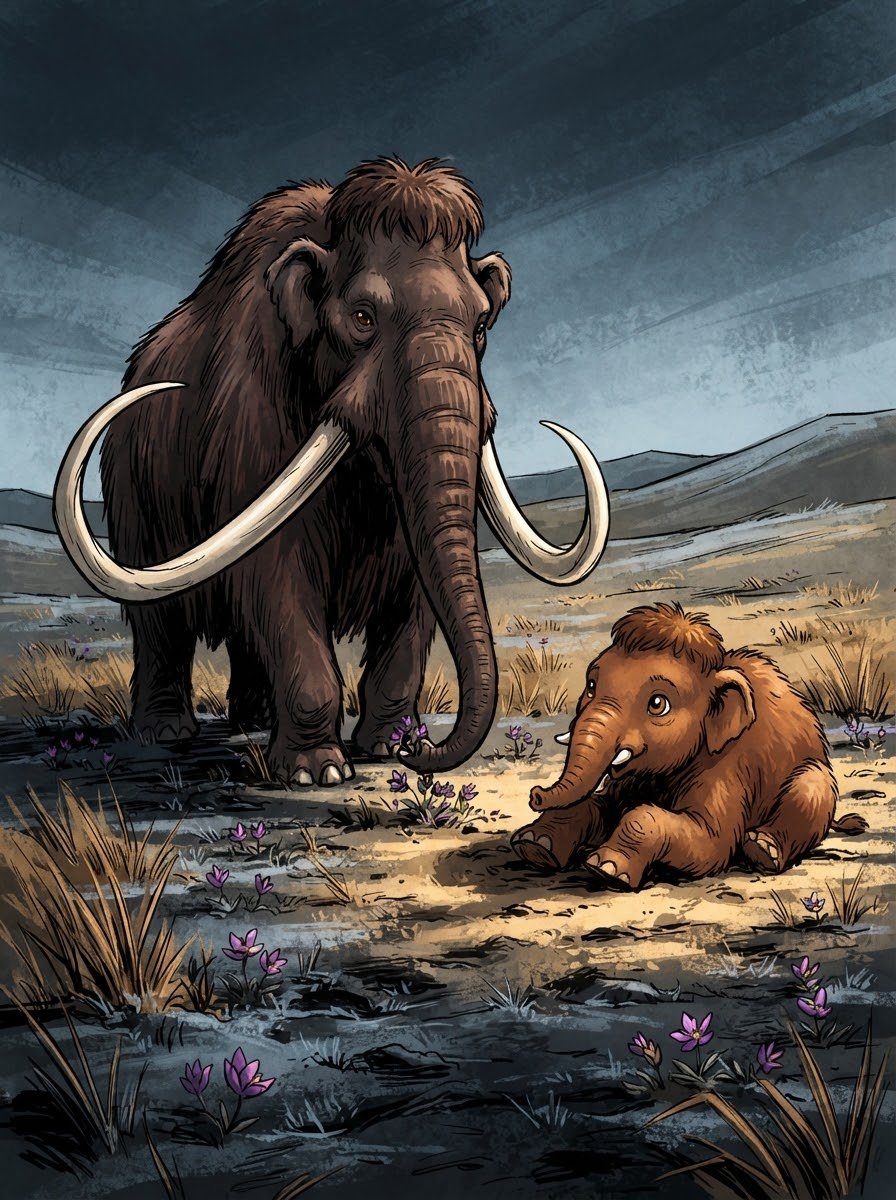
A Day on the Mammoth Steppe A day in the life of a mammoth was dominated by an endless search for food. With massive bodies to maintain, adults like Elora spent up to twenty hours every day consuming over two hundred kilograms of vegetation. Her long, prehensile trunk—ending in two delicate, finger-like projections—could pluck tiny wildflowers or tear up tough bunches of dry steppe grass with equal precision.
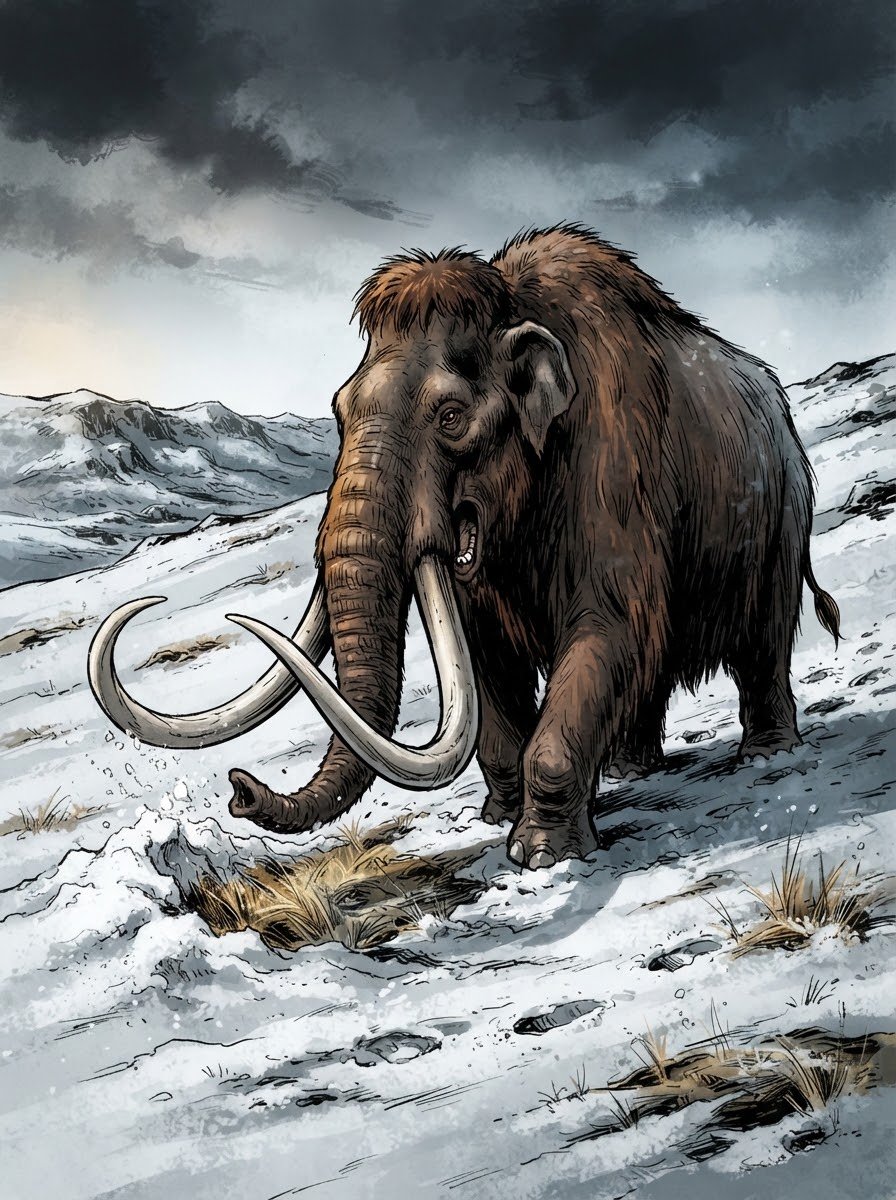
Searching for Food Winter brings deep snow to the steppe, but Elora’s massive ivory tusks are powerful snowplows. Curving inward and upward, her tusks sweep through drifts to clear away snow and expose buried vegetation. As she grazes, her specialized molars work like heavy grinding millstones, crushing tough, silica-rich plant fibers into digestible pulp.
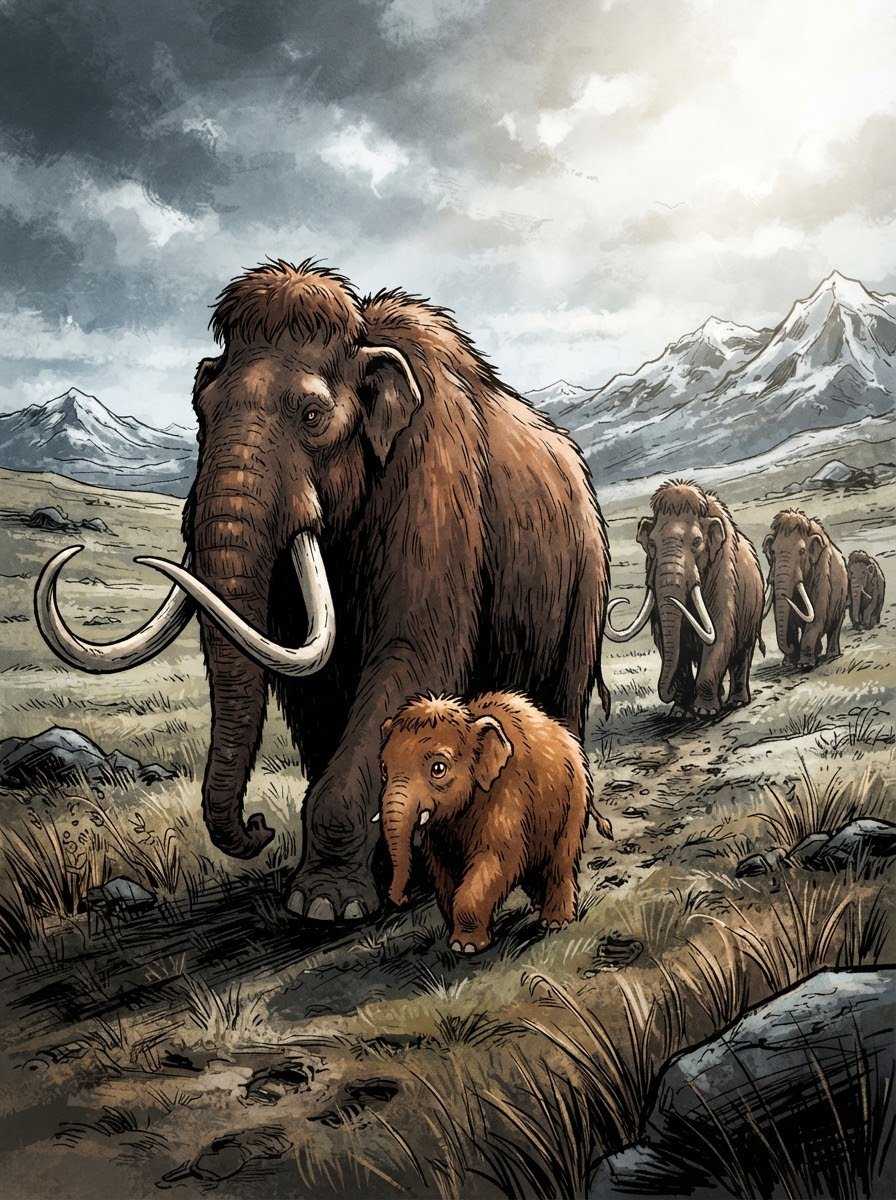
Life in a Herd Mammoths were intensely social animals, living in close-knit, female-led family units. Elora leads her sisters, daughters, and young calves across seasonal migration routes, drawing on decades of memory to find clean water holes and mineral licks. Adult males lived solitary lives or formed small bachelor groups, returning to the matriarchal herds only during the autumn breeding season.
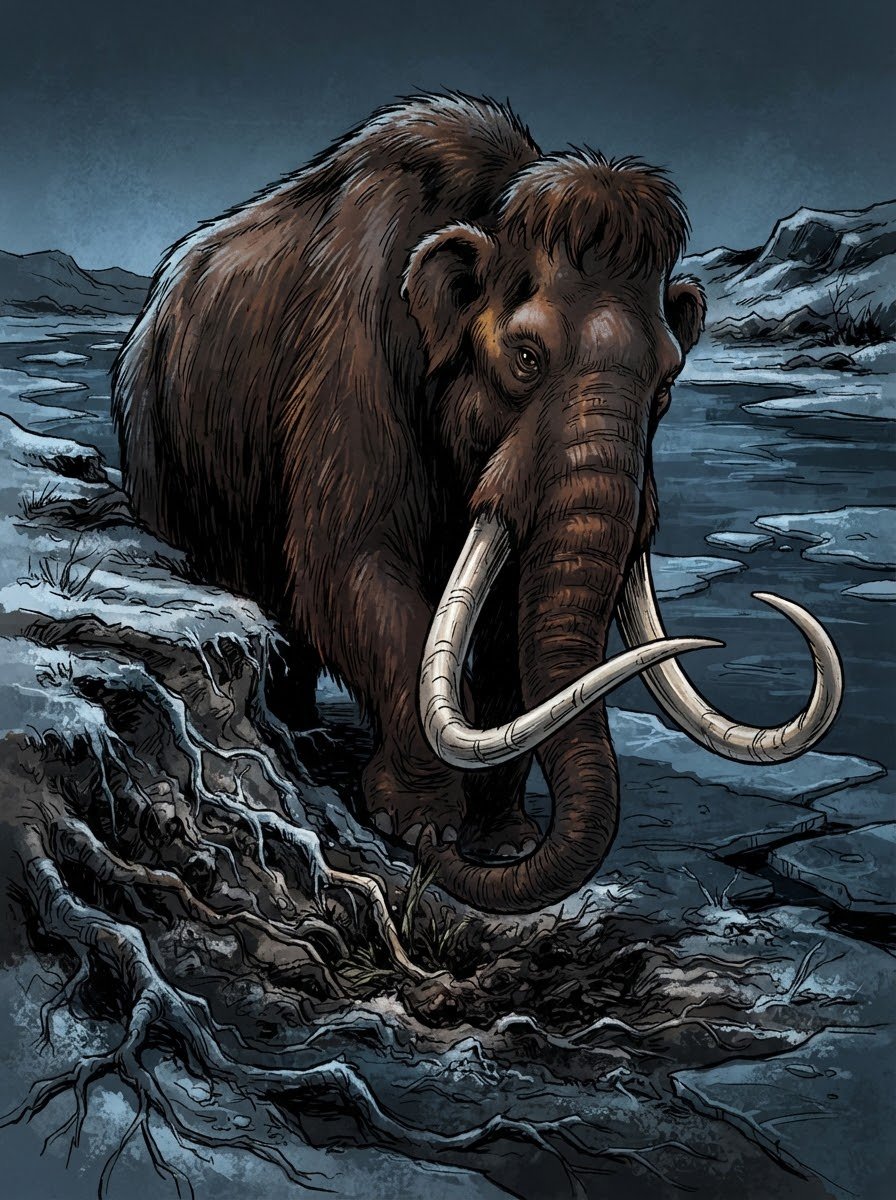
The Tools of Survival A mammoth’s tusks were not merely decorative; they were essential multi-tools. Elora uses hers to strip nutrient-rich bark from dwarf trees, dig for subterranean roots, and defend her family from large predators. Over decades of constant use, her tusks grew continuously, recording the story of her life in annual growth rings like the trunk of a tree.
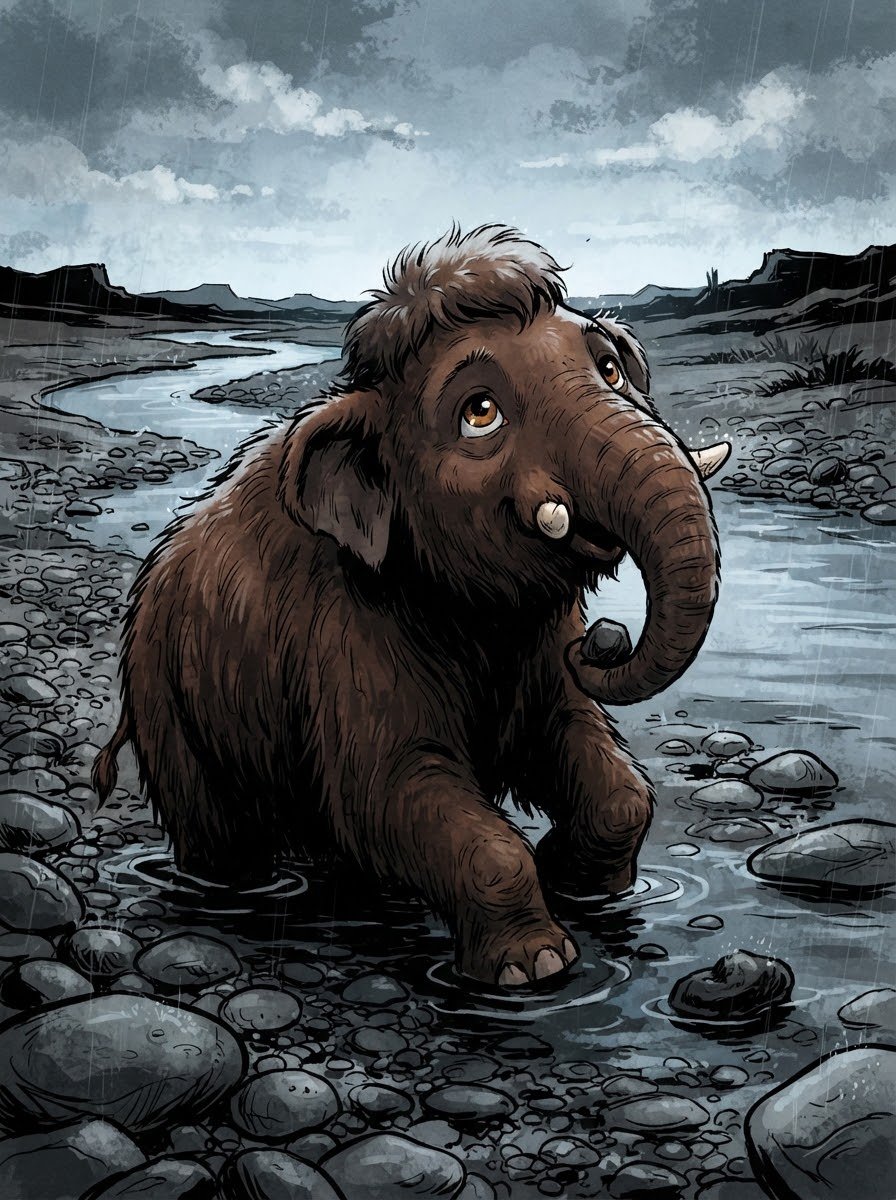
Growing Up a Mammoth After a gestation period of nearly twenty-two months, a mammoth mother gives birth to a single calf weighing about ninety kilograms. Little Boreal grows rapidly on his mother’s rich, fat-laden milk. Highly curious and playful, he practices using his clumsy trunk—a complex muscular organ containing over one hundred thousand individual muscle fibers that takes months to master.
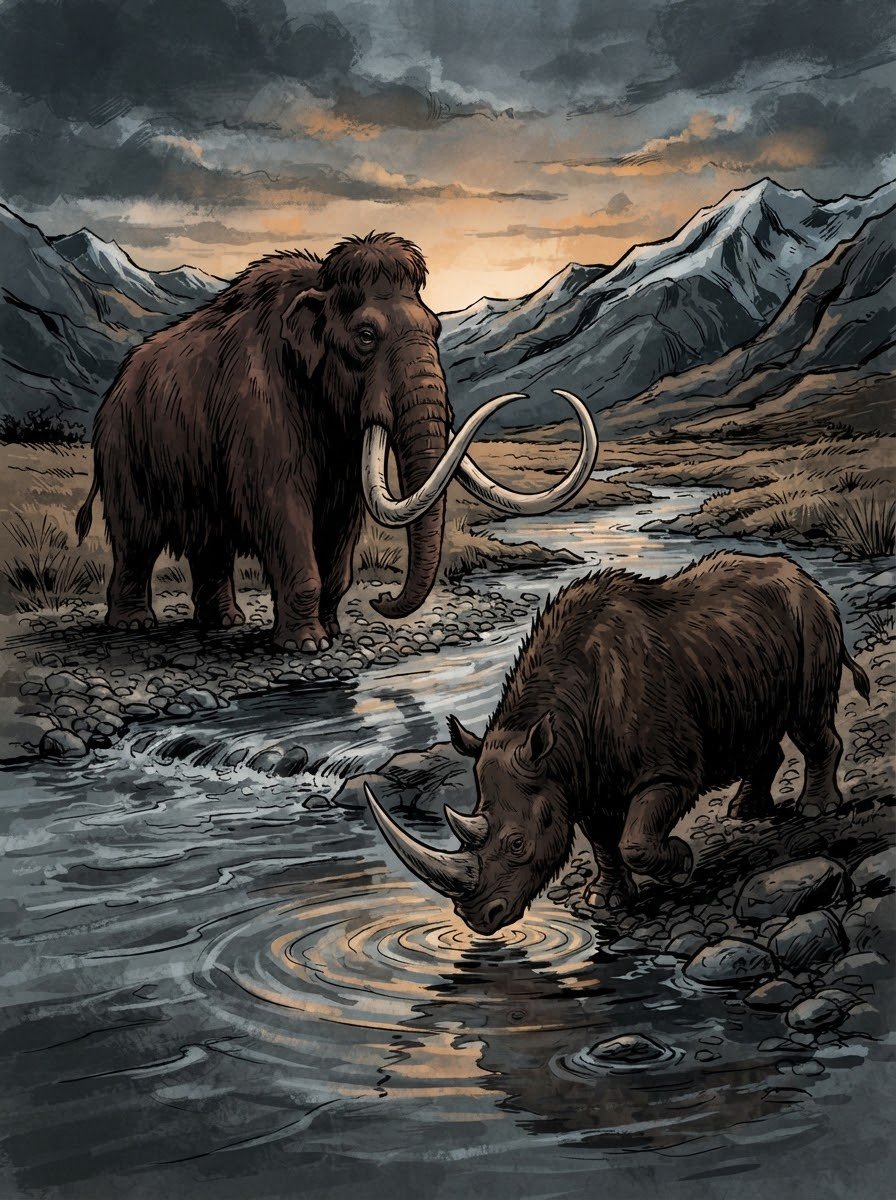
Neighbors of the Ice Age The Mammoth Steppe was home to a spectacular array of megafauna. As Elora pauses near a glacial meltwater stream, a massive woolly rhinoceros named Karga approaches to drink. Armed with two flattened horns and a thick, shaggy coat, Karga shares the pasture with steppe bison, wild horses, cave lions, and giant reindeer, creating a vibrant, interconnected ecosystem.
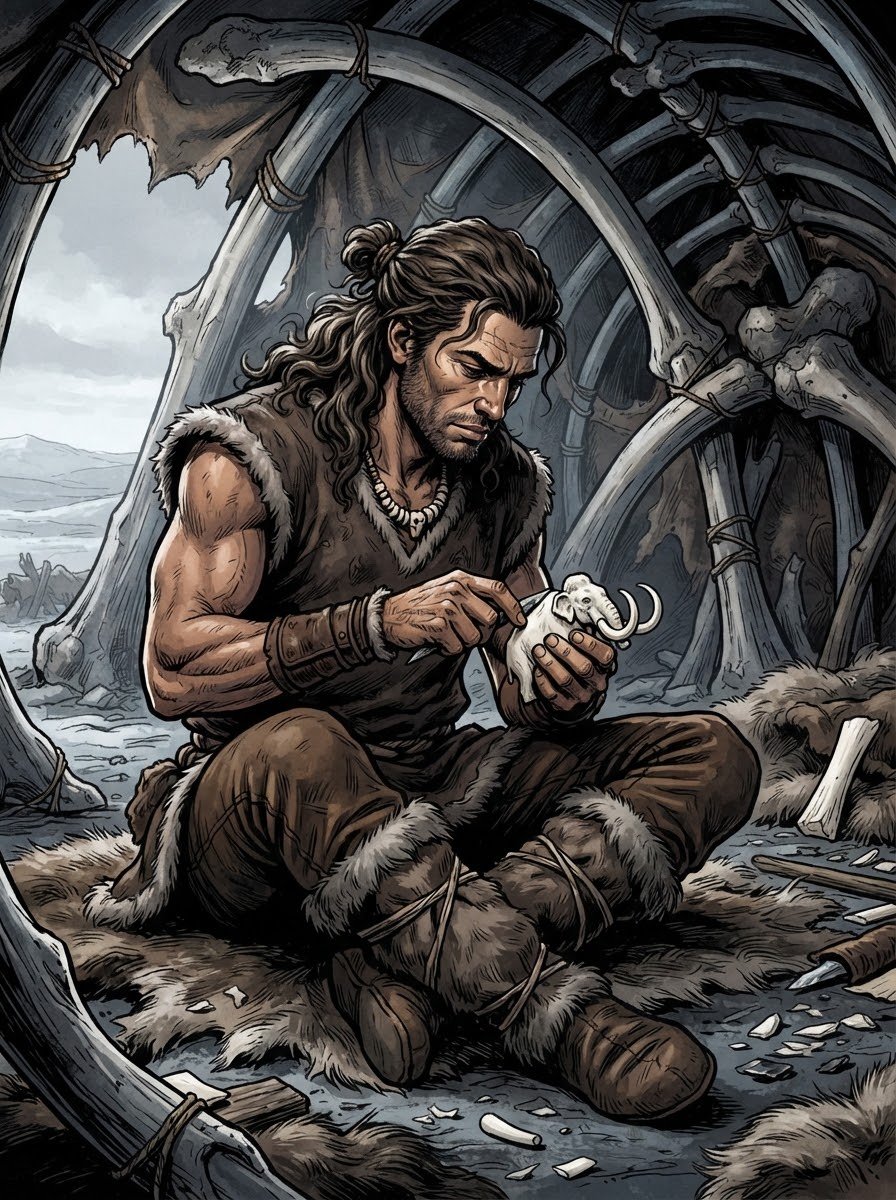
Humans and Mammoths As early Homo sapiens expanded across Eurasia, they encountered the giant of the steppe. Humans respected and relied upon the mammoth, using every part of the animal for survival. Hunters like Taran crafted sturdy tents using massive mammoth ribs and skulls draped with hides, carved ivory into intricate art and weapons, and used mammoth fat for fuel during dark winter nights.
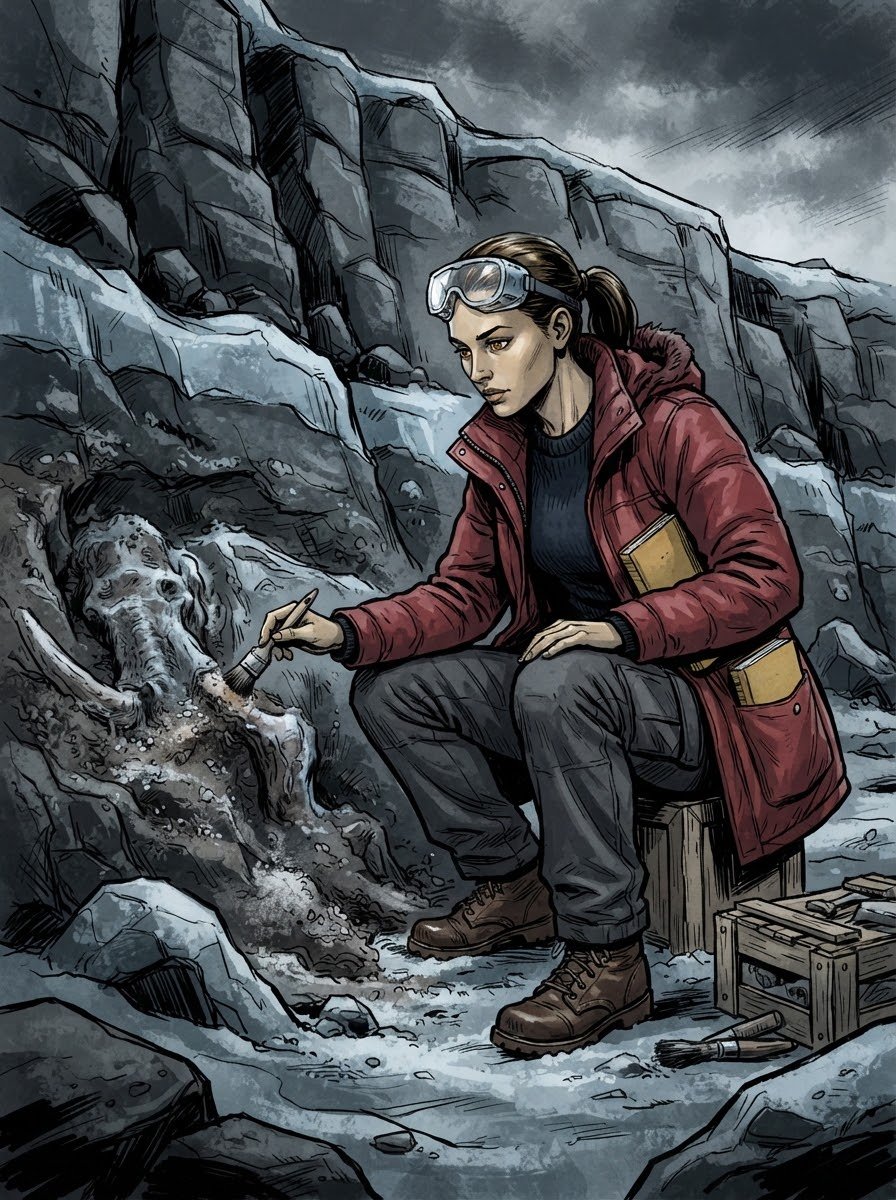
Clues Preserved in Ice and Stone In the vast permafrost regions of Siberia, nature created extraordinary time capsules. Dr. Elena Rostova, a modern paleontologist, carefully unearths a remarkably intact frozen mammoth specimen from deep within a frozen riverbank. Specimens like "Lyuba" and "Dima"—mummified mammoth calves—preserve soft tissues, stomach contents, and intact DNA frozen across millennia.
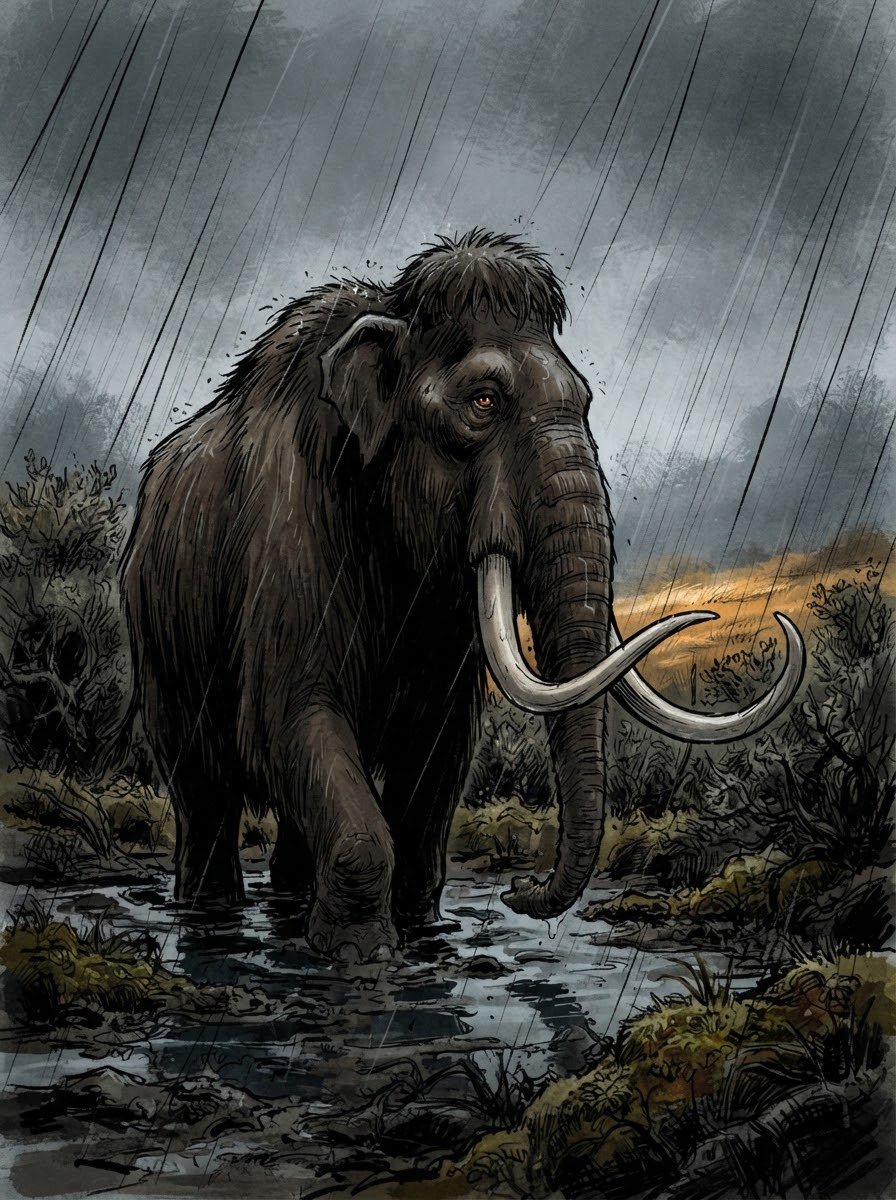
When the World Changed Around eleven thousand seven hundred years ago, the Pleistocene Epoch drew to a close. As global temperatures warmed, the dry, sunny climate of the Mammoth Steppe shifted. Increased rain and snowfall turned dry grasslands into wet tundra, waterlogged bogs, and dense coniferous forests. Boreal, now a fully grown adult, finds his grassland habitat shrinking rapidly beneath rising waters.
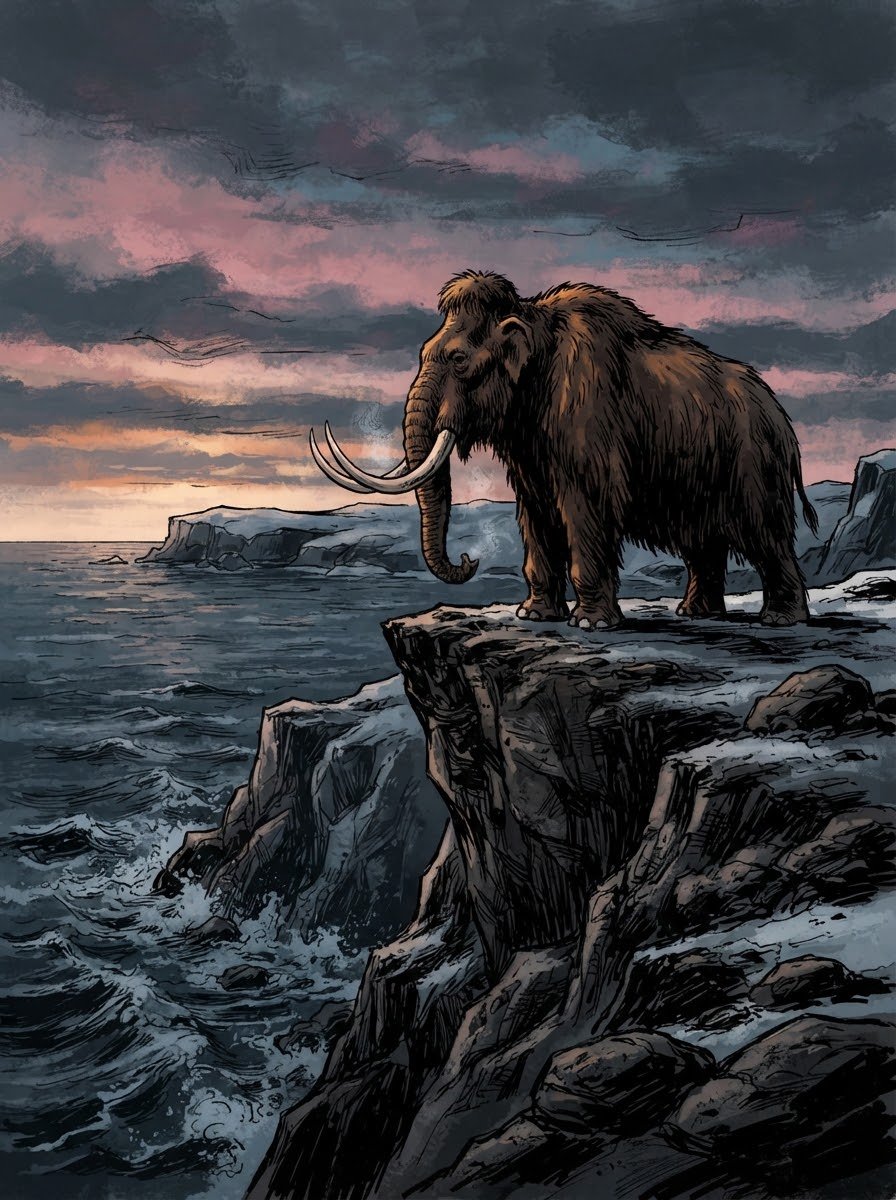
The Last Mammoths While mainland mammoths vanished around ten thousand years ago, a small population survived in isolation on remote Wrangel Island in the Arctic Ocean. Isolated from human hunters and mainland climate shifts, these resilient mammoths persisted until four thousand years ago—coexisting in time with the building of the Great Pyramids of Ancient Egypt before finally disappearing forever.
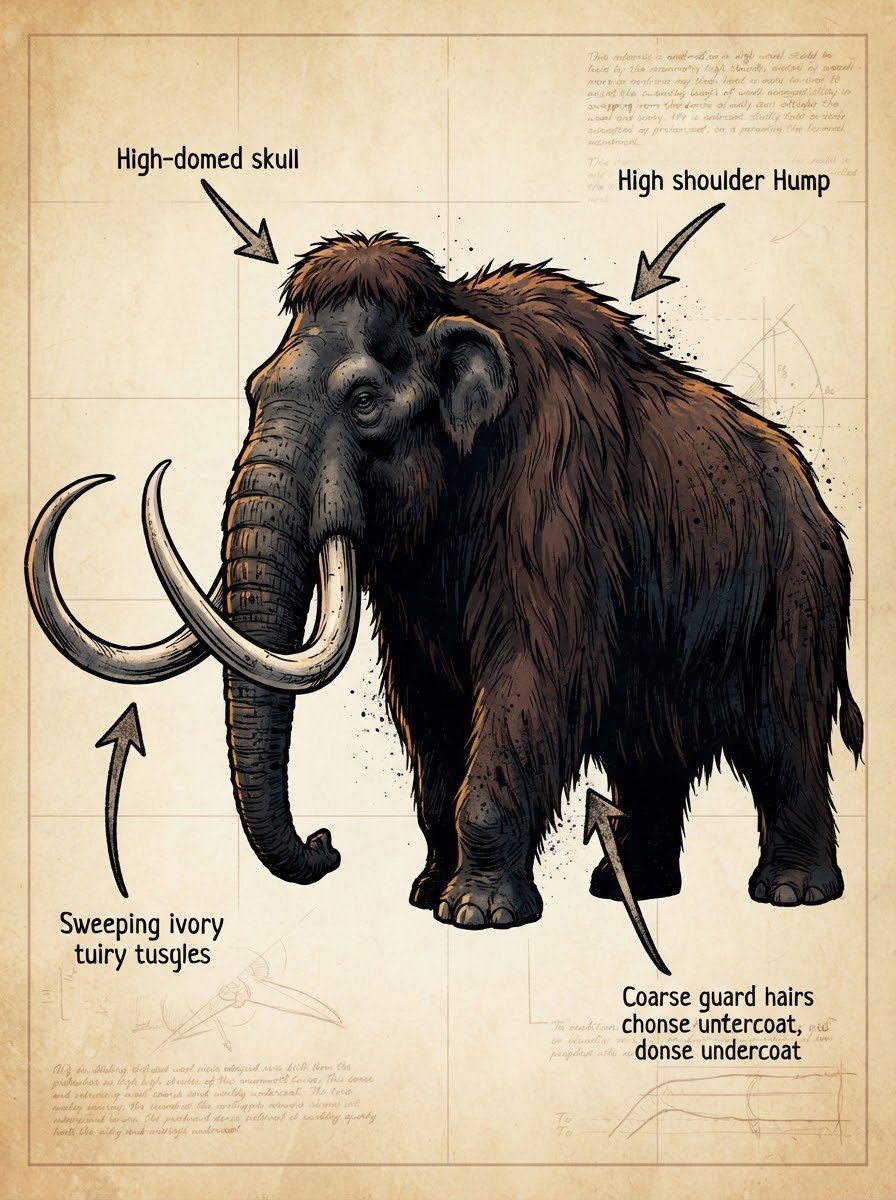
Woolly Mammoth Fact File WOOLLY MAMMOTH — SCIENTIFIC FACT FILE • Scientific Name: Mammuthus primigenius • Epoch: Late Pleistocene to Mid-Holocene (~300,000 to 4,000 years ago) • Geographic Range: Mammoth Steppe (Northern Eurasia & North America) • Shoulder Height: 2.7 to 3.4 meters (9–11 feet) • Weight: 4 to 6 metric tons (8,800–13,200 lbs) • Key Adaptations: Double-coat fur, 10 cm fat layer, high-crowned molars, small heat-retaining ears. • Diet: Grasses, sedges, flowering herbs, woody shoots (herbivore). • Extinction Cause: Climate-driven habitat loss, vegetation change, and human hunting.

Echoes of the Ice Age Although the woolly mammoth no longer walks the Earth, its legacy endures in modern science and our ecological imagination. Today, Dr. Elena Rostova examines a gleaming mammoth tusk in a brightly lit museum laboratory. By unlocking ancient DNA and studying lost biomes, scientists gain crucial insights into climate change, species adaptation, and the delicate balance of life on our changing planet.