
THE ARMORED TERROR OF THE ANCIENT SEAS: DUNKLEOSTEUS
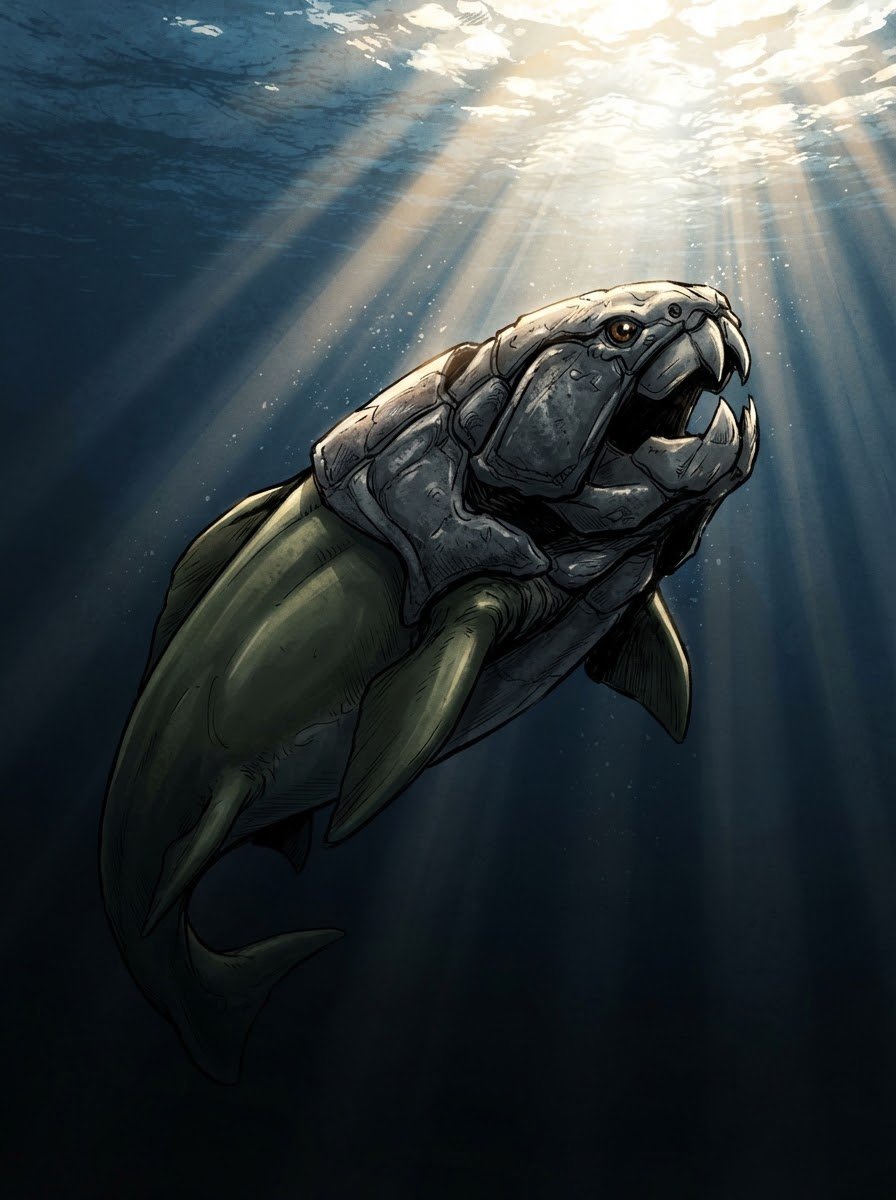
Before the Age of Dinosaurs Nearly 380 million years ago, planet Earth was a vastly different world. Continents were aligned in unfamiliar shapes, land plants were just beginning to form early forests, and not a single dinosaur had yet evolved. The true monarchs of this era belonged to the sea. In warm, shallow oceans across the globe, fish were undergoing an unprecedented evolutionary explosion, earning the Devonian Period its famous nickname: "The Age of Fishes."
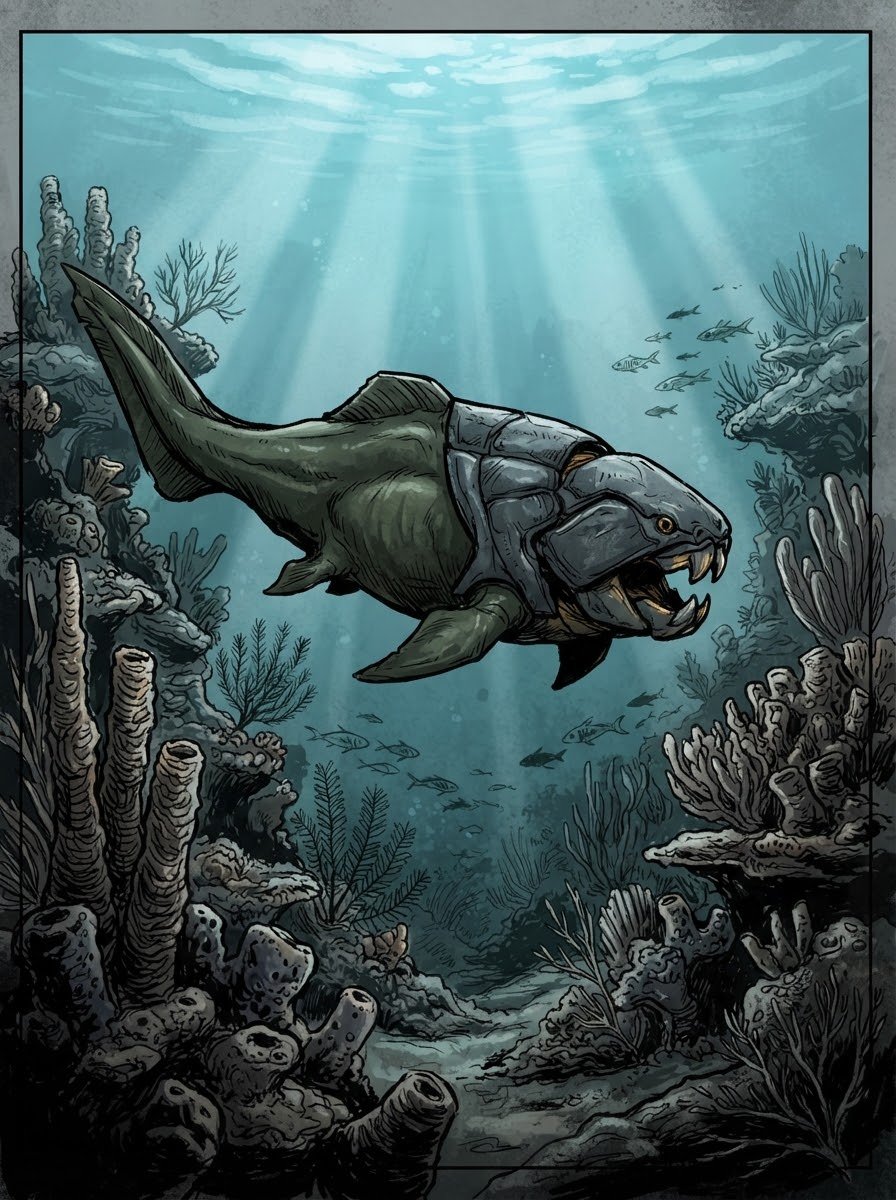
Meet Dunkleosteus Among the many strange marine creatures of the Late Devonian, none was more formidable than Dunkleosteus terrelli. Named in honor of paleontologist David Dunkle and fossil collector Jay Terrell, this creature belonged to the placoderms—an early group of jawed vertebrates that clad their heads and torsos in plates of solid bone armor.
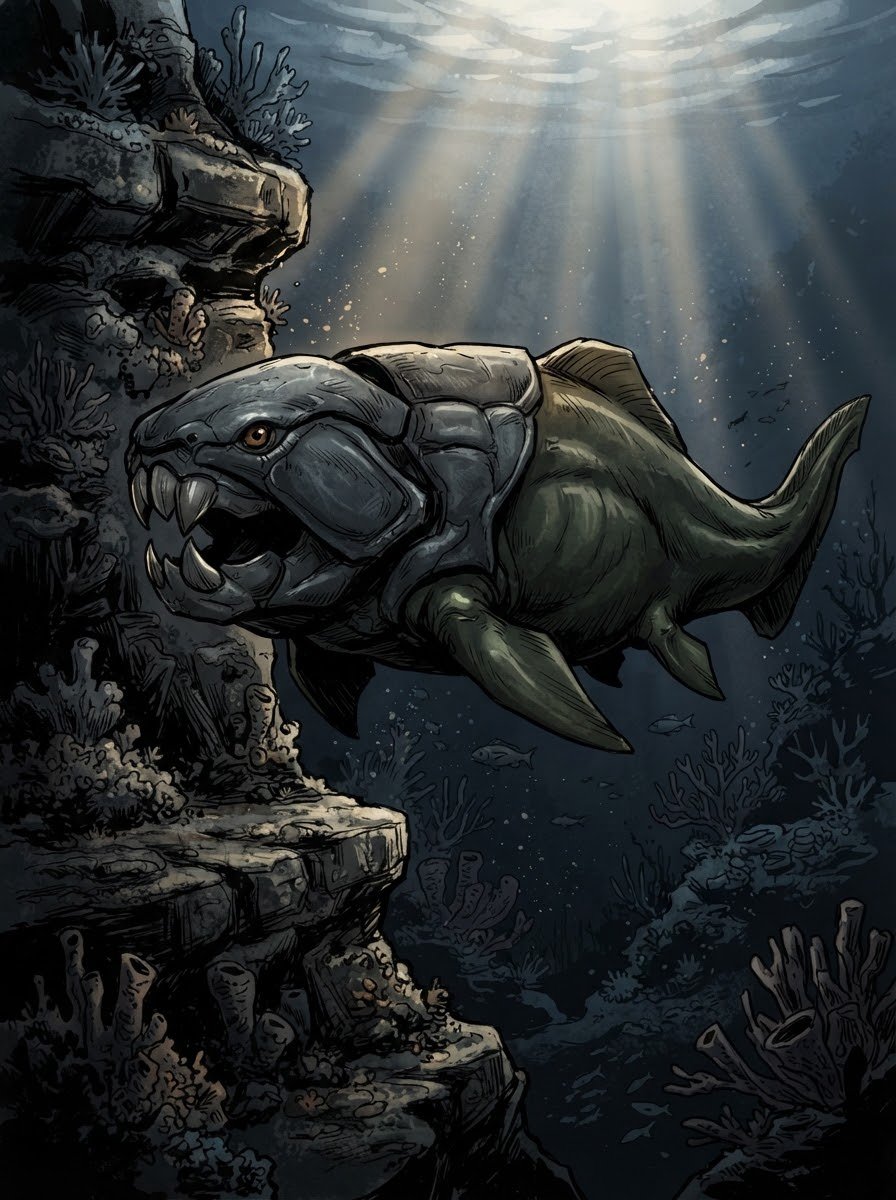
The Armor of a Predator The defining feature of Aegis is its impressive armor plating. Constructed from heavy, interlocking dermal bones, this shield protected the animal's head, braincase, and gill arches. The armor consisted of distinct plates fitted together with specialized flexible joints, giving Aegis protection against rivals without sacrificing total head mobility.
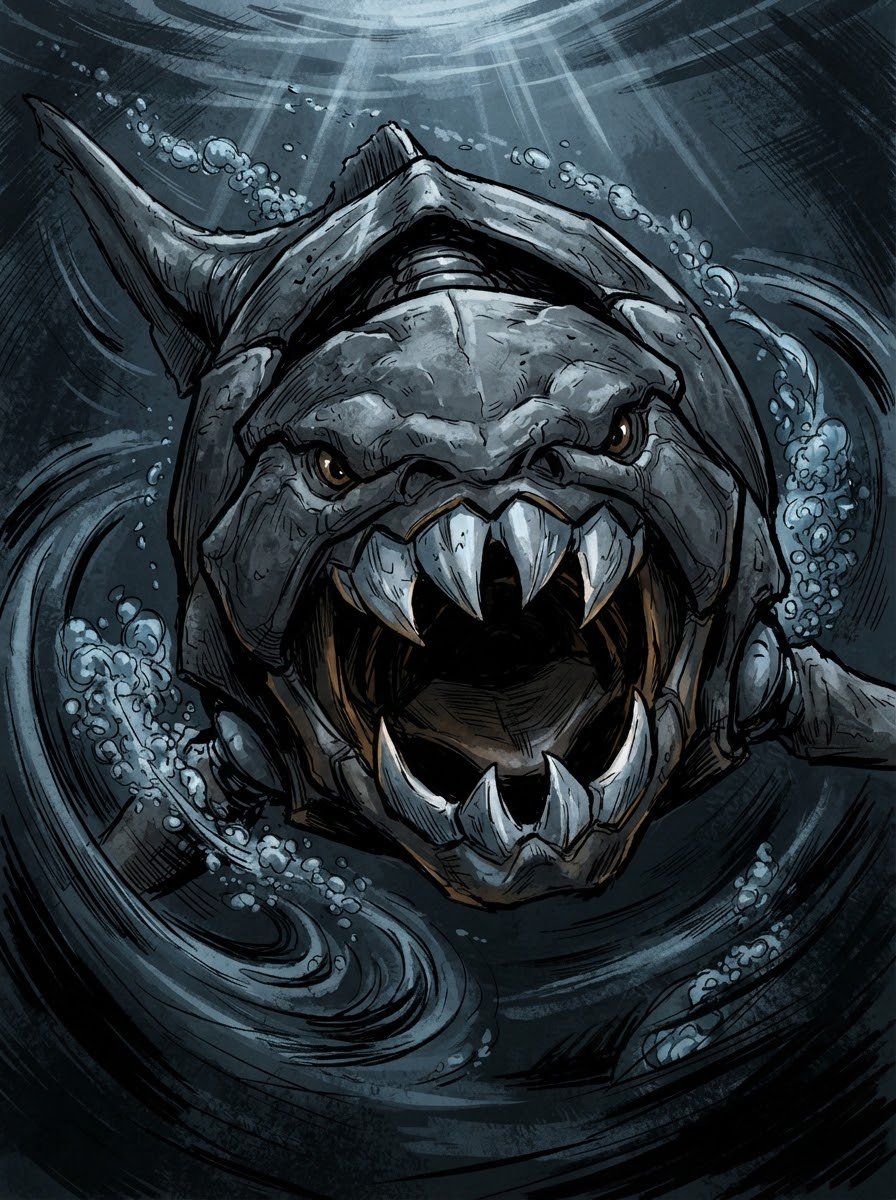
Jaws Like No Other Unlike modern sharks or mammals, Dunkleosteus did not have true, replaceable teeth made of dentin and enamel. Instead, its jaws featured self-sharpening, bony plates that grew directly from its jawbones. As the upper and lower gnathal plates scraped against each other during biting, they honed themselves into dangerously sharp cutting edges.
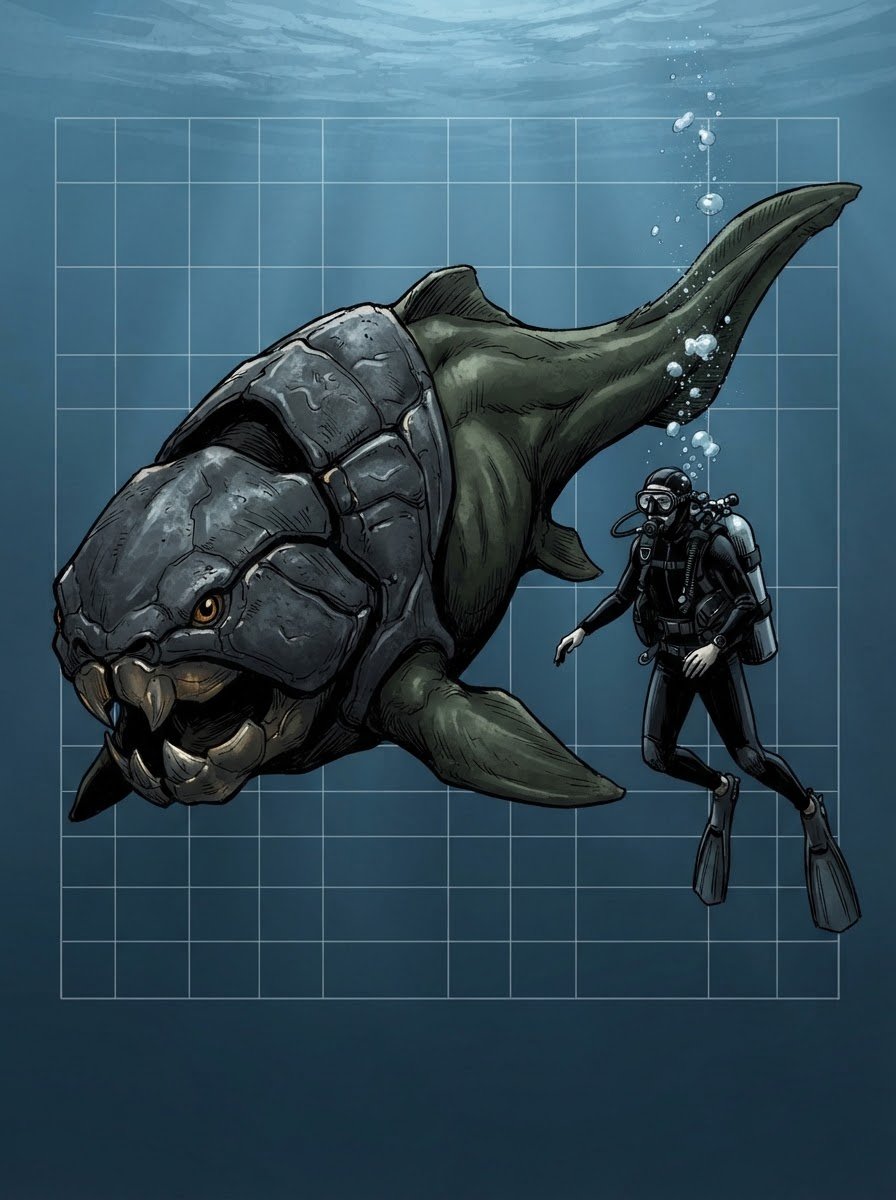
How Big Was the Giant? How large was Dunkleosteus? Because soft tissues rarely fossilize, paleontologists must estimate its total body size using only its fossilized armor. Older reconstructions portrayed Dunkleosteus as a long, streamlined fish reaching up to 8 to 10 meters (26 to 33 feet). However, recent scientific studies comparing body proportions across placoderm relatives suggest it may have been shorter and stockier—perhaps 3.4 to 4.1 meters (11 to 13.5 feet) in length—with a much thicker, heavier body than previously thought.
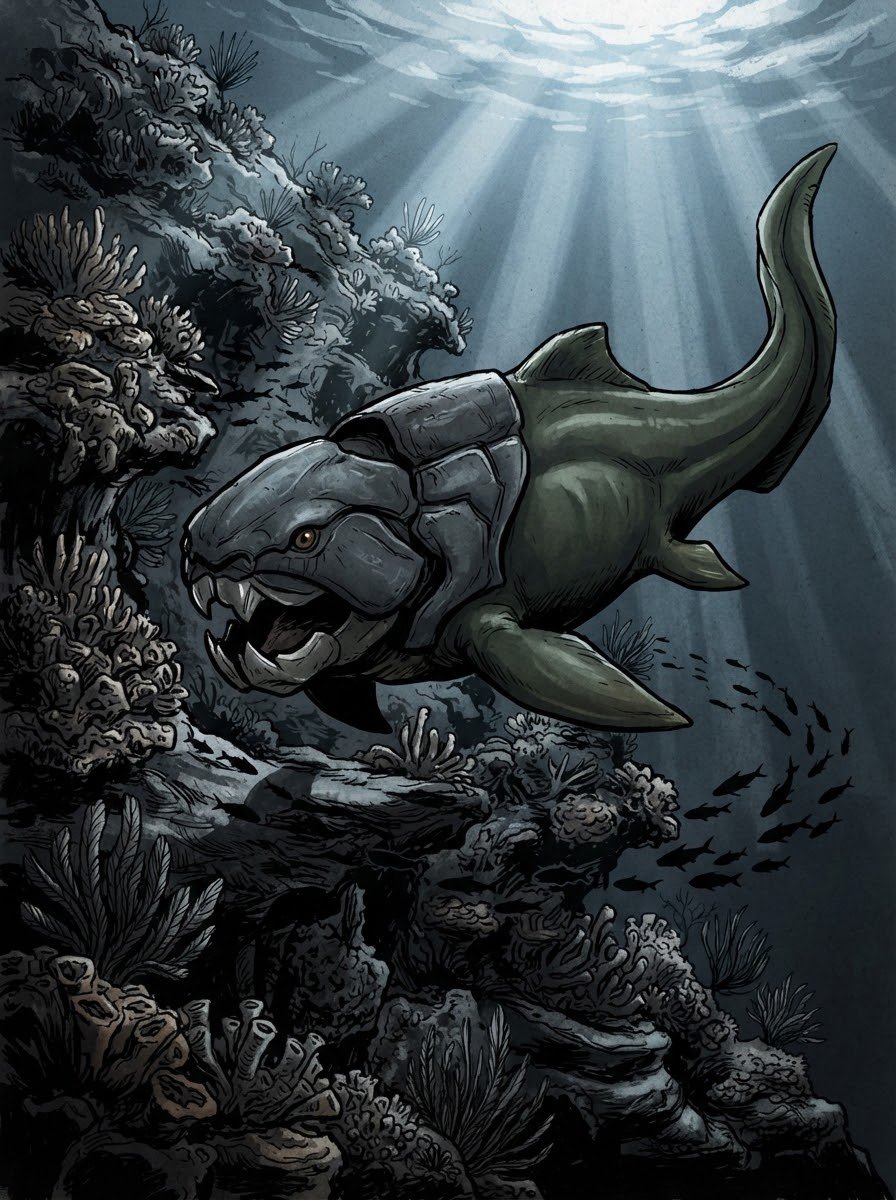
A Day in the Devonian Ocean In the warm, epicontinental seas of the Devonian, Aegis navigated a vibrant marine ecosystem. Tropical waters were filled with massive horn corals, encrusting stromatoporoid sponges, and delicate sea lilies (crinoids). Swimming through these ancient reefs, Aegis occupied the very top of the food chain, keeping populations of smaller marine creatures in balance.
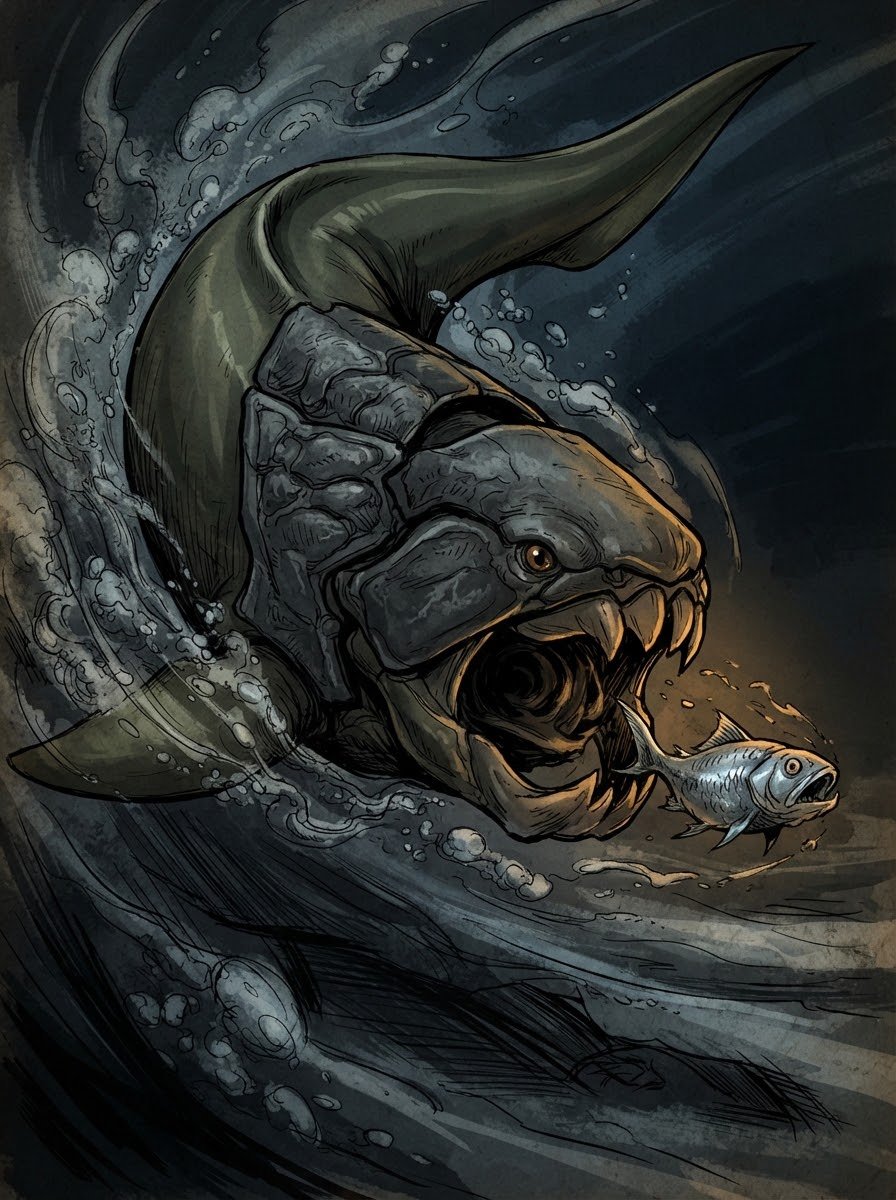
The Hunter Beneath the Waves When hunting, Dunkleosteus utilized a sophisticated linkage system in its skull. By rapidly lifting its upper head shield while simultaneously dropping its lower jaw, it could open its mouth in a fraction of a second. This rapid expansion created a sudden drop in water pressure, pulling prey directly into its gaping, blade-lined jaws through high-speed suction feeding.
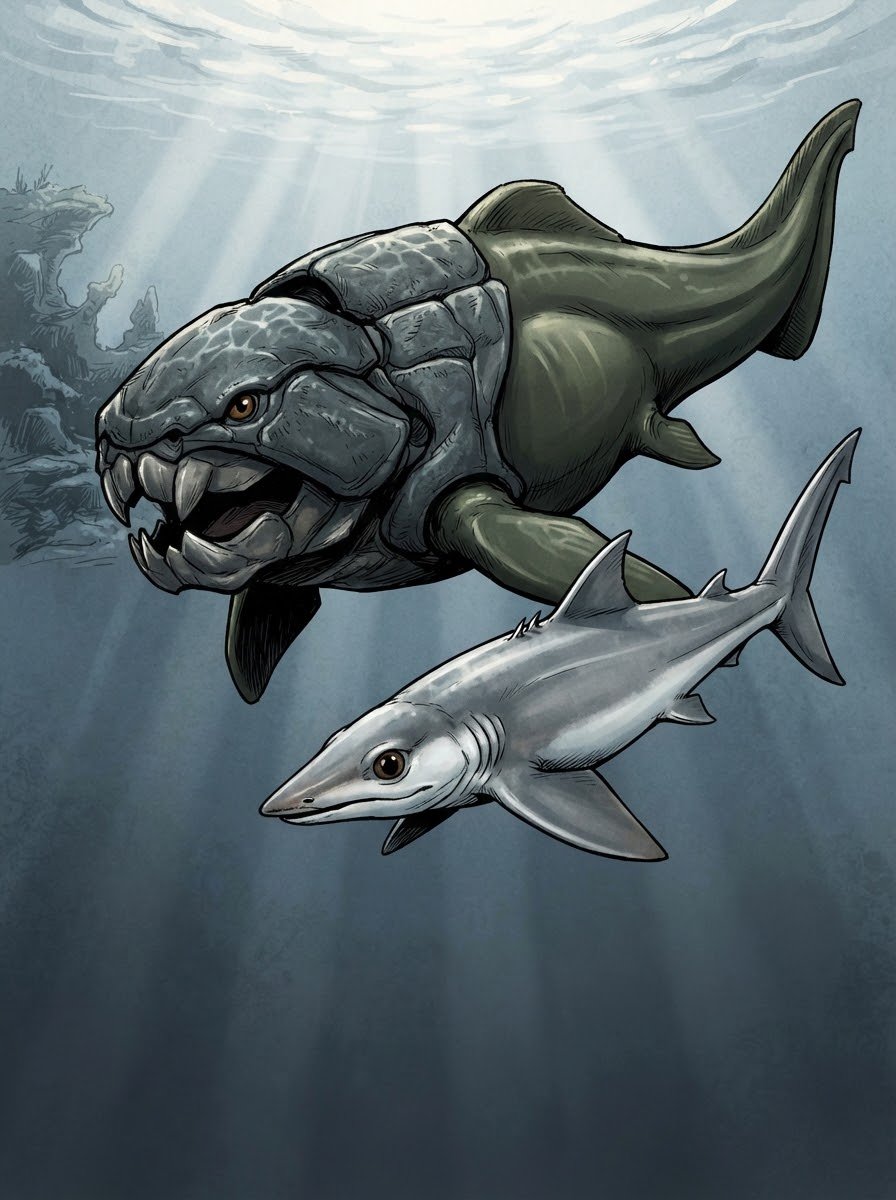
A Sea Full of Strange Fish Aegis was not the only fascinating fish in the Devonian seas. Bony fish were evolving, early sharks like Cladoselache were expanding into open waters, and other placoderms thrived in varied ecological niches. Cladoselache, a sleek, two-meter-long early shark, was fast and agile, but had to stay alert to avoid becoming prey for giant placoderms like Aegis.
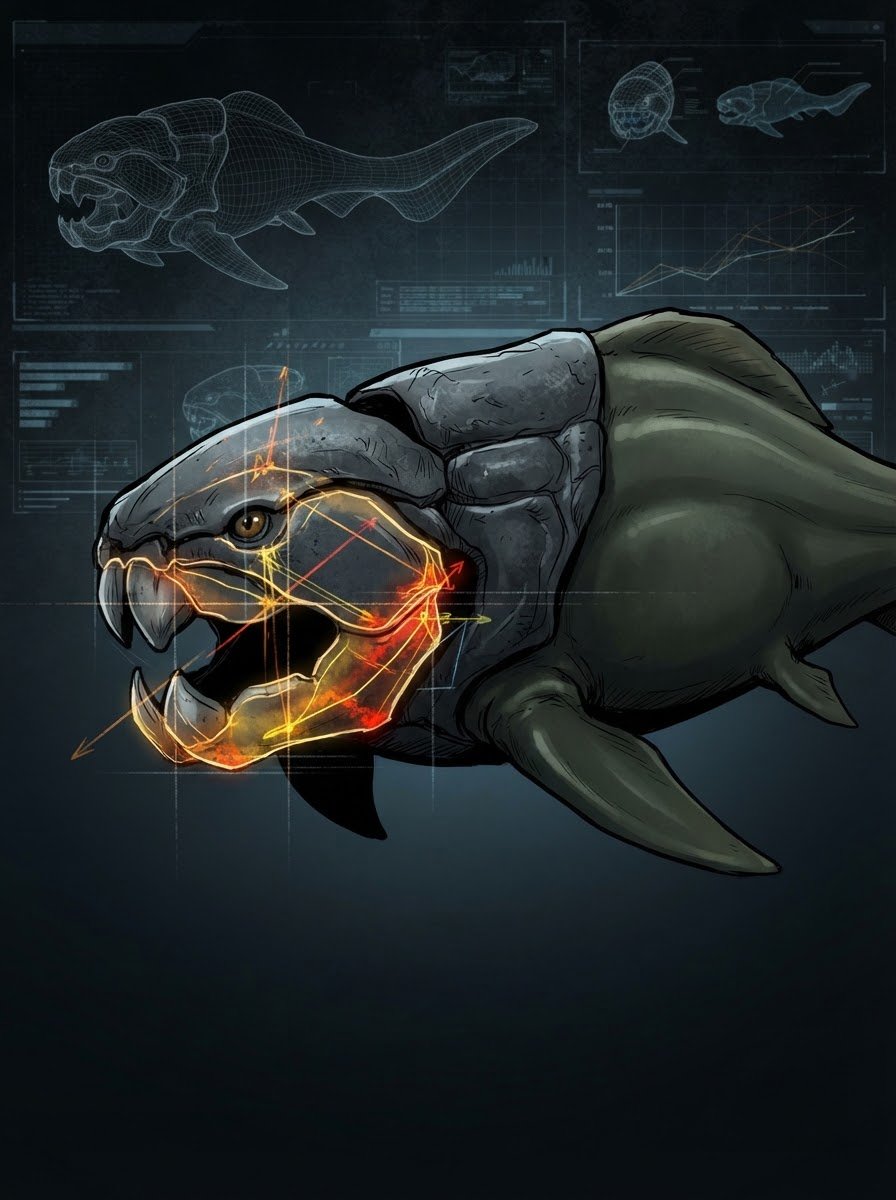
The Science of the Bite To understand how Dunkleosteus fed, paleontologists construct digital 3D models of its skull bones. By measuring muscle attachment sites on fossilized armor plates, computer simulations analyze the mechanics of its bite. While early studies proposed staggering bite force figures rivaling those of large crocodilians, ongoing research continuously refines these biomechanical models to better reflect realistic muscle mass and jaw leverage.
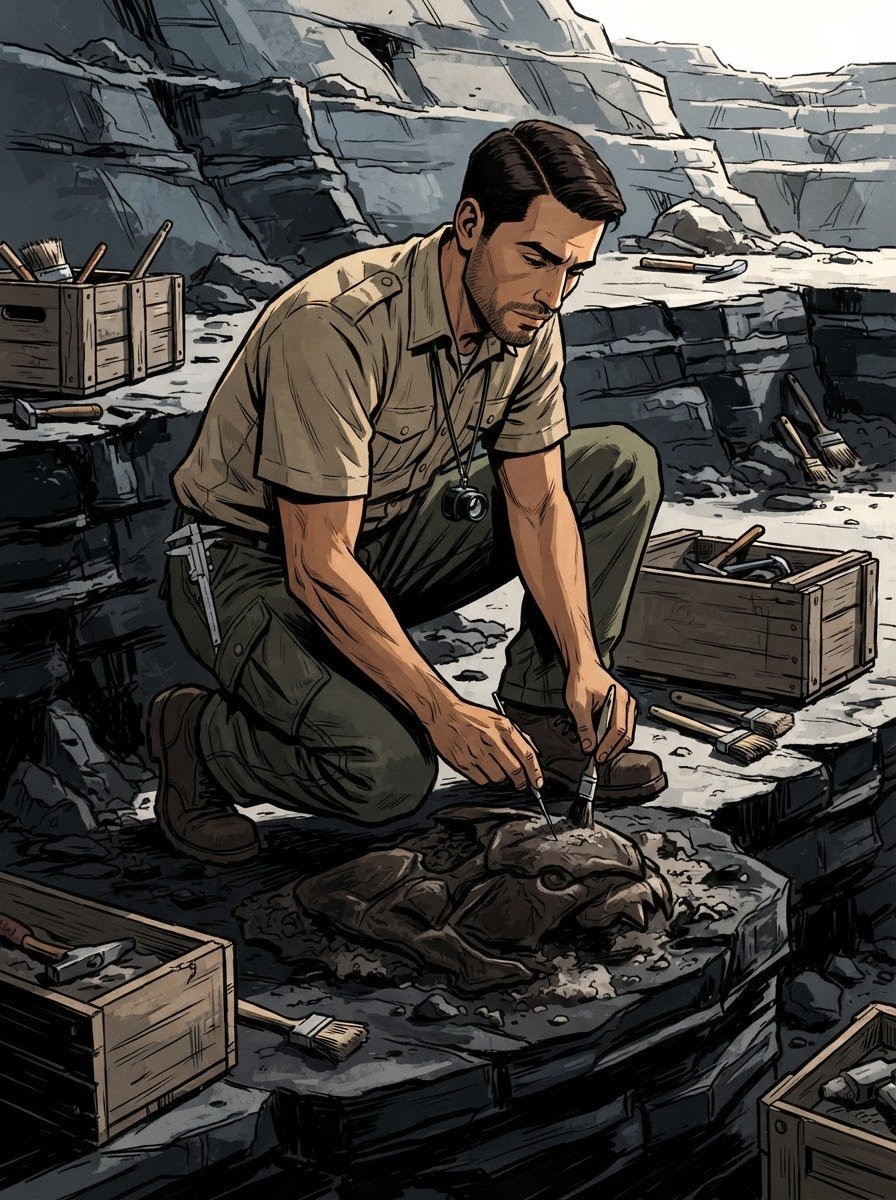
Fossils from An Ancient Sea Much of what we know about Dunkleosteus comes from dark, fine-grained mudstones known as the Cleveland Shale in Ohio, USA. Millions of years ago, dead placoderms sank into muddy, low-oxygen sea floors where their heavy bone armor was buried and mineralized. Today, scientists excavate these dark shale layers to recover beautifully preserved jaw blades and skull shields.
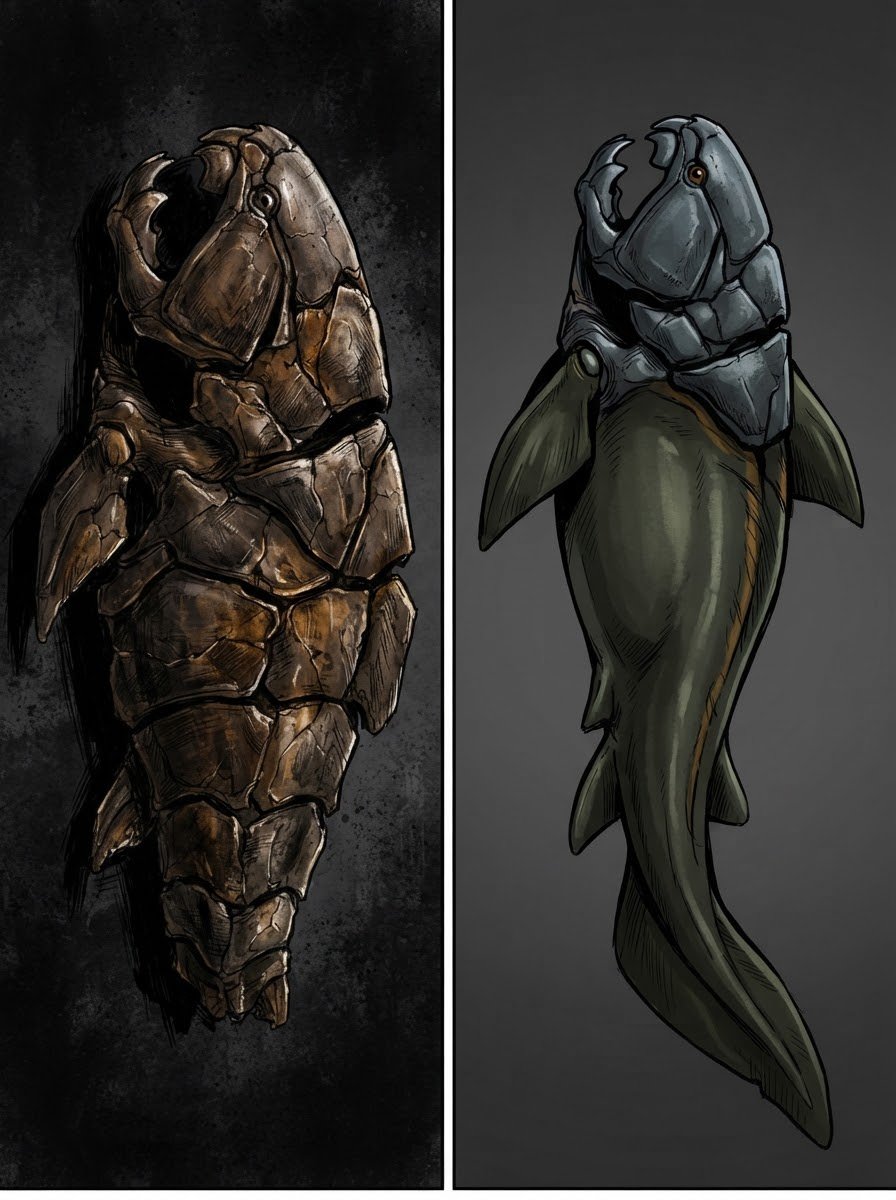
Rebuilding a Lost Predator Reconstructing Dunkleosteus requires combining paleontology, comparative anatomy, and artistic skill. Because only the armored head and forebody readily fossilized, scientists look to smaller, fully preserved placoderm relatives—such as Coccosteus—to infer the shape of Dunkleosteus's unarmored trunk, fins, and tail.
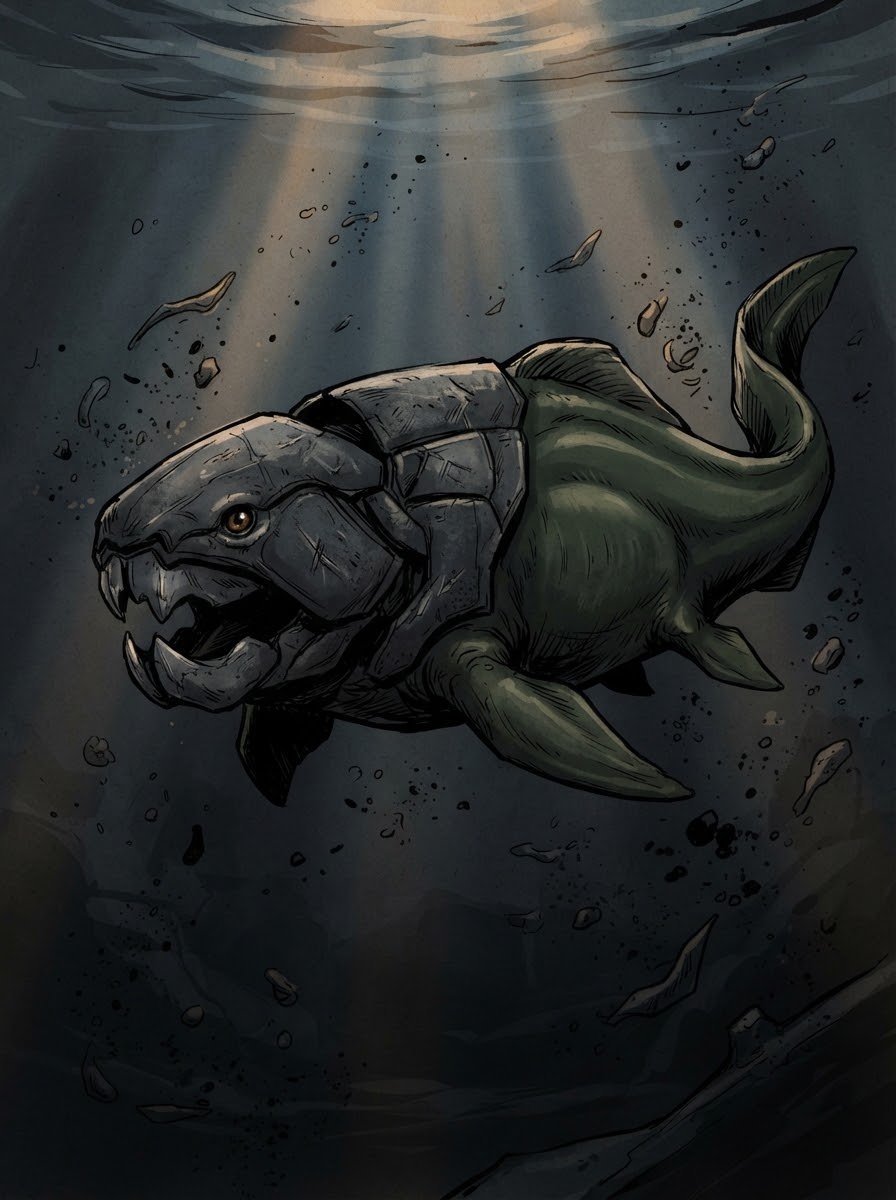
When the Devonian World Changed Near the end of the Devonian Period, Earth's marine ecosystems experienced massive environmental disturbances known as the Late Devonian extinction events. Fluctuating sea levels, severe drops in ocean oxygen levels (anoxia), and climate cooling placed intense stress on ocean life. Over millions of years, these environmental changes decimated placoderm populations, eventually leading to their complete extinction.
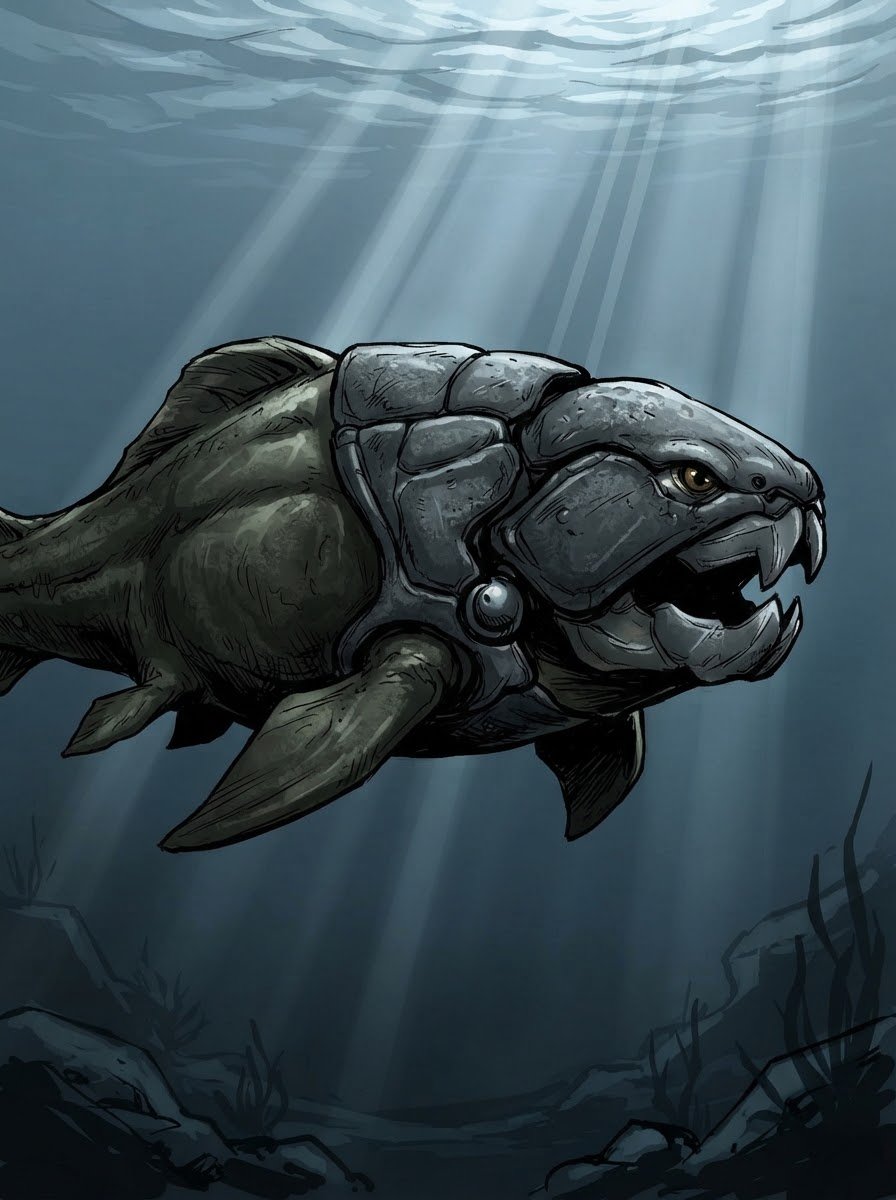
Dunkleosteus: Myths Versus Facts Over time, popular culture has created many myths about Dunkleosteus. Let's set the record straight with real scientific facts:
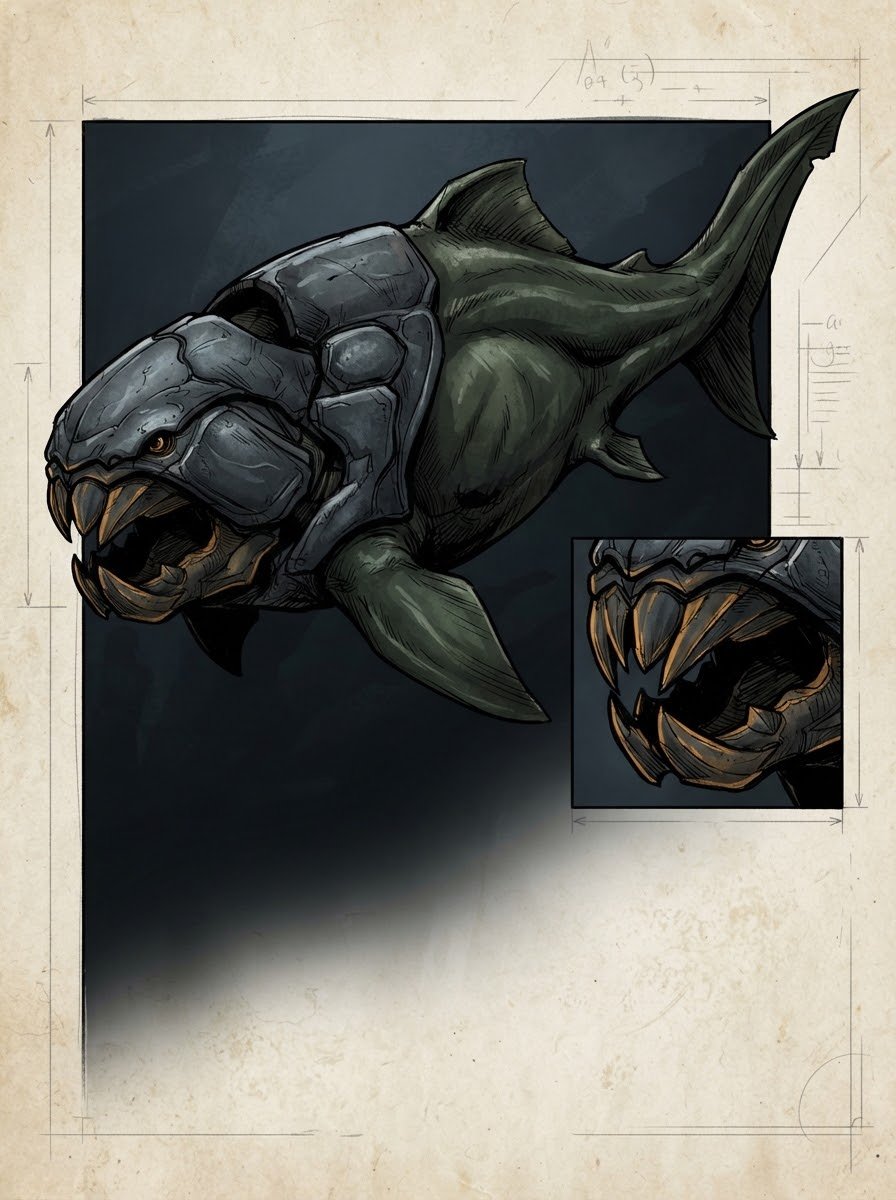
Dunkleosteus Fact File DUNKLEOSTEUS — SCIENTIFIC FACT FILE • Scientific Name: Dunkleosteus (meaning "Dunkle's Bone") • Best-Known Species: Dunkleosteus terrelli • Animal Group: Placoderm (extinct armored jawed fish) • Era: Late Devonian Period (~382 to 358 million years ago) • Primary Habitat: Shallow to open marine environments • Diet: Carnivorous (fish, early sharks, smaller placoderms) • Key Anatomy: Heavy dermal head armor, jointed thoracic shield, blade-like gnathal plates • Estimated Size: Highly debated; recent estimates range from 3.4 to 4.1 meters (11 to 13.5 feet), with older estimates reaching up to 8–10 meters depending on reconstruction models.
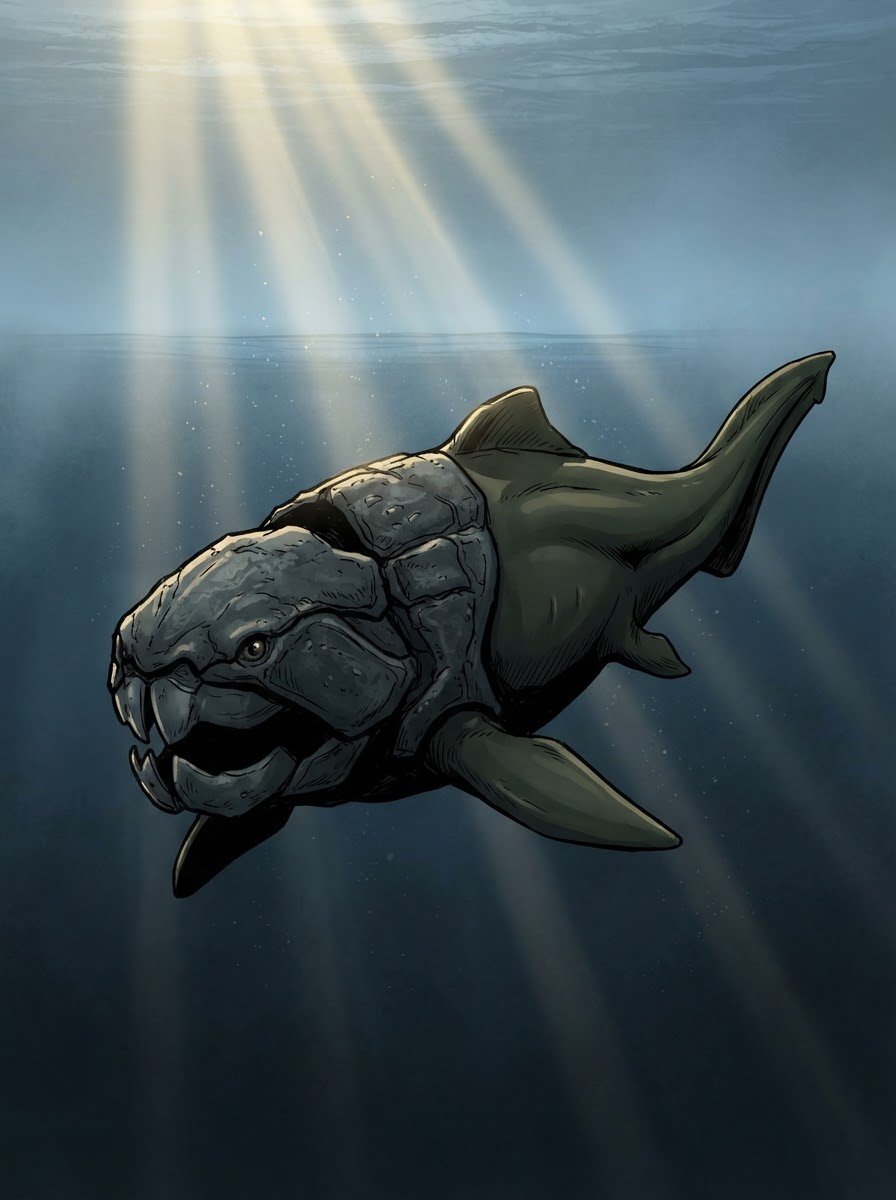
Echoes of the Ancient Seas Though Dunkleosteus vanished hundreds of millions of years ago, its story lives on through the rock record. Every fossil plate discovered in ancient shales brings new understanding of how early vertebrates evolved, hunted, and adapted to changing oceans. As scientists apply new technologies to old fossils, our vision of Earth's deep past continues to grow clearer—reminding us that long before land animals arose, armored giants ruled the ancient seas.