
THE GIANT OF THE ANCIENT SWAMPS: TITANOBOA
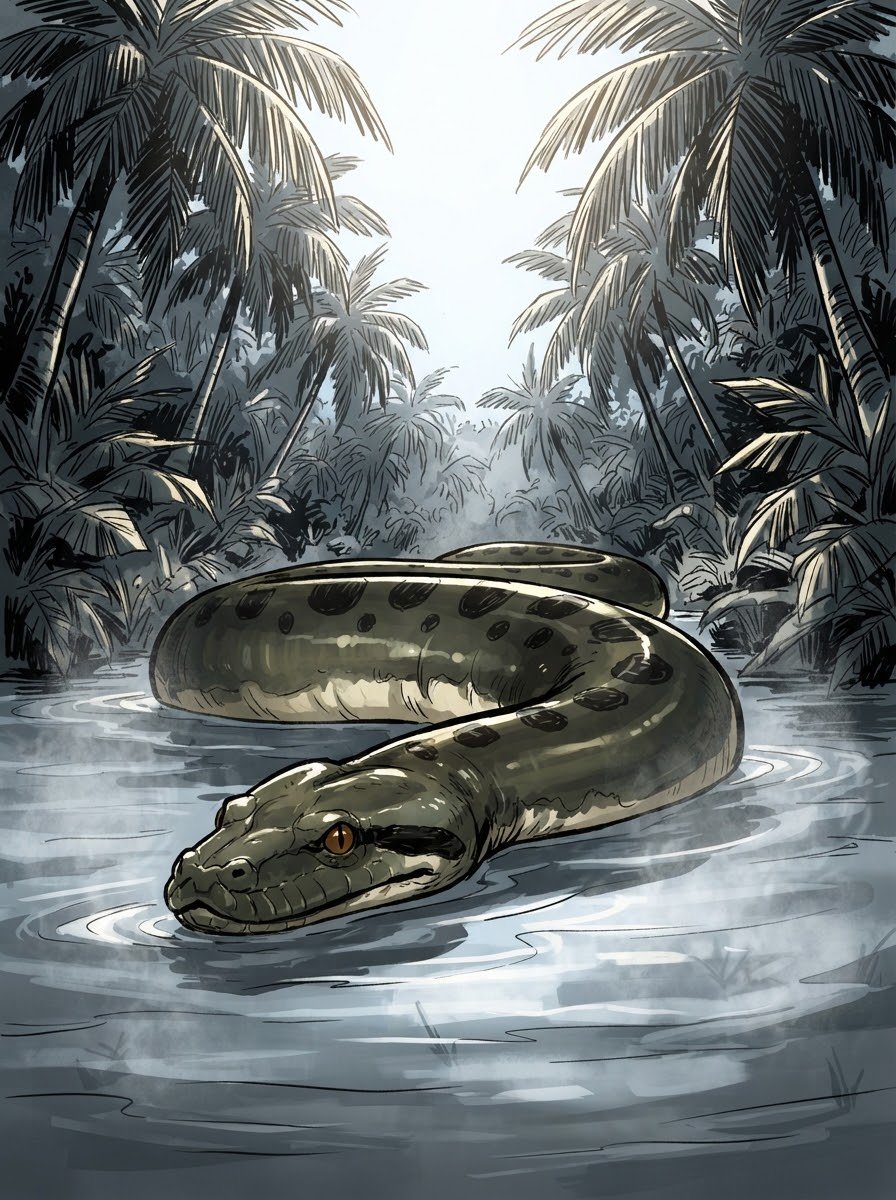
The Giant of the Ancient Swamps Sixty million years ago, in the steaming tropical rainforests of what is now South America, a true shadow leviathan ruled the waterways. Entering the Paleocene Epoch, Earth witnessed the rise of Titanoboa cerrejonensis—the largest, heaviest, and longest snake ever discovered. Journey back in time to explore the primordial world of this colossal reptile and discover how scientists unspooled its secrets from deep within an open-pit coal mine.
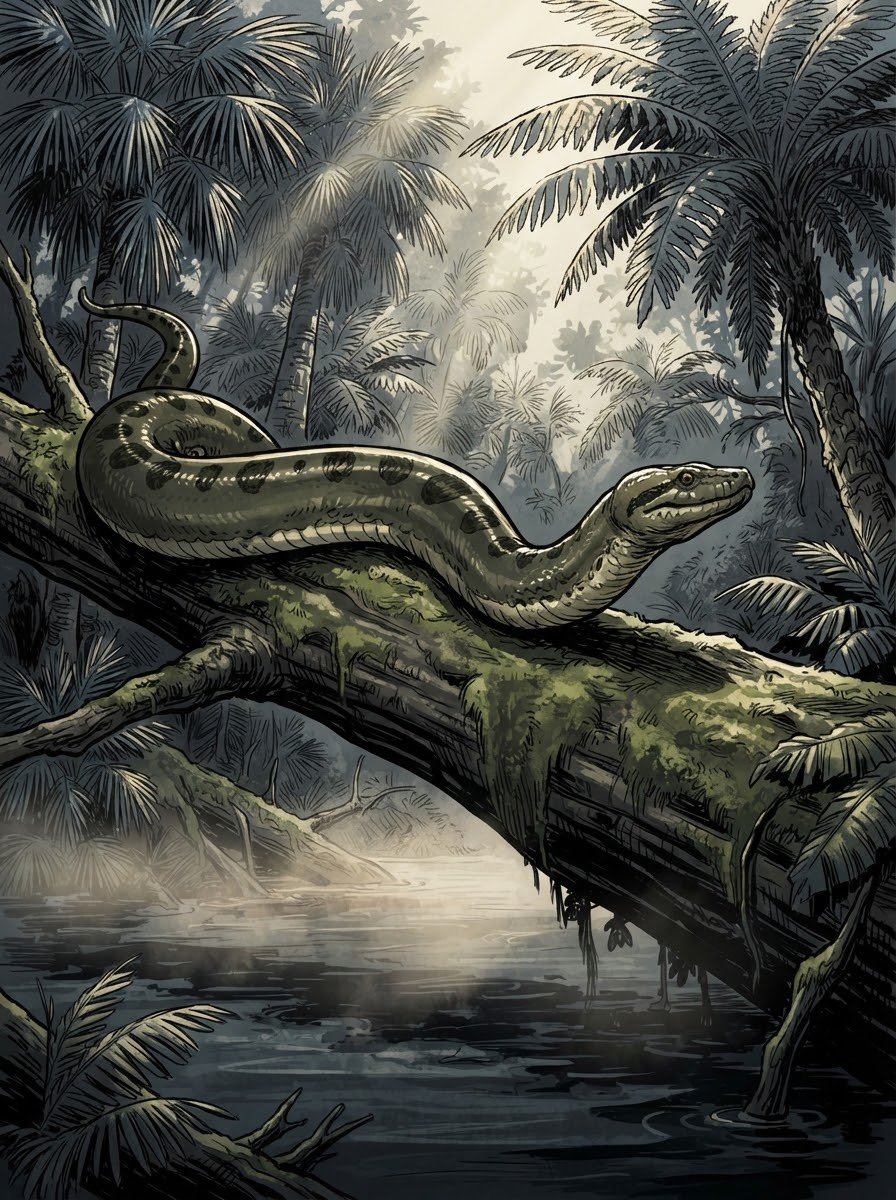
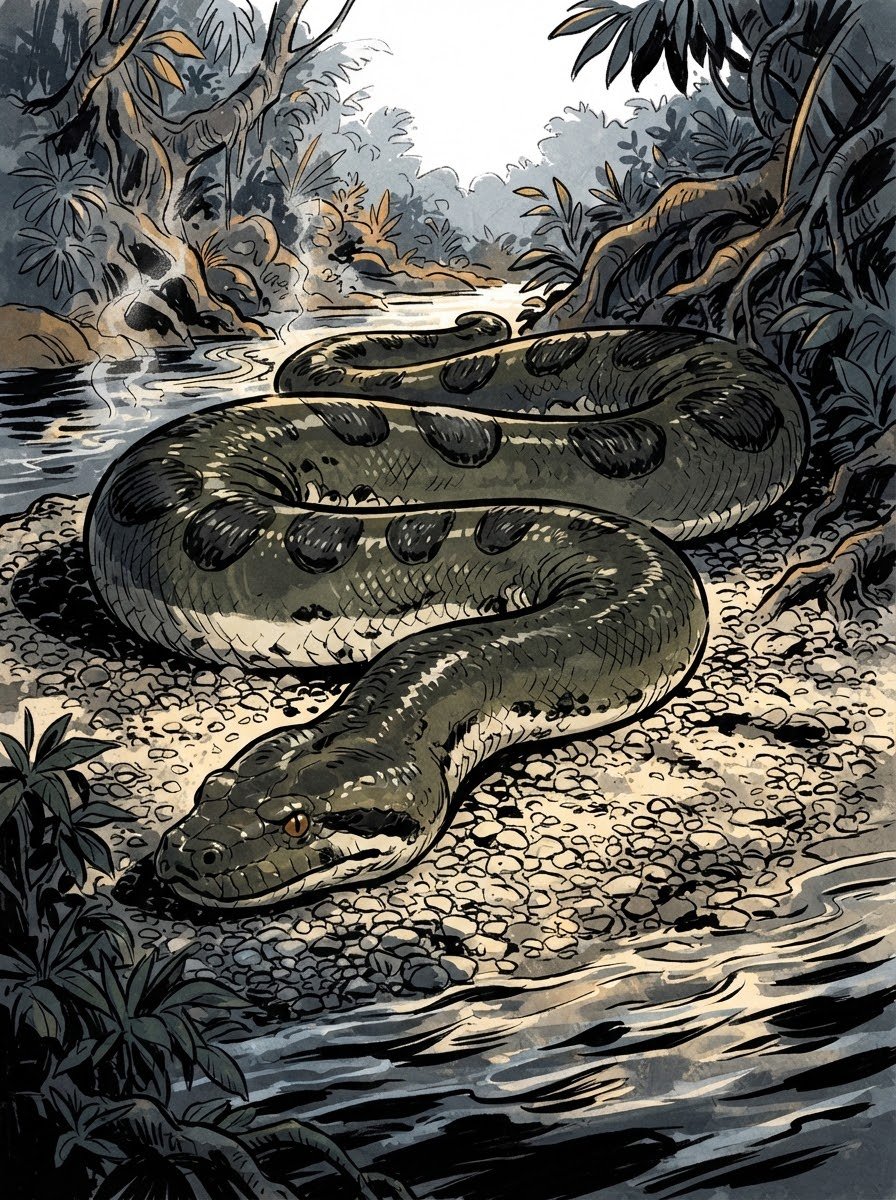
A World After the Dinosaurs Six million years after the catastrophic asteroid impact ended the reign of Tyrannosaurus rex, planet Earth was recovering. In the hot, equatorial regions of northern South America, lush, dense rainforests grew where shallow seas once sat. Gliding through a warm water channel in present-day Colombia is Saria, a fully grown female Titanoboa, navigating her vast, wet ecosystem.
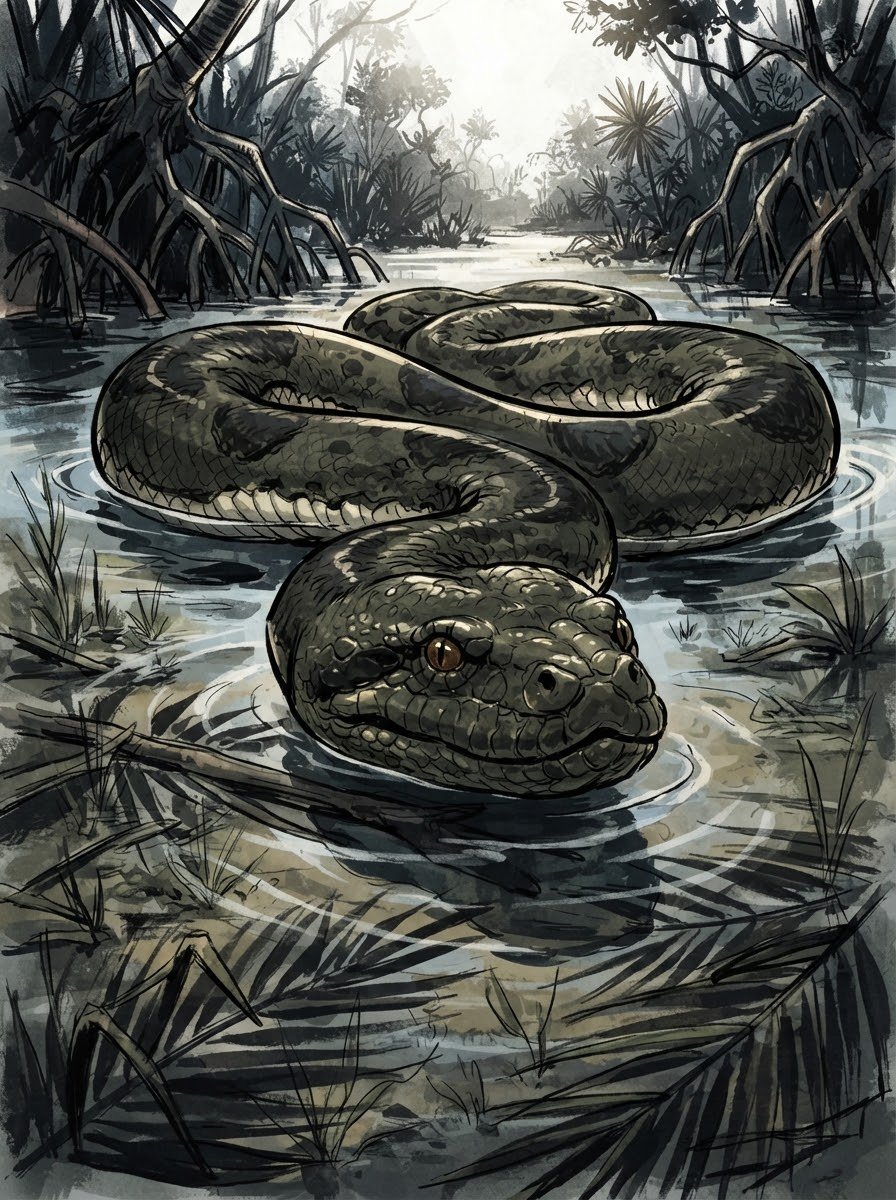
Meet Titanoboa Titanoboa cerrejonensis was a master of stealth and raw physical power. Stretching up to 13 meters (40 feet) in length and weighing over 1.1 metric tons (2,500 pounds), Saria was longer than a modern city bus and heavier than a full-grown black rhinoceros. With smooth, dark, waterproof scales, she was perfectly adapted for a life spent almost entirely in water.
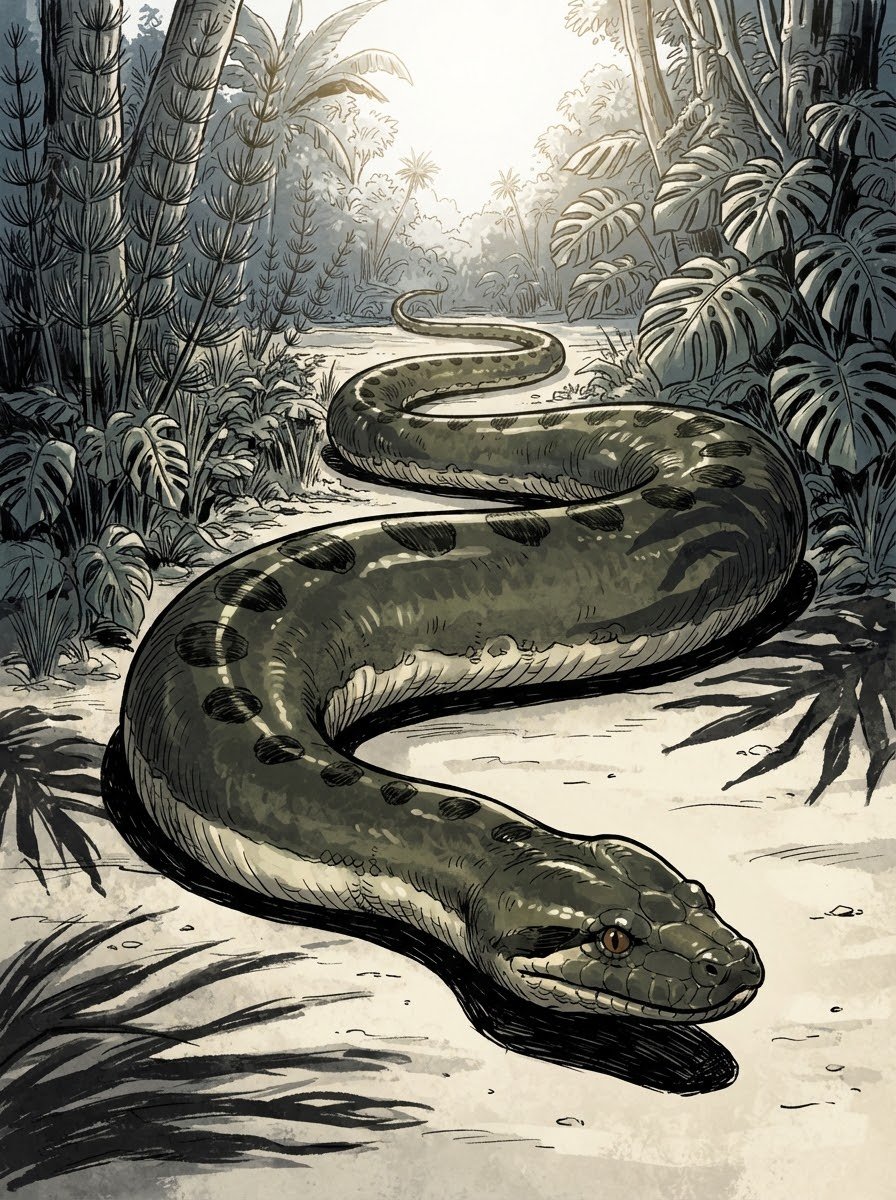
How Big Was Titanoboa? To understand the size of Titanoboa, picture the largest green anaconda today—which reaches around 6 to 7 meters and weighs about 250 kilograms. Saria was double that length and more than four times as heavy. Her thickest body section was wider than a human adult's waist, making her the undisputed apex predator of her freshwater realm.
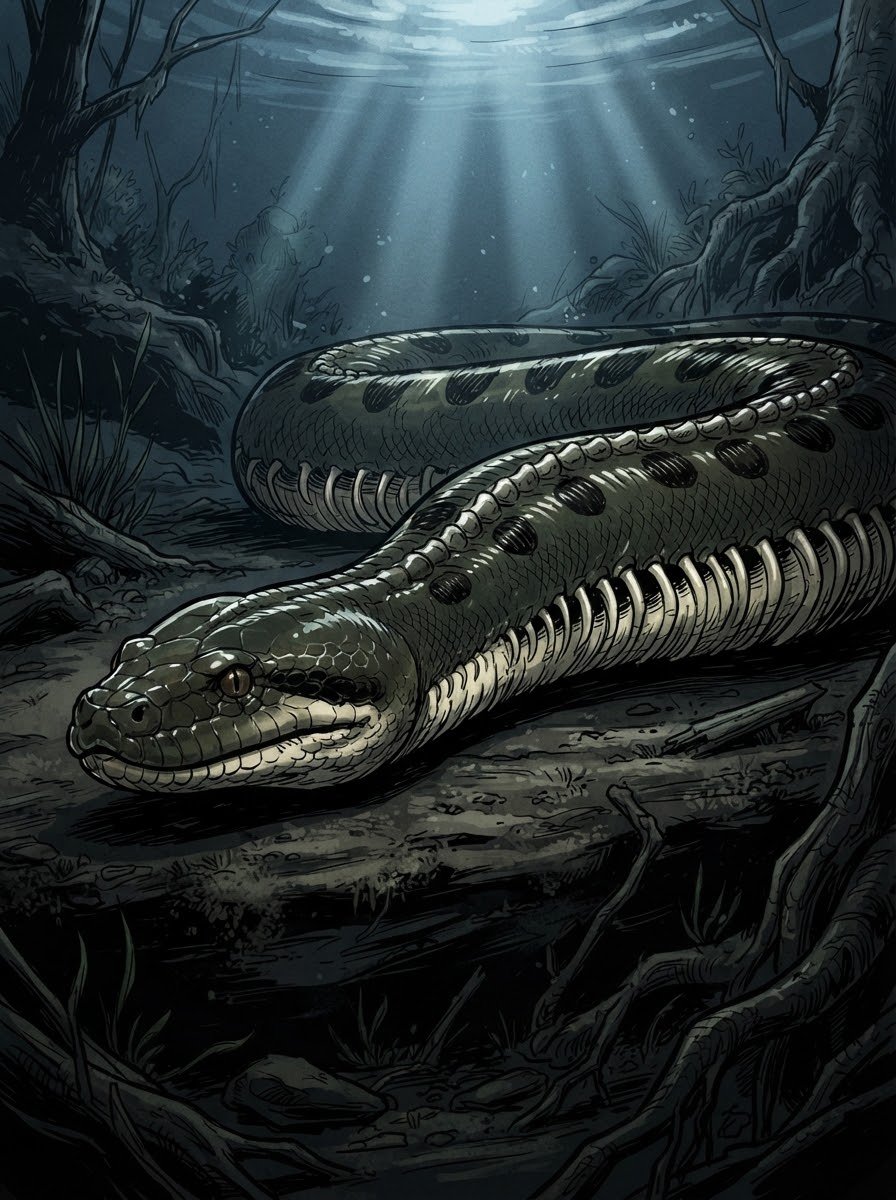
Built Like a Giant Saria's body was a miracle of biomechanical engineering. With more than 250 individual vertebrae supporting her spine, her skeleton provided both immense flexibility and terrifying muscular force. Her flexible ribs could expand outward, allowing her to digest prey items that were far wider than her own head.
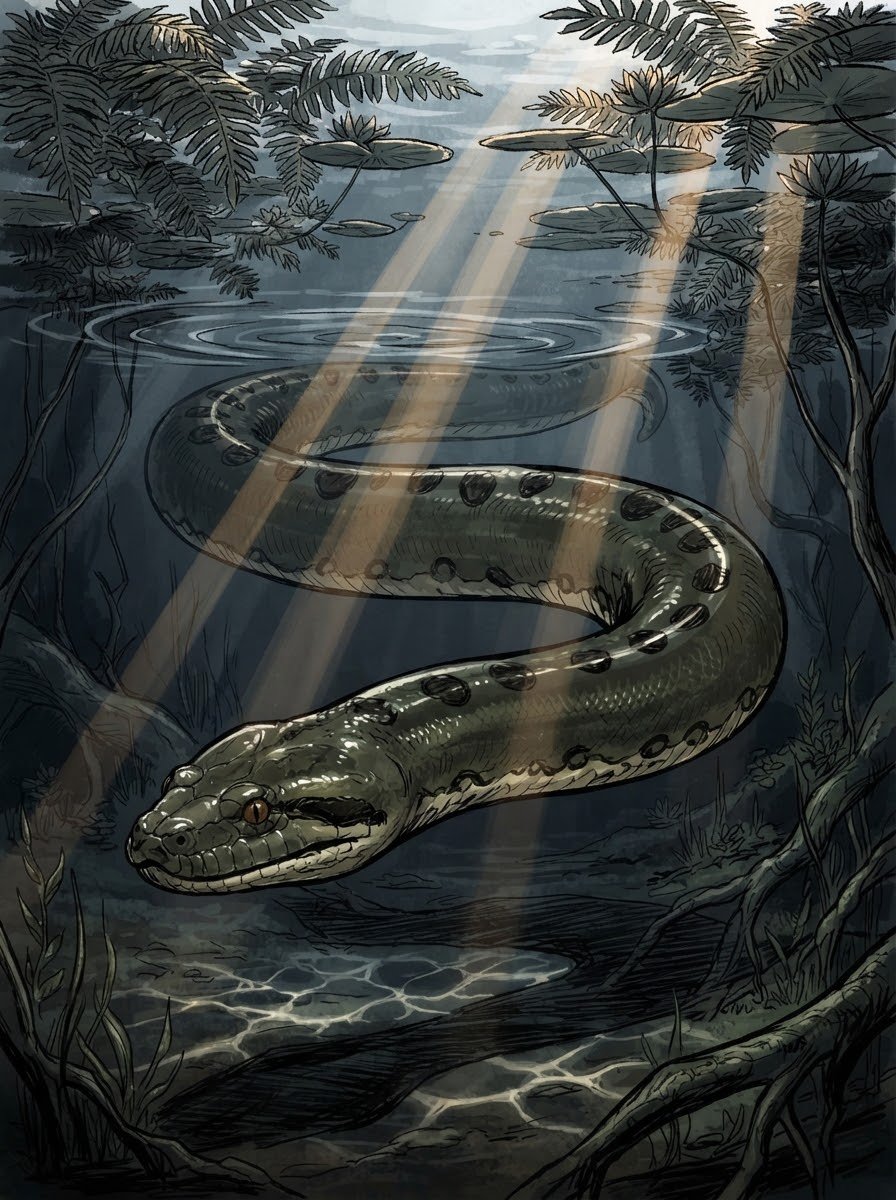
Life in the Ancient Swamps The ancient world of Cerrejón was scorching hot and exceedingly humid, with average annual temperatures hovering around 30 to 34°C (86 to 93°F). Saria spent most of her daytime hours floating effortlessly through slow-moving muddy deltas and shaded oxbow lakes, using water buoyancy to support her immense weight.
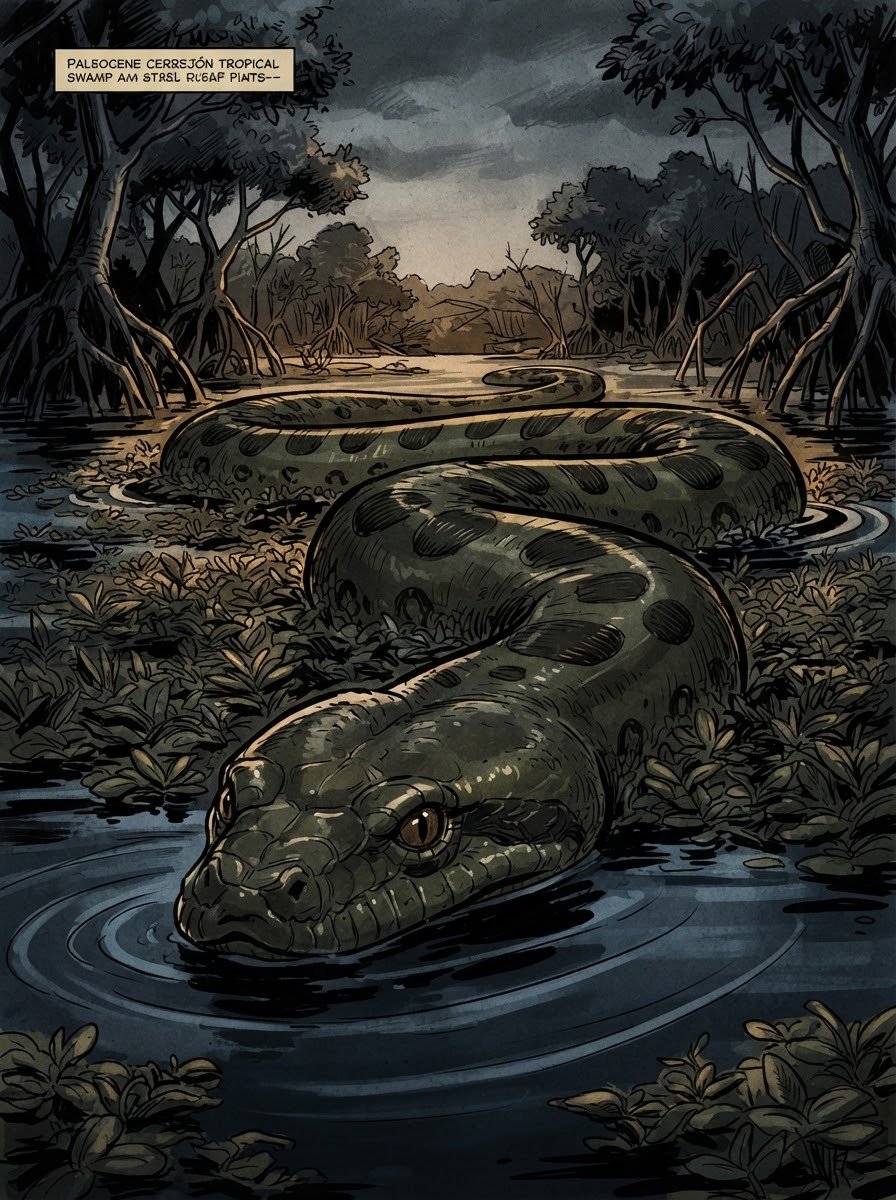
The Hidden Hunter Lying completely motionlessness among floating river plants, Saria is invisible to unsuspecting animals. Only her nostrils and dark amber eyes break the surface. Sensory organs in her snout pick up minute vibrations and biochemical signals in the water, alerting her to an approaching creature along the muddy river edge.
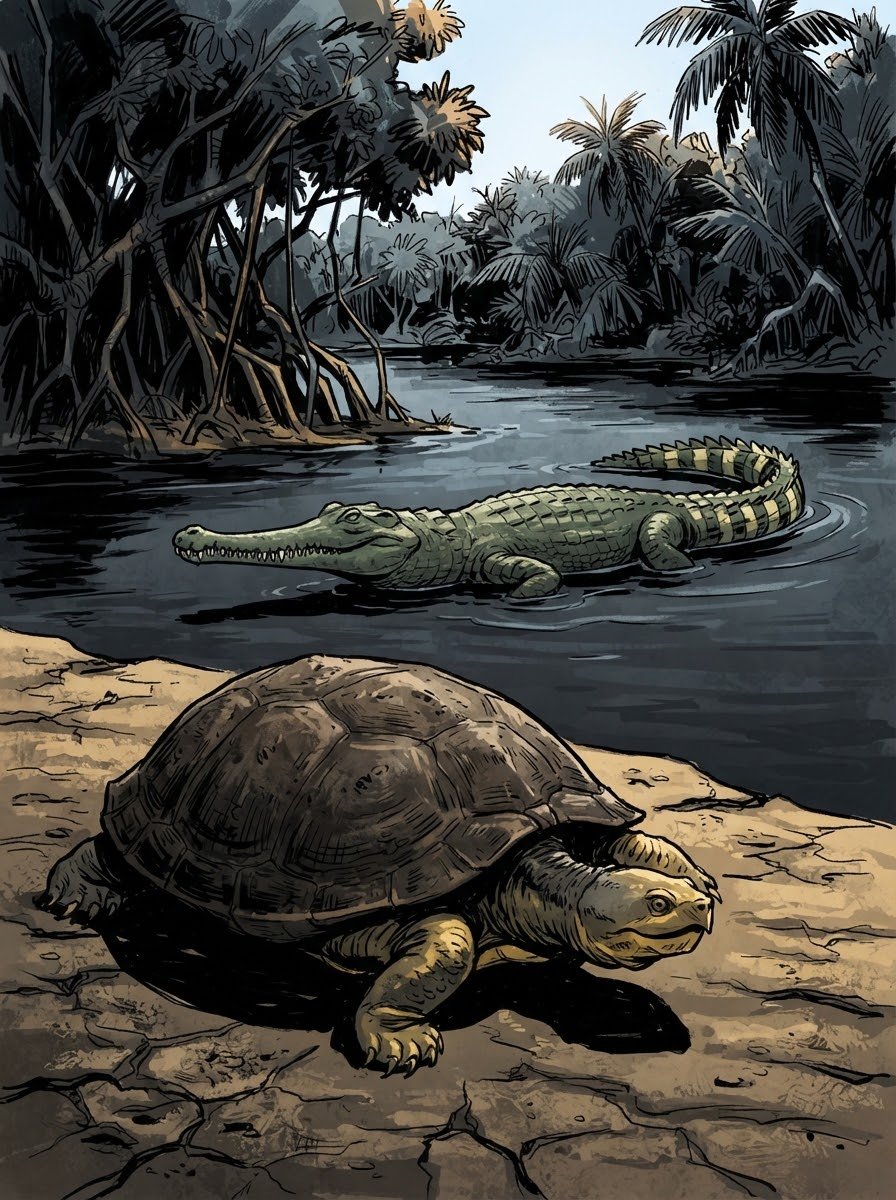
A World Full of Giants Saria was not the only giant living in the Paleocene swamps of Cerrejón. Massive side-necked turtles like Carbonemys, with shell lengths exceeding 1.7 meters (5.5 feet), basked on fallen logs. Nearby, broad-bodied dyrosaurid crocodilians glided through channels, competing for fish in the nutrient-rich ecosystem.
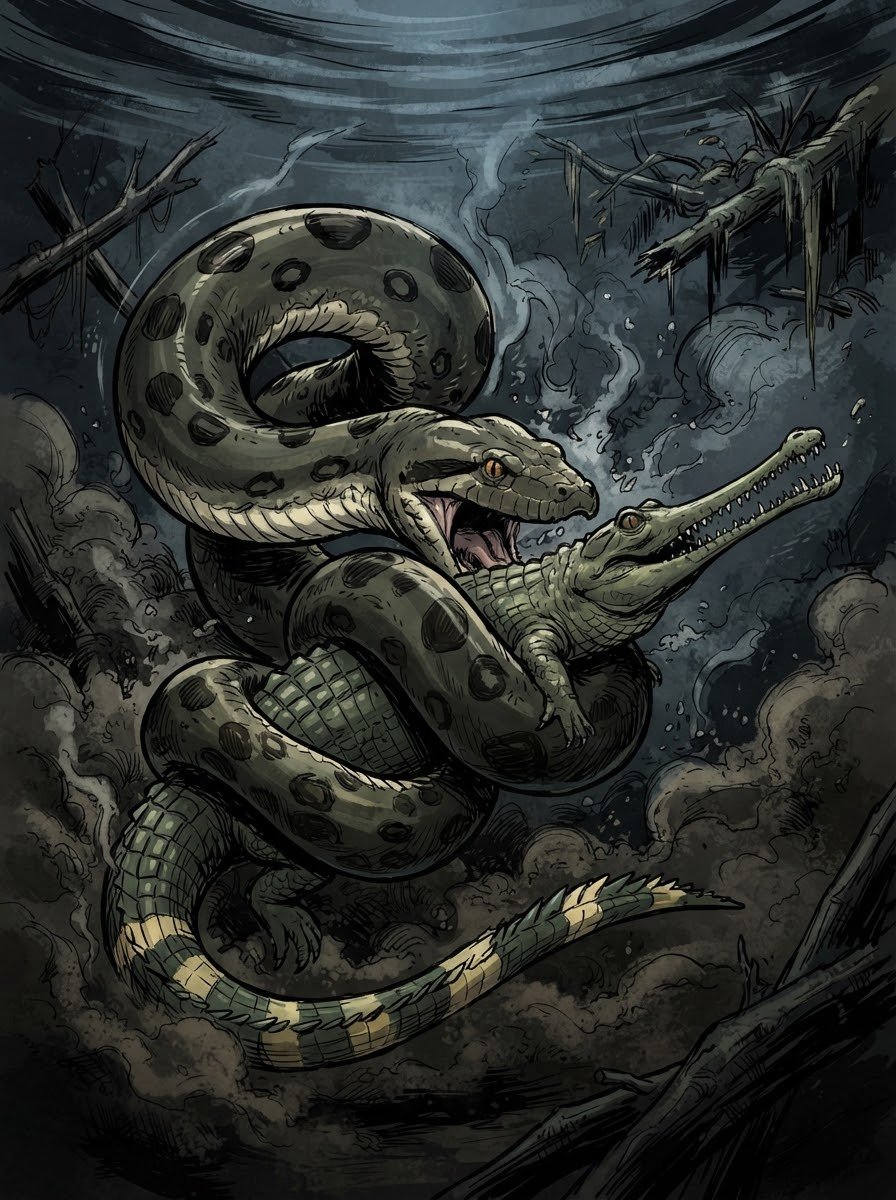
The Power of Its Jaws and Body When a long-snouted dyrosaurid crocodilian swims too close, Saria strikes with lightning speed. Her recurved, needle-sharp teeth grip the slippery target, and in a flash, her heavy coils wrap around her prey. Exerting tremendous pressure, she overpowers her target before swallowing it whole, headfirst.
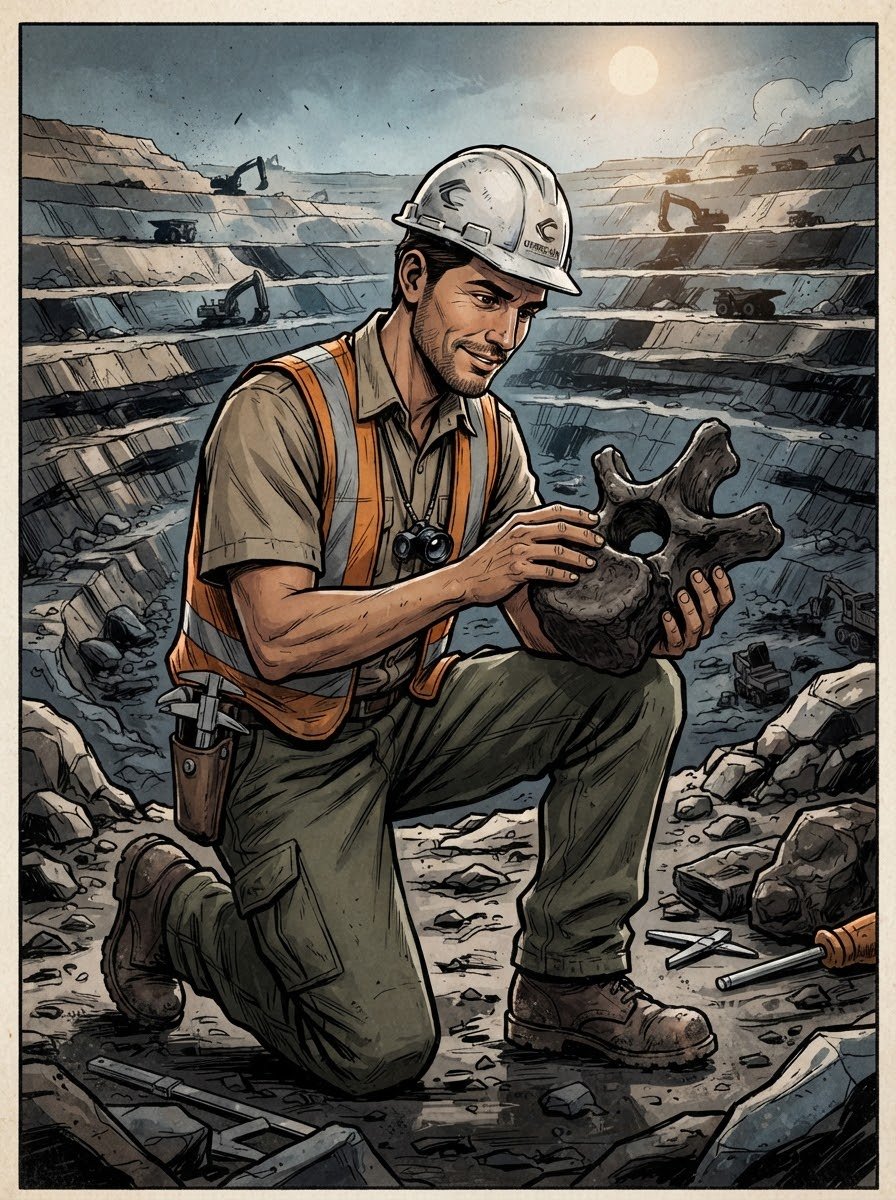
The Fossil Detectives For tens of millions of years, the world of Titanoboa remained buried beneath layers of rock and coal. In the early 2000s, inside the vast Cerrejón open-pit coal mine in La Guajira, Colombia, paleontologists uncovered giant fossilized vertebrae that did not belong to any known mammal or dinosaur. Lead researcher Dr. Mateo Silva inspects a freshly excavated spine bone.
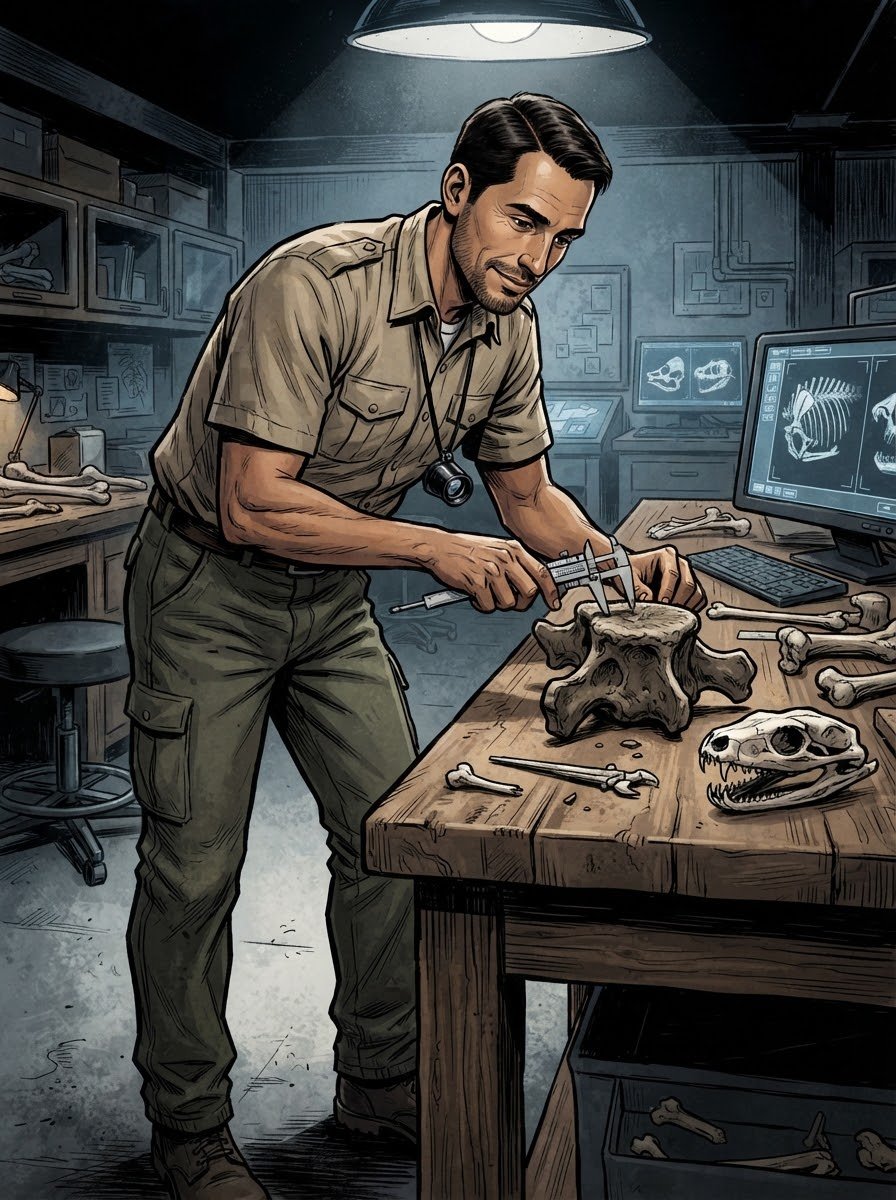
How Scientists Reconstruct a Giant Back in the laboratory, Dr. Mateo Silva compares the fossil vertebrae of Titanoboa with skeletal specimens of modern green anacondas and python species. By measuring the width, height, and neural arch angles of each bone, paleontologists used mathematical scaling models to accurately reconstruct the entire size and shape of Titanoboa.
Why Did Snakes Grow So Large? Why was Titanoboa able to grow to such colossal proportions? Because snakes are ectotherms, their body temperature depends directly on ambient climate heat. In the ultra-warm tropical world of the Paleocene, high equatorial temperatures provided enough thermal energy for metabolic processes to support unprecedented cold-blooded body mass.
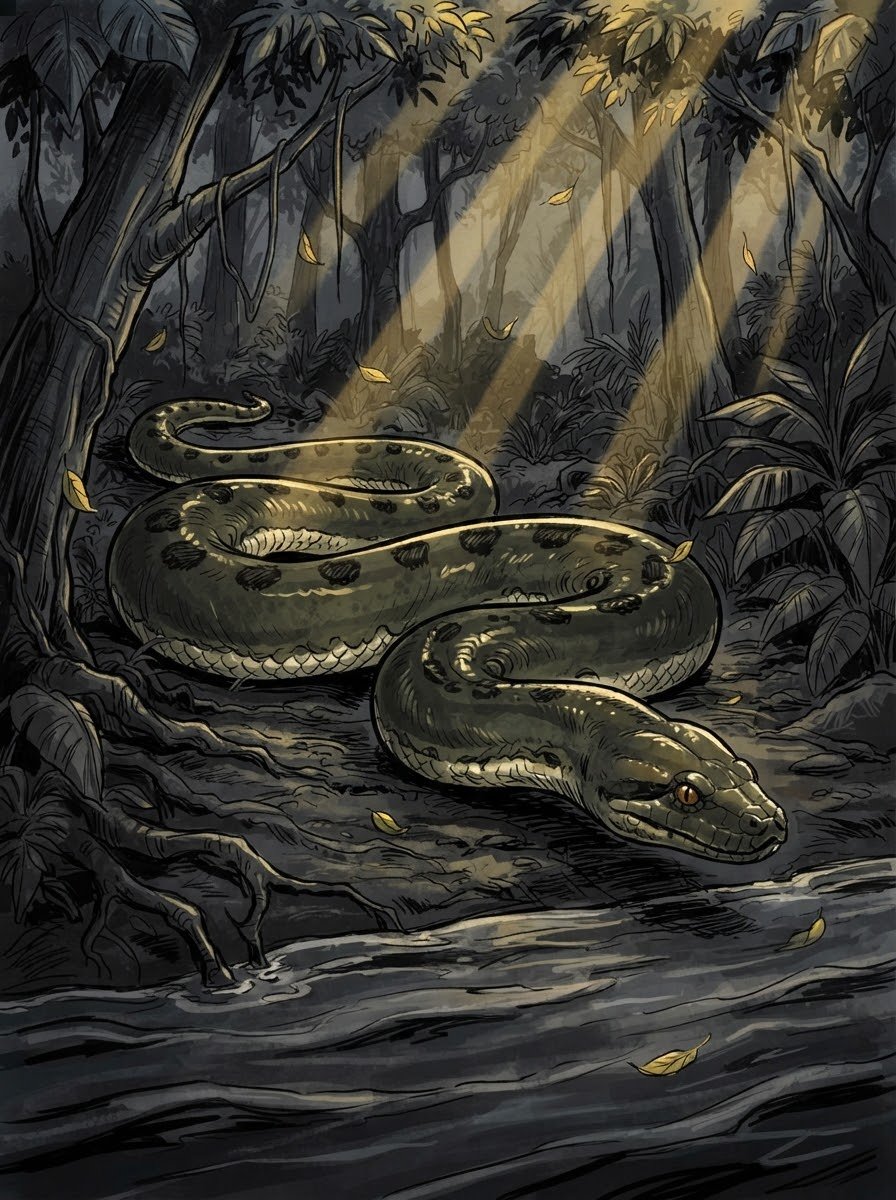
When the Ancient World Changed Over millions of years, Earth's climate began a long, gradual cooling trend. As global temperatures dropped and swamp ecosystems dried up or transformed into modern river basins, the specialized conditions that supported mega-reptiles disappeared. Unable to maintain its giant mass in a cooler world, Titanoboa gradually went extinct.
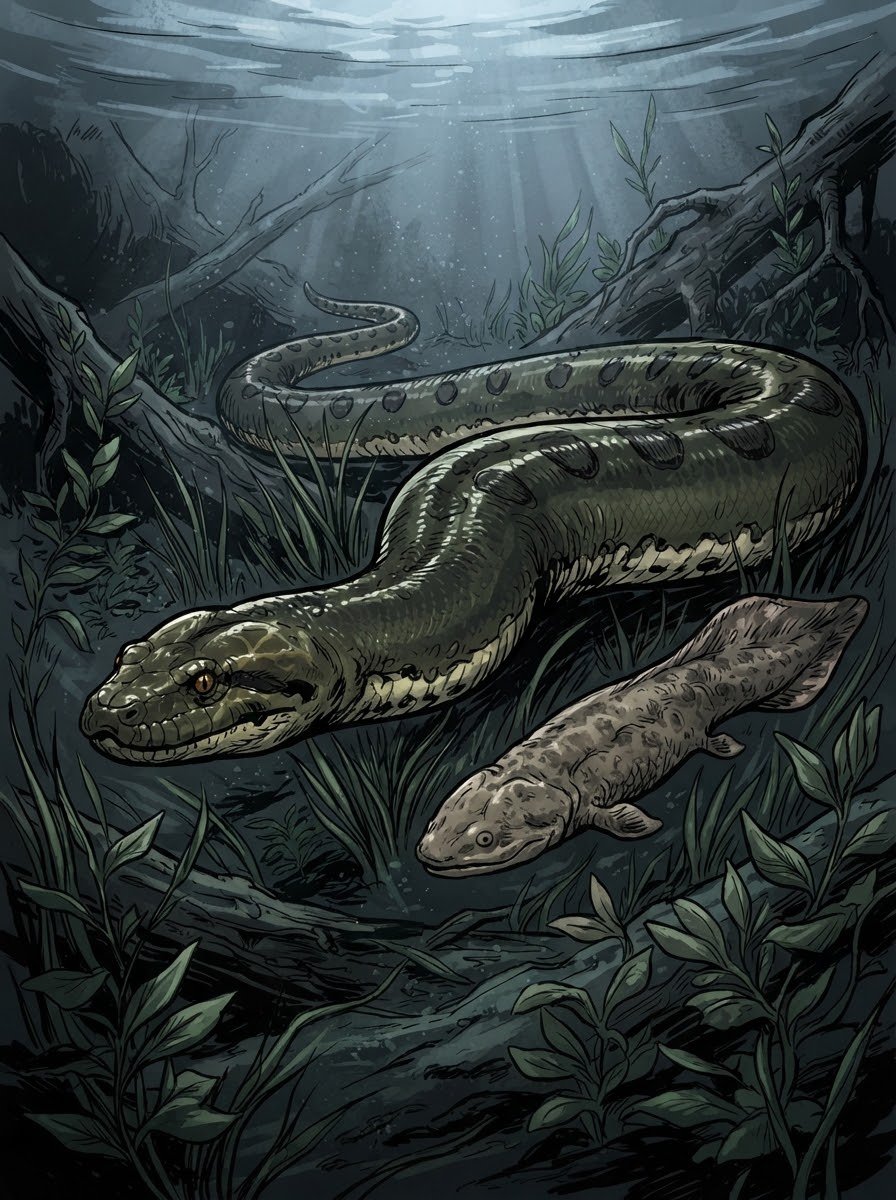
Titanoboa: Myths Versus Facts Pop culture often depicts giant prehistoric snakes as terrifying land monsters that hunted land mammals and breathed fire. In reality, Titanoboa was a non-venomous, water-dwelling hunter that spent most of its life swimming in calm swamp channels, feeding largely on giant fish, lungfish, and small crocodilians.
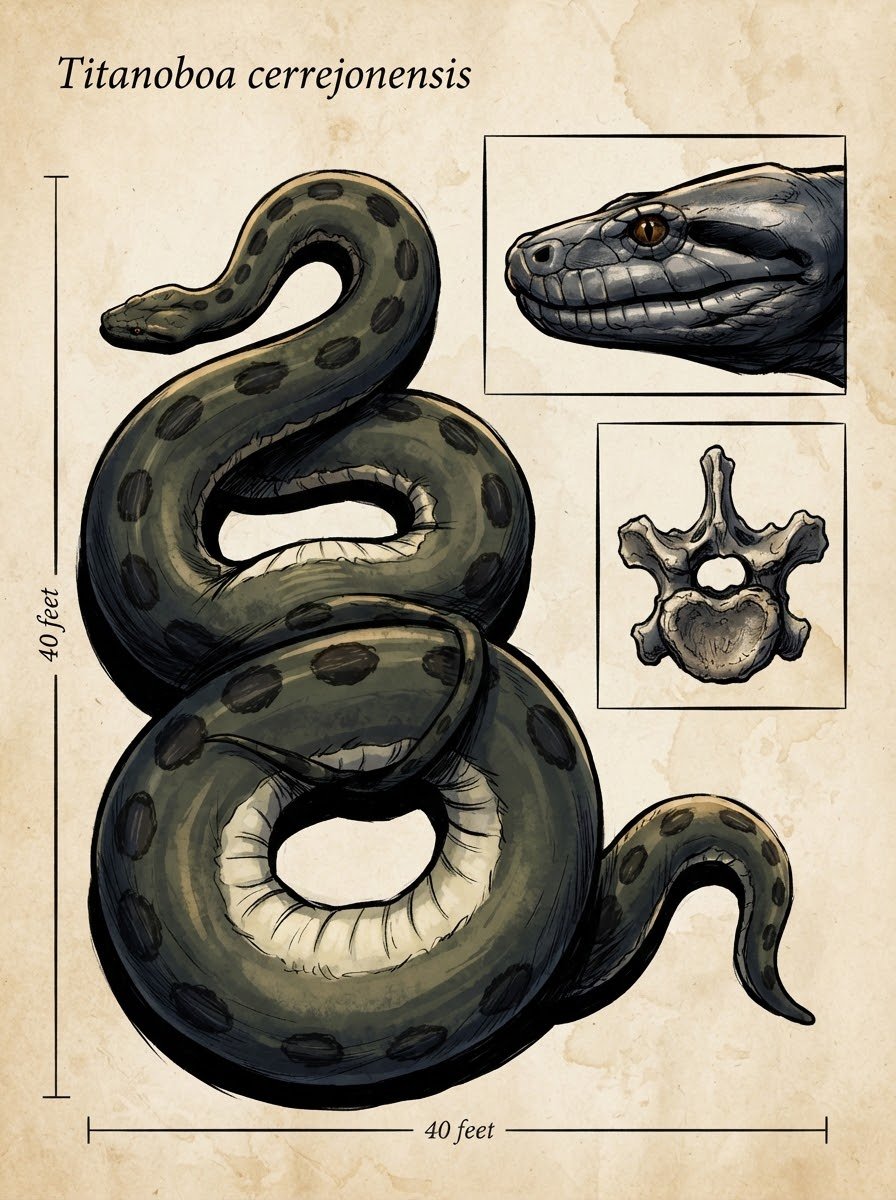
Titanoboa Fact File TITANOBOA — SCIENTIFIC FACT FILE • Scientific Name: Titanoboa cerrejonensis • Temporal Range: Early Paleocene Epoch (~60 to 58 million years ago) • Classification: Class Reptilia, Order Squamata, Suborder Serpentes, Family Boidae • Estimated Length: 12 to 14 meters (39 to 46 feet) • Estimated Mass: ~1,135 kilograms (2,500 pounds / 1.1 metric tons) • Maximum Body Diameter: ~1 meter (3.3 feet) at widest point • Diet: Large fish, ancient lungfish, and dyrosaurid crocodilians • Key Fossil Location: Cerrejón Coal Mine, La Guajira Peninsula, Colombia
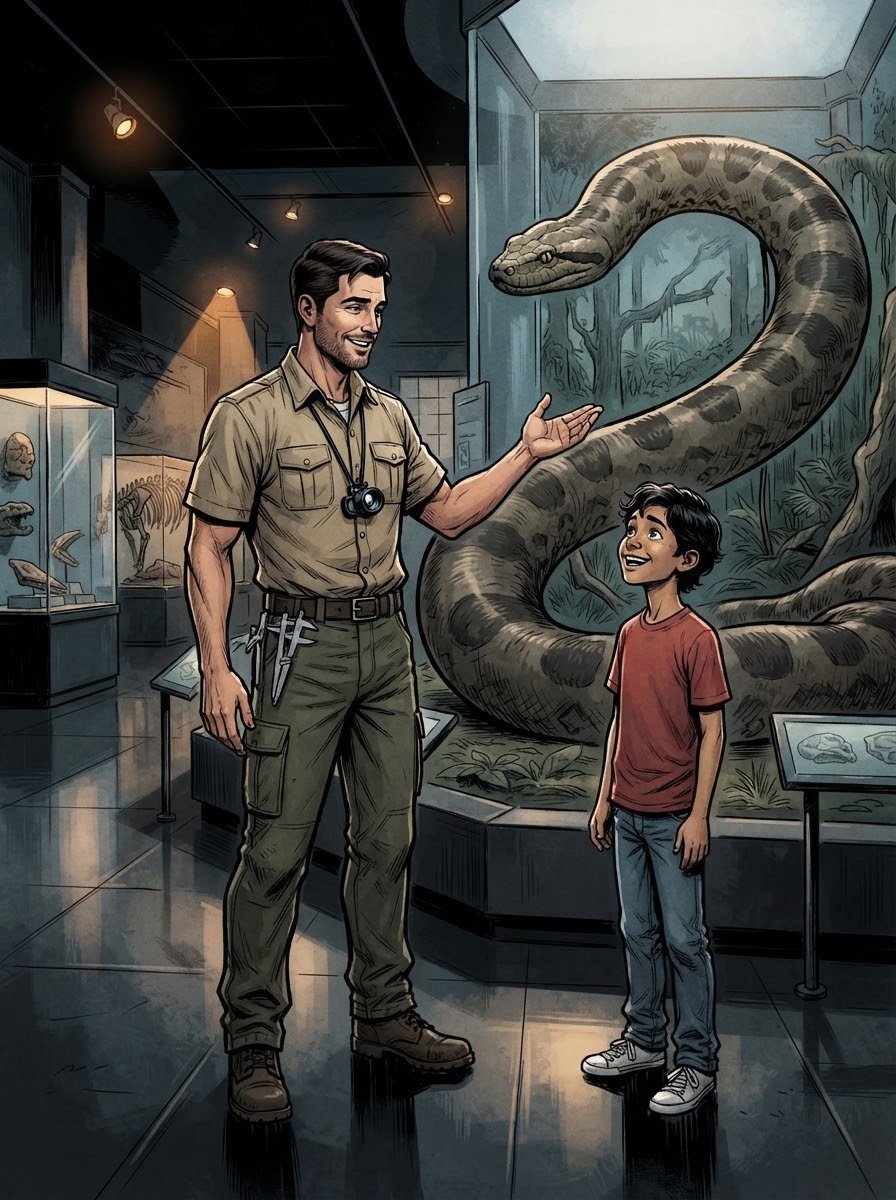
Echoes of the Ancient Swamps Today, Titanoboa serves as a crucial window into Earth's deep climate history and biological adaptation. Inside a brightly lit natural history exhibit, Dr. Mateo Silva presents a full-scale, life-sized model of Titanoboa to a young student, sharing how studying ancient ecosystems helps us protect modern rainforests and understand our planet's future.