
THE KING OF THE LOST WORLD: TYRANNOSAURUS REX
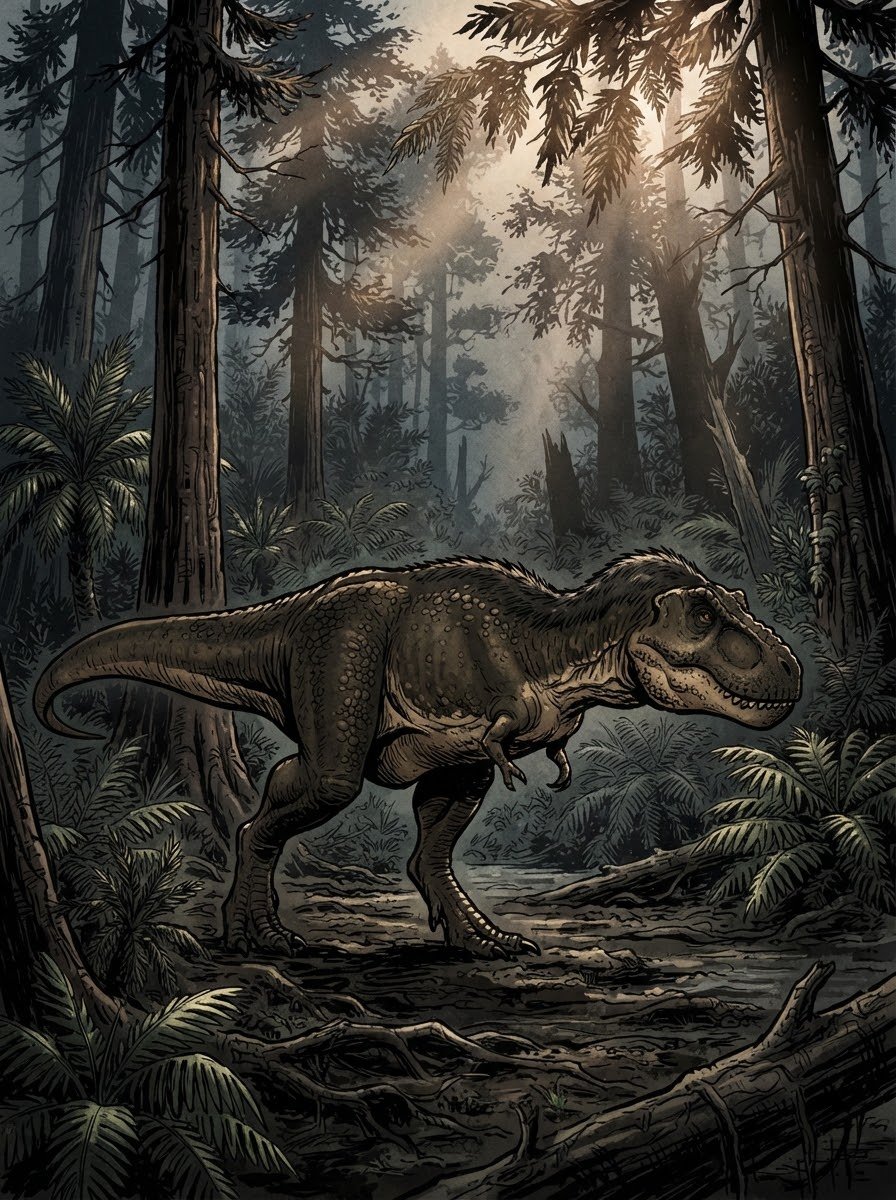 Sixty-six million years ago, in the lush, subtropical floodplains of what is now North America’s Hell Creek Formation, a giant walked the earth. The air was warm, rich with oxygen, and dense with the scent of conifers, cycads, and blooming flowers. Dominating this ancient river delta was the ultimate apex predator of the Late Cretaceous: Tyrannosaurus rex. Measuring up to 40 feet in length and weighing over eight metric tons, this colossal theropod was not a slow, mindless brute, but a highly evolved masterpiece of evolutionary engineering.
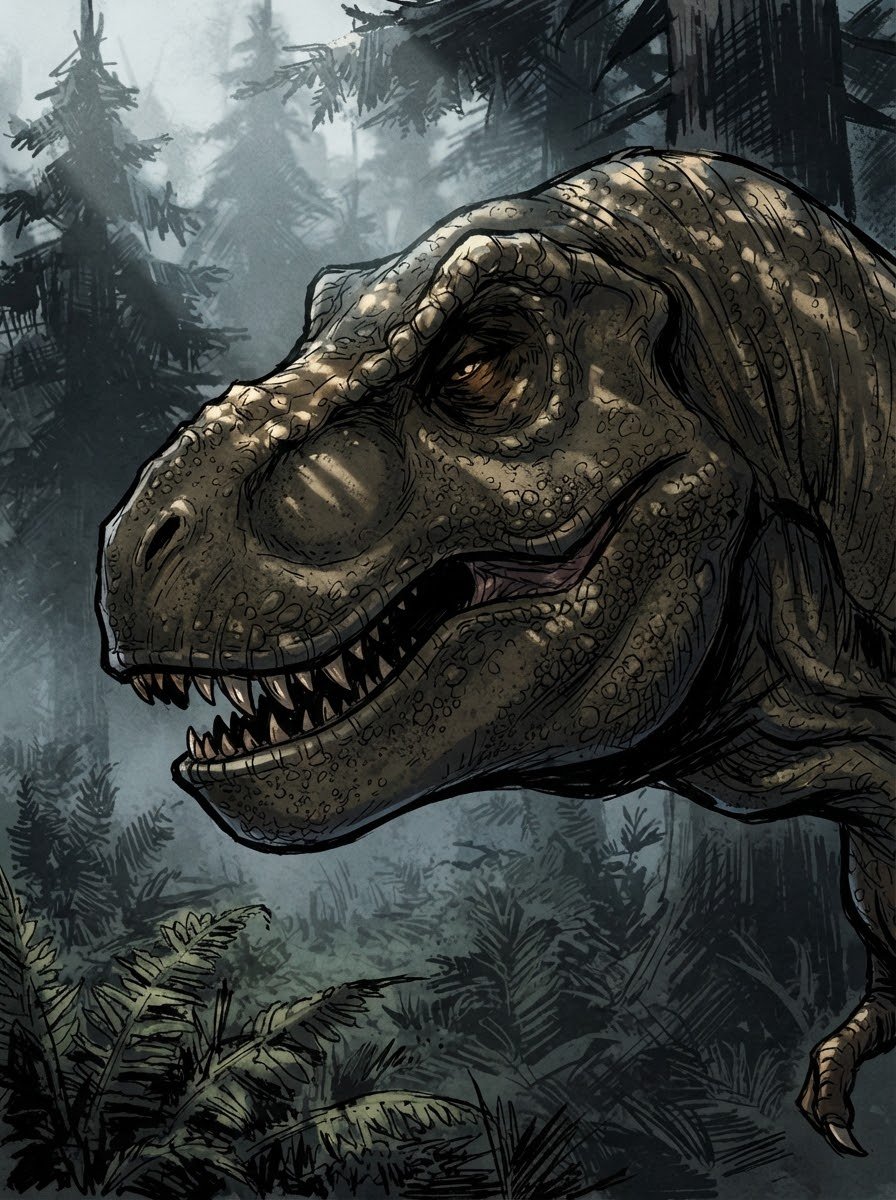
The biomechanical architecture of Tyrannosaurus rex was engineered for terrifying efficiency. Unlike all other carnivorous dinosaurs, T. rex possessed a fused nasal bone and a massive, heavily reinforced skull capable of delivering a bite force exceeding 12,000 pounds—enough pressure to pulverize solid bone. Its thick, banana-shaped teeth had wide roots and serrated edges, designed not just to slice flesh, but to crunch through skeletal structures to access rich bone marrow. With wide-set eyes positioned forward on its skull, T. rex enjoyed stereoscopic depth perception superior to modern hawks.
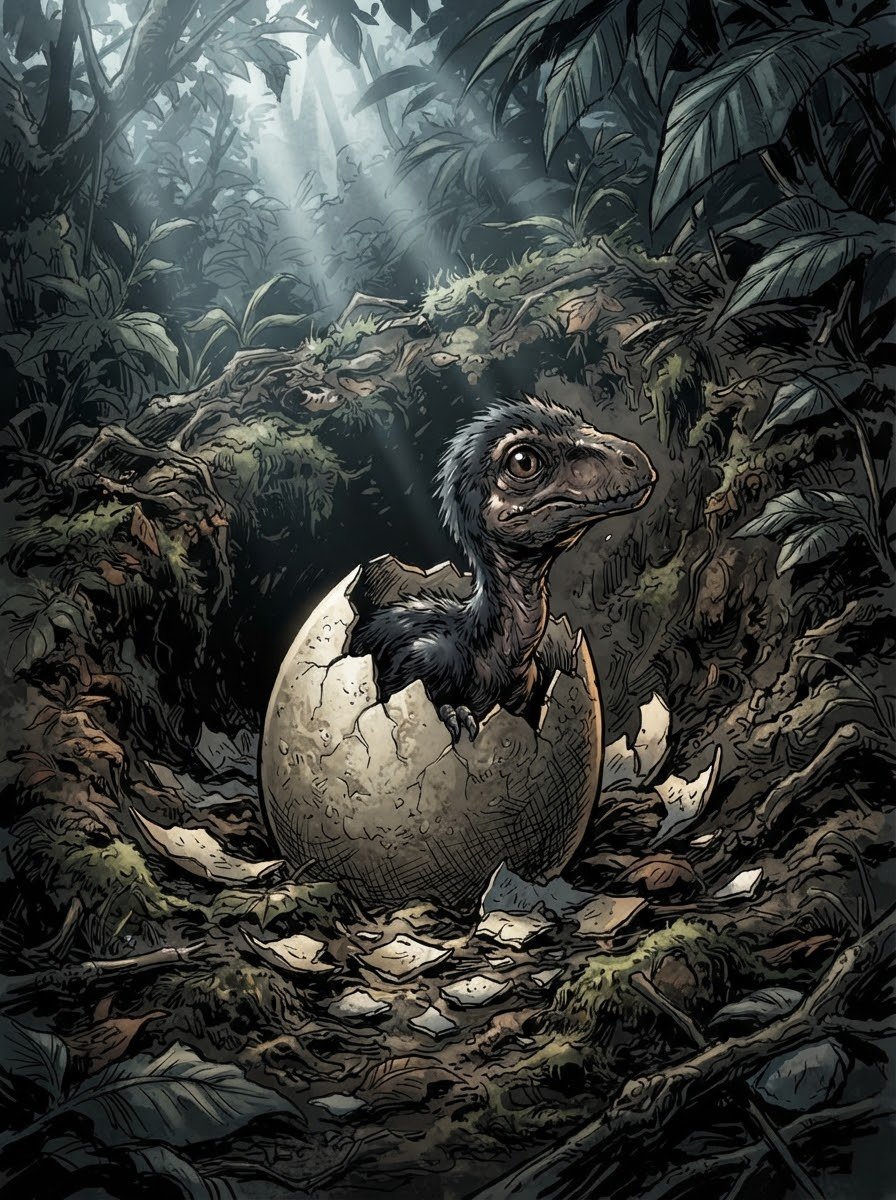
The life cycle of the tyrant king began inside a carefully guarded nest mound constructed of decaying vegetation and earth. Female tyrannosaurs laid clutches of elongated, textured eggs. Upon hatching, baby tyrannosaurs like Teron emerged weighing less than ten pounds—tiny, vulnerable creatures clad in downy, insulating feathers. Highly agile and equipped with long legs, young hatchlings fed on small lizards, mammals, and insects, staying close to dense underbrush to avoid larger predators, including adult members of their own species.
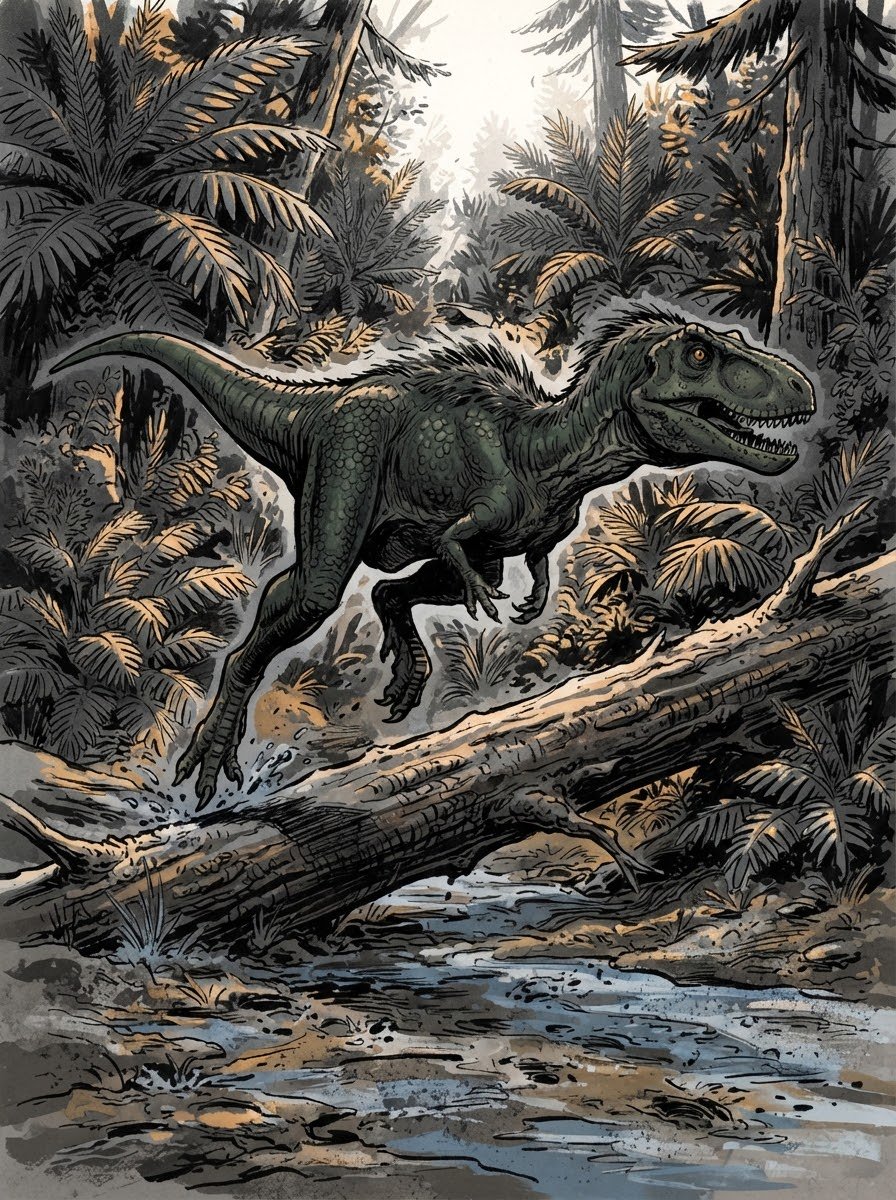
Between the ages of 10 and 15, juvenile tyrannosaurs underwent one of the most drastic growth spurts in natural history, gaining over four pounds of bone and muscle every day. As a subadult, Teron transformed into a lean, long-legged pursuit predator. Lacking the heavy armor-crushing skull of his parents, the juvenile sported a slender snout and elongated hind limbs, allowing him to sprint at speeds up to 25 miles per hour. This distinct physiological stage allowed young tyrannosaurs to occupy a completely different ecological niche than adults.
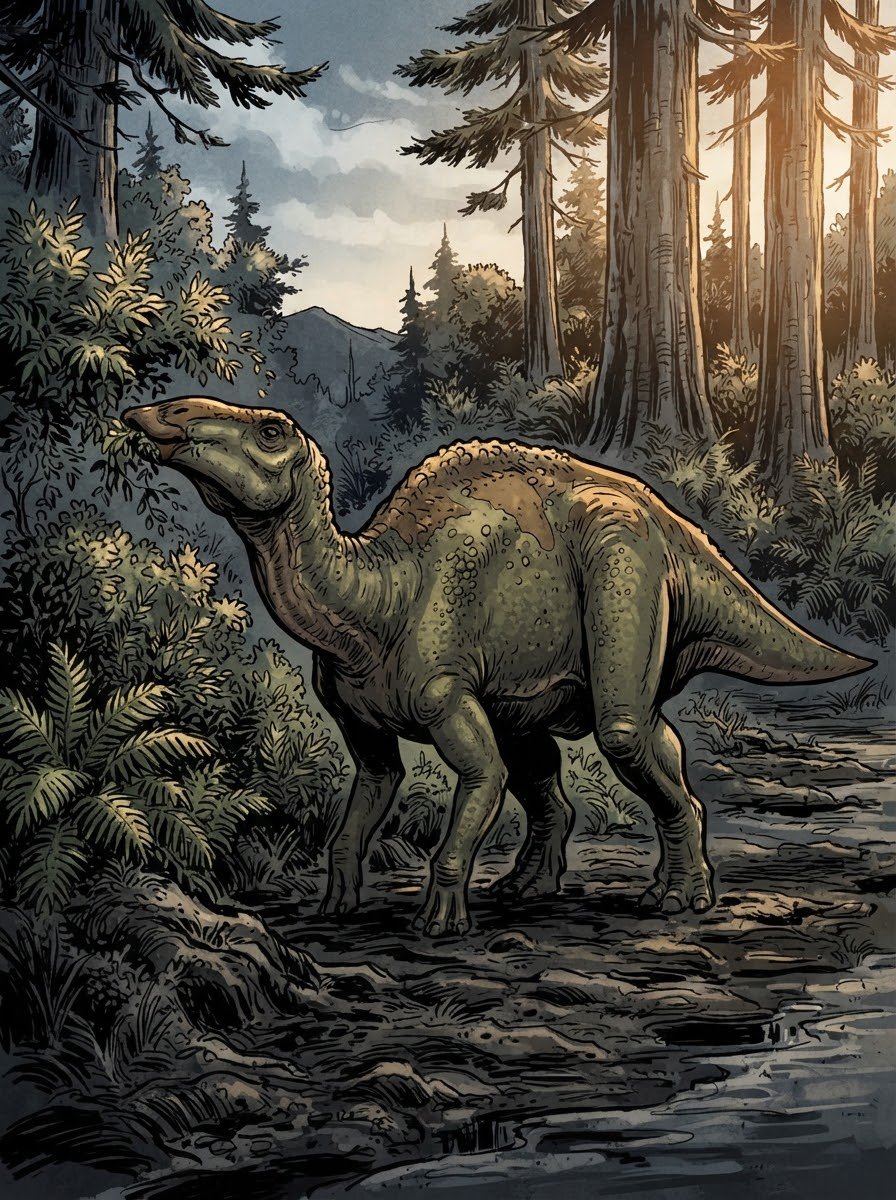
The Late Cretaceous ecosystem was a bustling food web sustained by immense primary producers. Among the most abundant herbivores was Edmontosaurus, a duck-billed hadrosaur growing up to 39 feet long. Moving in vast migratory herds across the river basins, these gentle giants stripped vegetation with hundreds of tightly packed teeth arranged in dental batteries. Anod, a mature male Edmontosaurus, keeps a watchful eye over his feeding herd, ever alert to subtle vibrations in the ground and distant calls that signal the approach of Hell Creek's ultimate predator.
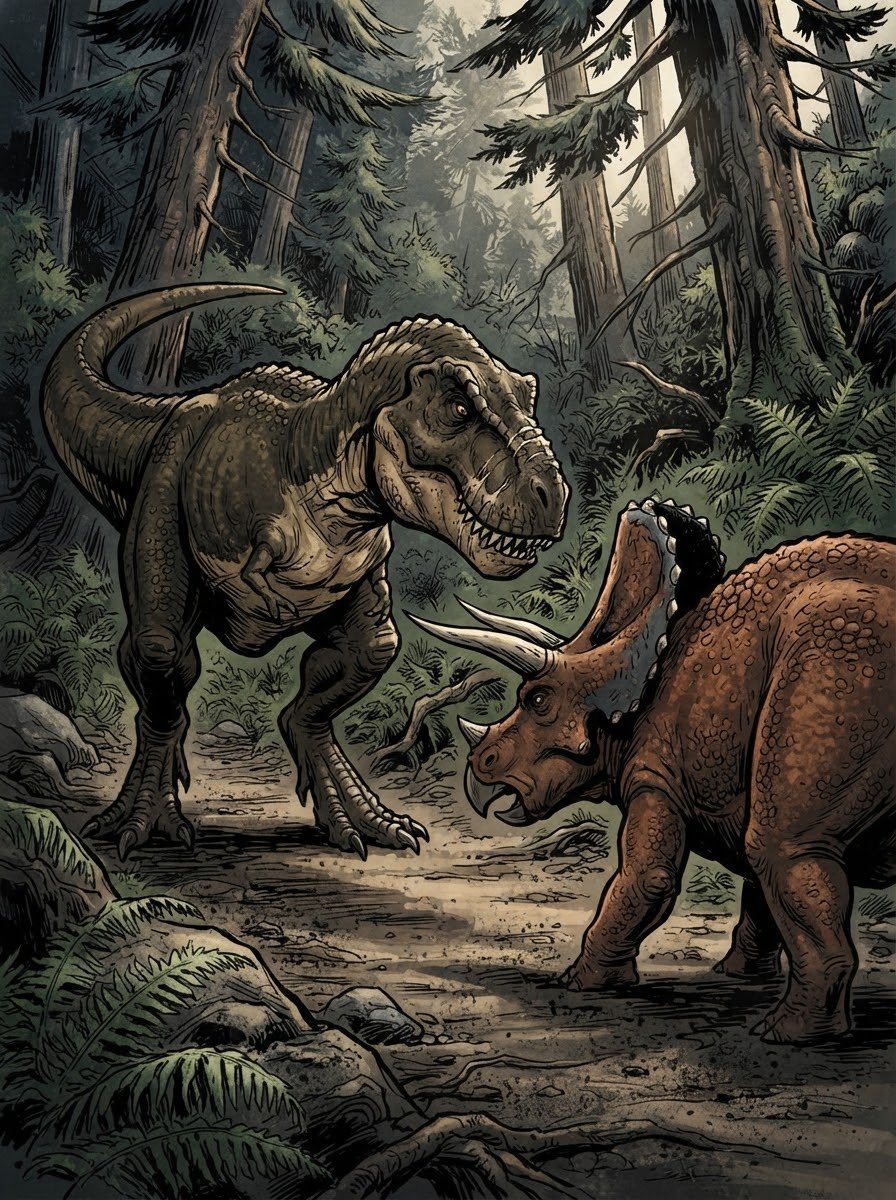
No prehistoric rivalry is more iconic than that between Tyrannosaurus rex and Triceratops horridus. Armed with a three-foot horn over each eye and a massive solid-bone neck frill, an adult Triceratops like Styr was a formidable tank capable of goring even the largest predator. Fossil evidence, including healed bite marks on Triceratops frills and shed tyrannosaur teeth embedded in horn bones, proves these megafauna engaged in brutal, frequent battles. A single misstep by T. rex could result in a fatal impalement.
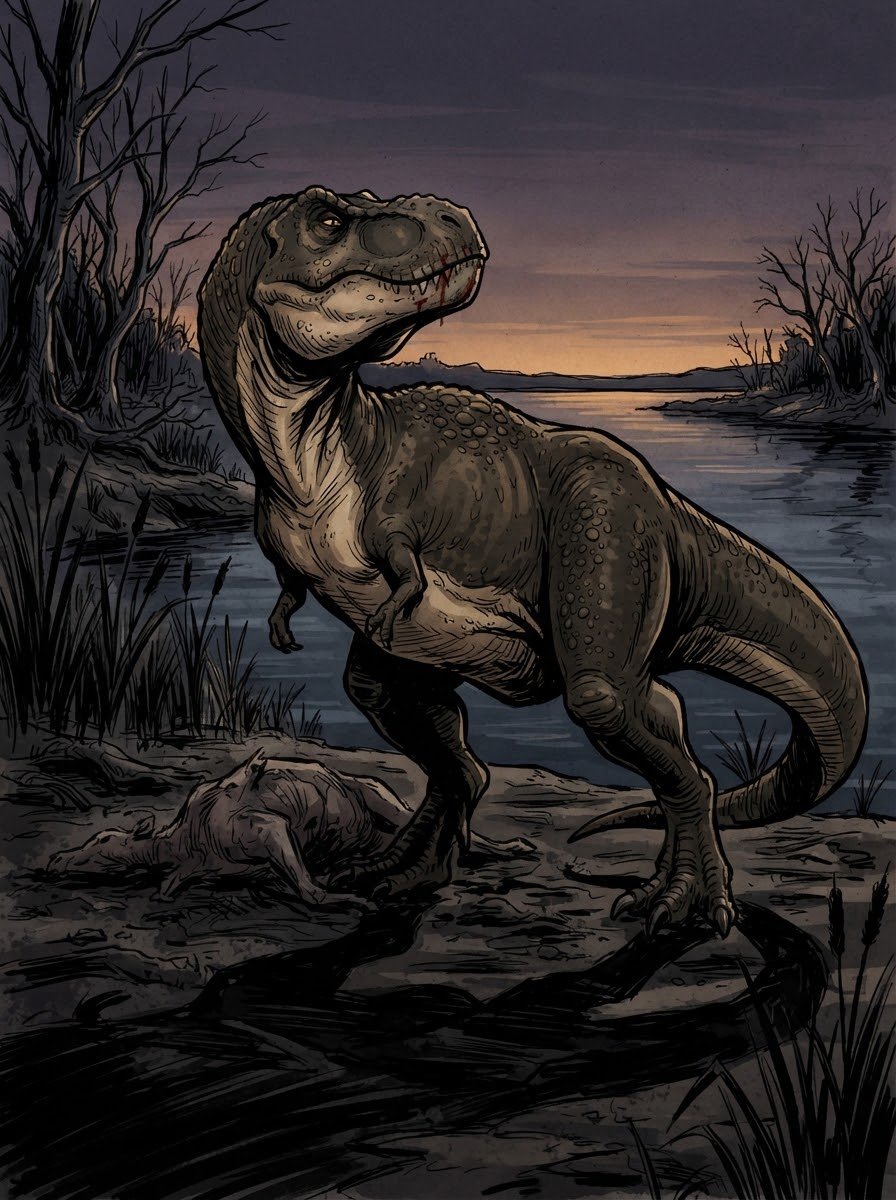
Was Tyrannosaurus rex a ruthless hunter or an opportunistic scavenger? Modern paleontology reveals it was unequivocally both. Like modern lions and hyenas, T. rex would actively hunt when conditions favored an ambush, using low-frequency rumbles to communicate and terrain cover to stalk unsuspecting prey. However, with its unmatched olfactory system—powered by oversized nasal cavities—a tyrannosaur could smell decaying carcasses from miles away, using its sheer size to intimidate smaller carnivores like Dakotaraptor away from fresh kills.
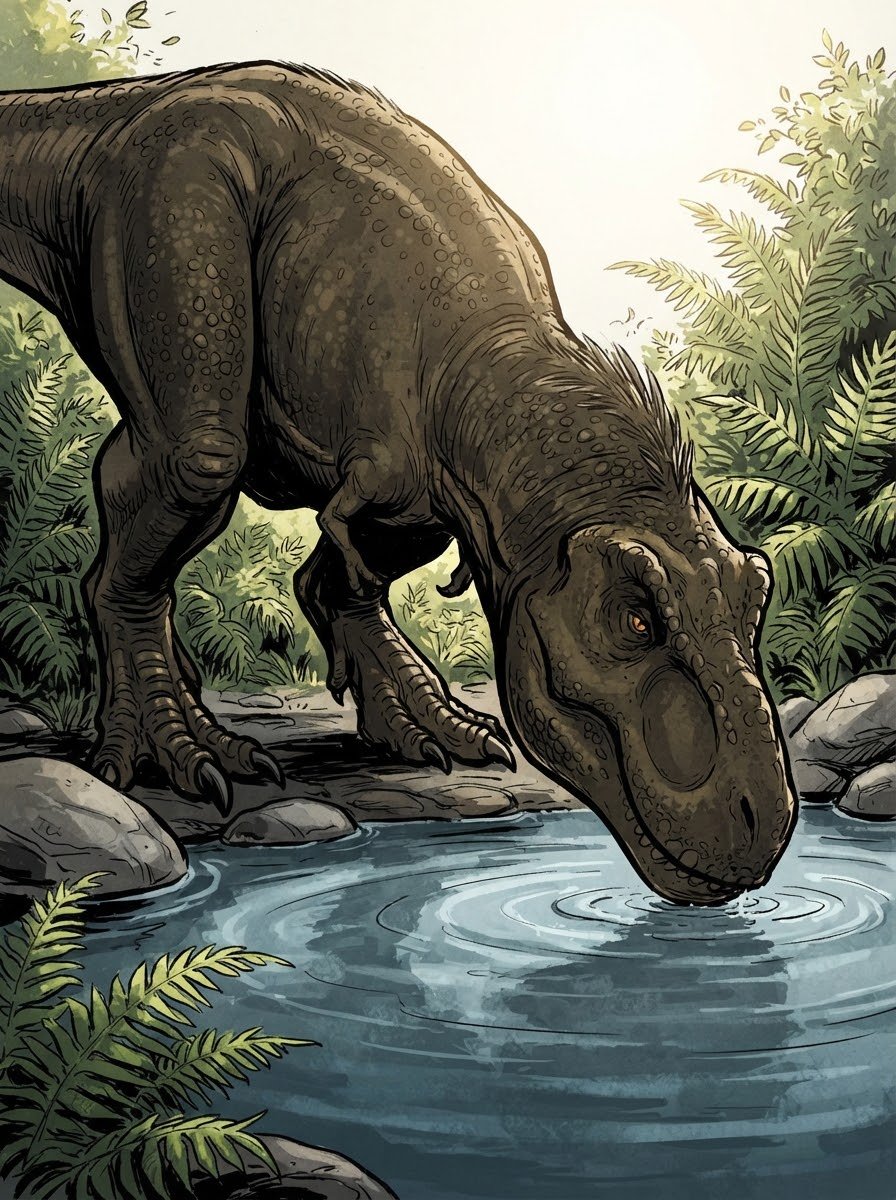
Recent high-resolution skin impressions confirm that adult Tyrannosaurus rex possessed fine, pebbled scales across most of its body, particularly along its flanks, legs, and tail, while reduced feather filaments may have persisted along its neck and spine for display or thermoregulation. Internal neurocranium scans show that the tyrannosaur's brain possessed huge olfactory bulbs for acute smell, inner ear structures tuned to pick up low-frequency infrasound, and advanced balance systems that enabled quick, agile directional turns despite its immense mass.
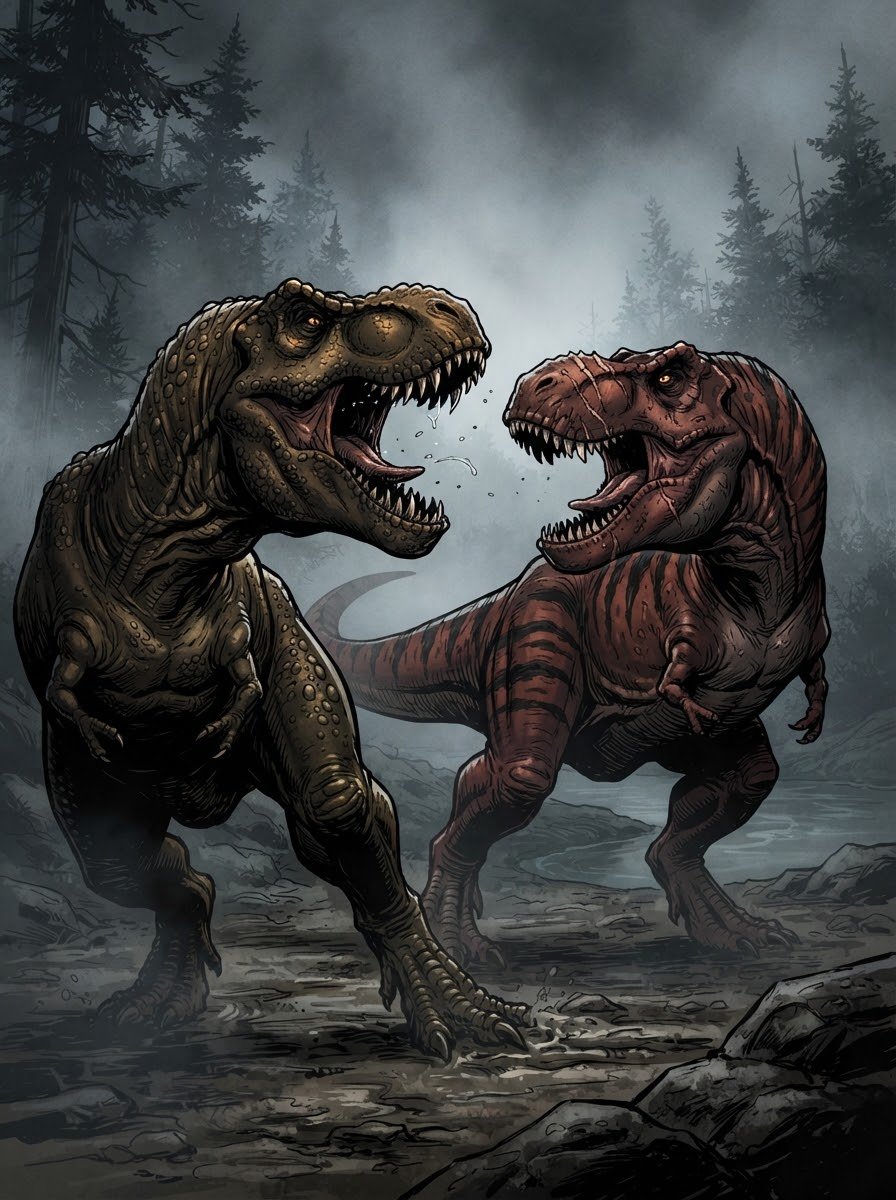
Life at the top of the Cretaceous food chain was violent and unforgiving. Tyrannosaurs frequently fought one another for territory, carcass ownership, and mating rights. Paleontologists have uncovered numerous T. rex skulls bearing healed bite marks that perfectly match the tooth spacing of another T. rex. When Rhea encounters Kratos, a rival male intruding upon her hunting grounds, the two giants engage in face-biting rituals and body checks, leaving battle scars that heal over years into thick, fibrous bone growths.
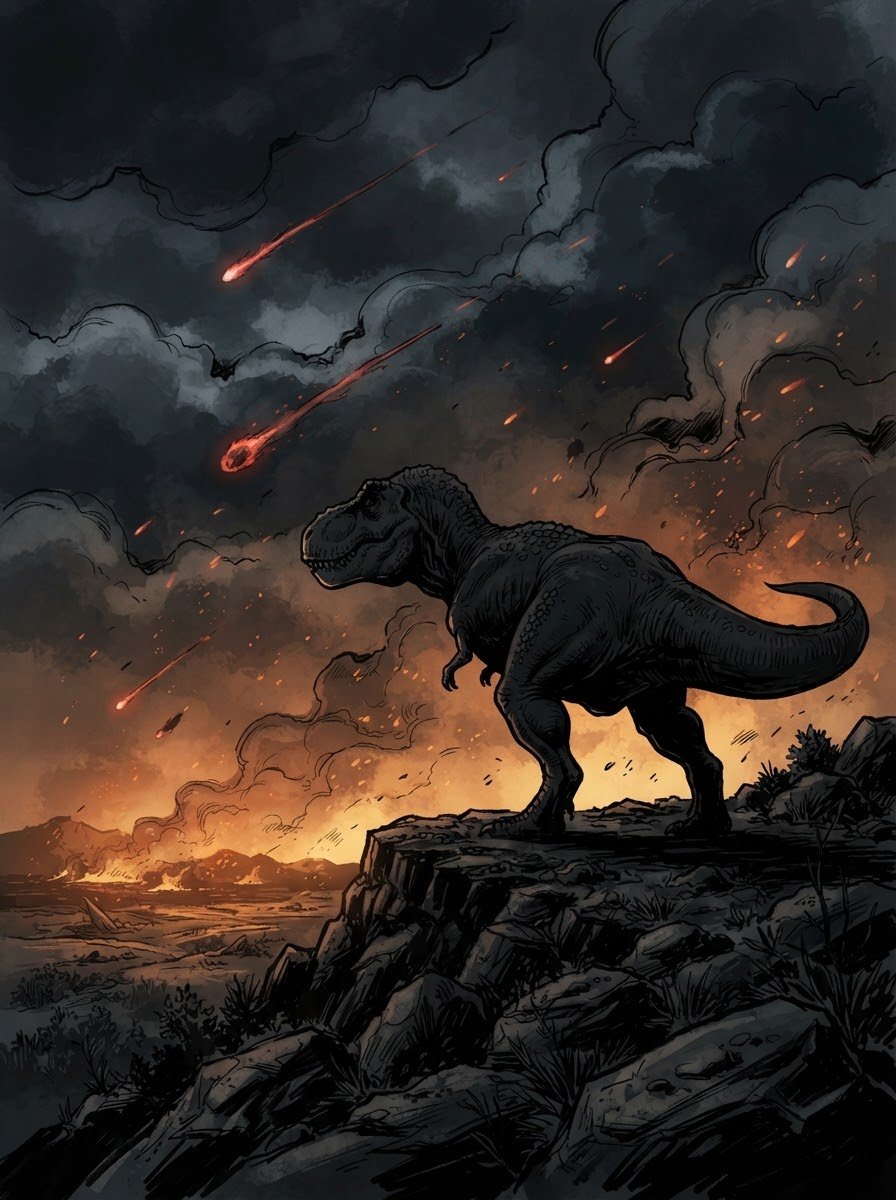
Sixty-six million years ago, the golden age of the dinosaurs came to a catastrophic halt. An asteroid roughly six miles in diameter slammed into the Yucatán Peninsula at over 45,000 miles per hour. The Chicxulub impact unleashed thermal radiation that ignited global wildfires, sent mega-tsunamis racing across inland seas, and blasted billions of tons of vaporized rock and sulfur into the atmosphere. Within hours, the skies over Hell Creek darkened as incandescent debris rained down from the atmosphere.
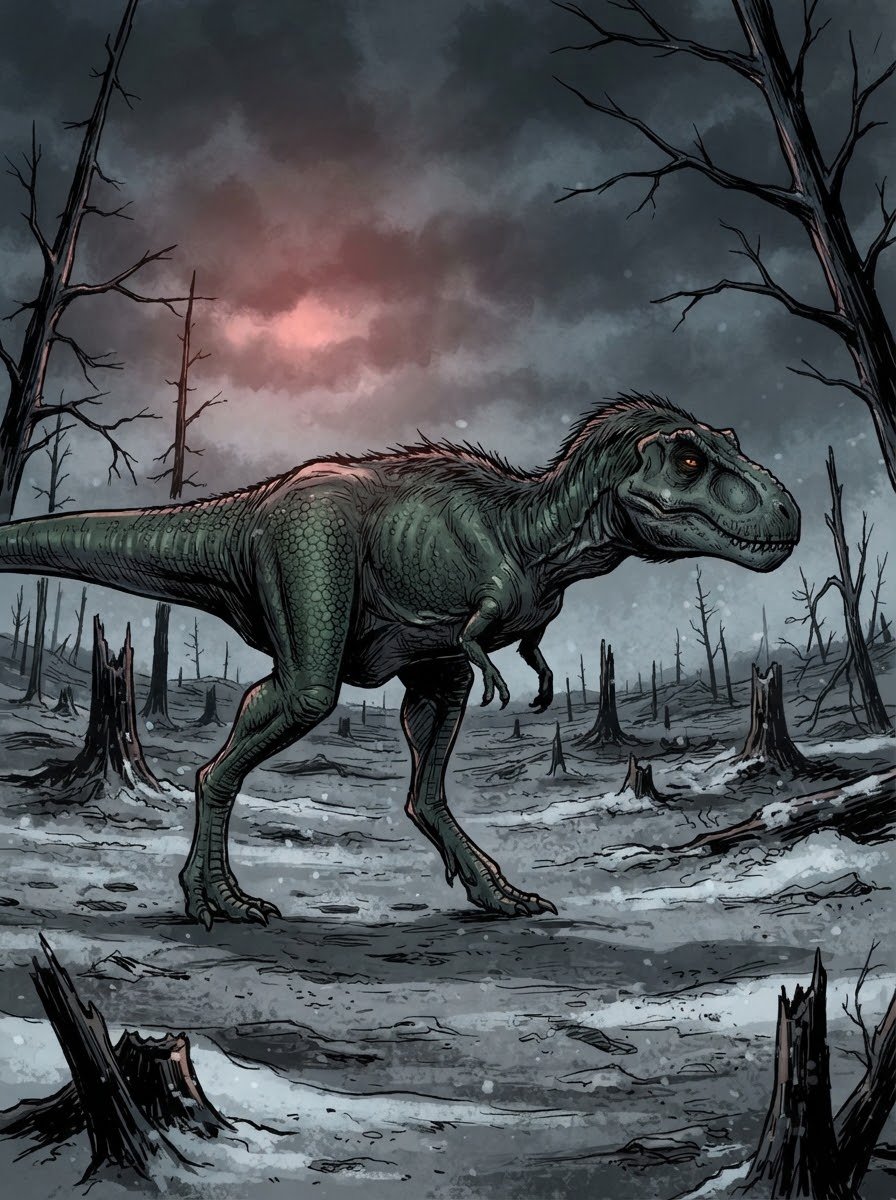
In the months and years following the impact, aerosolized dust and sulfur blocked out sunlight, causing global temperatures to plummet and halting photosynthesis. The collapsed food chain hit large organisms hardest; plant-eating herds starved, and without herbivorous prey, apex predators like Tyrannosaurus rex faced total collapse. Teron, now a young adult, roams a desolate, ash-choked landscape in search of food. Within a few thousand years, every non-avian dinosaur species on Earth was wiped out.
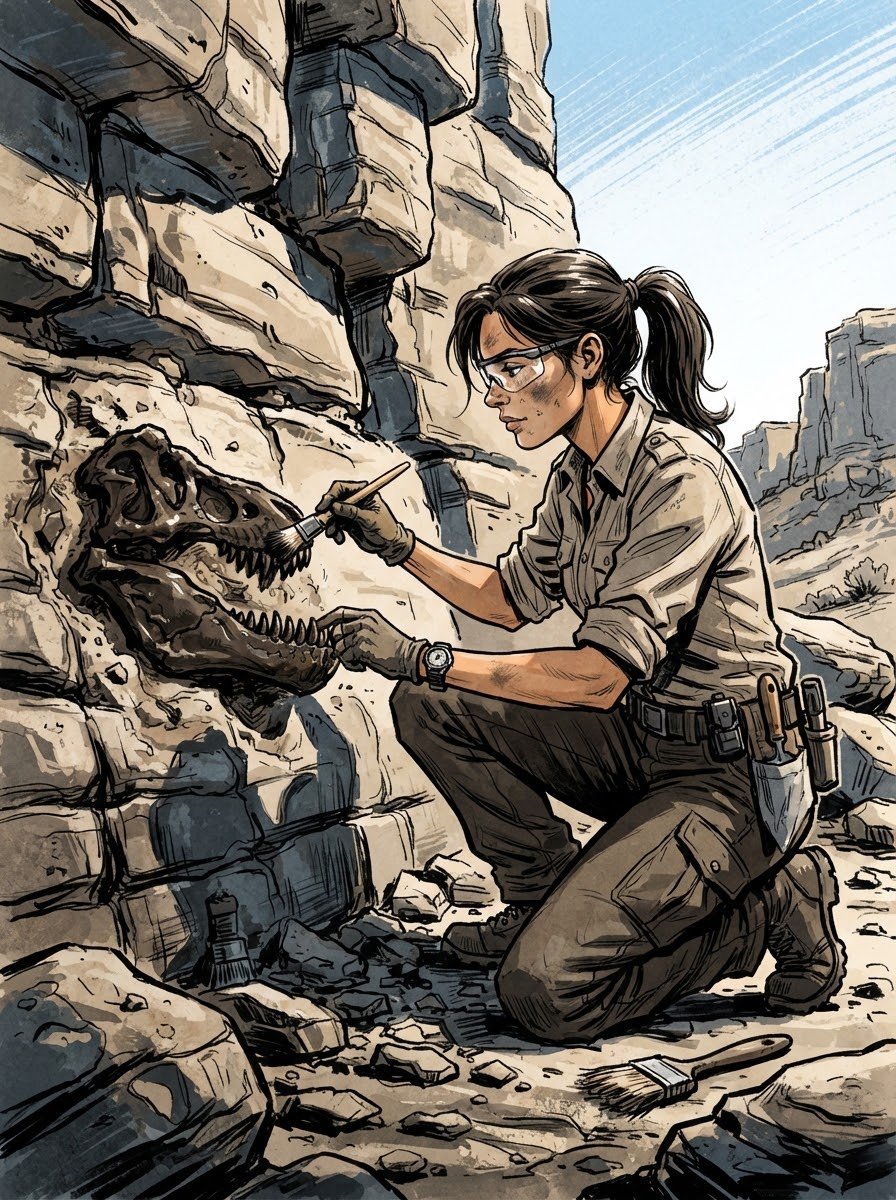
Though Tyrannosaurus rex vanished, its story was preserved in stone. Millions of years later, geological uplift exposed fossilized bones embedded in North American sandstone. In 1990, paleontologists discovered "SUE," the most complete and best-preserved T. rex specimen ever found, revealing over 90% of her skeleton. Fossils like SUE provide extraordinary insights into dinosaur health, displaying broken and healed ribs, arthritis, and parasitic jaw infections, proving these ancient giants endured grueling lives of survival and injury.
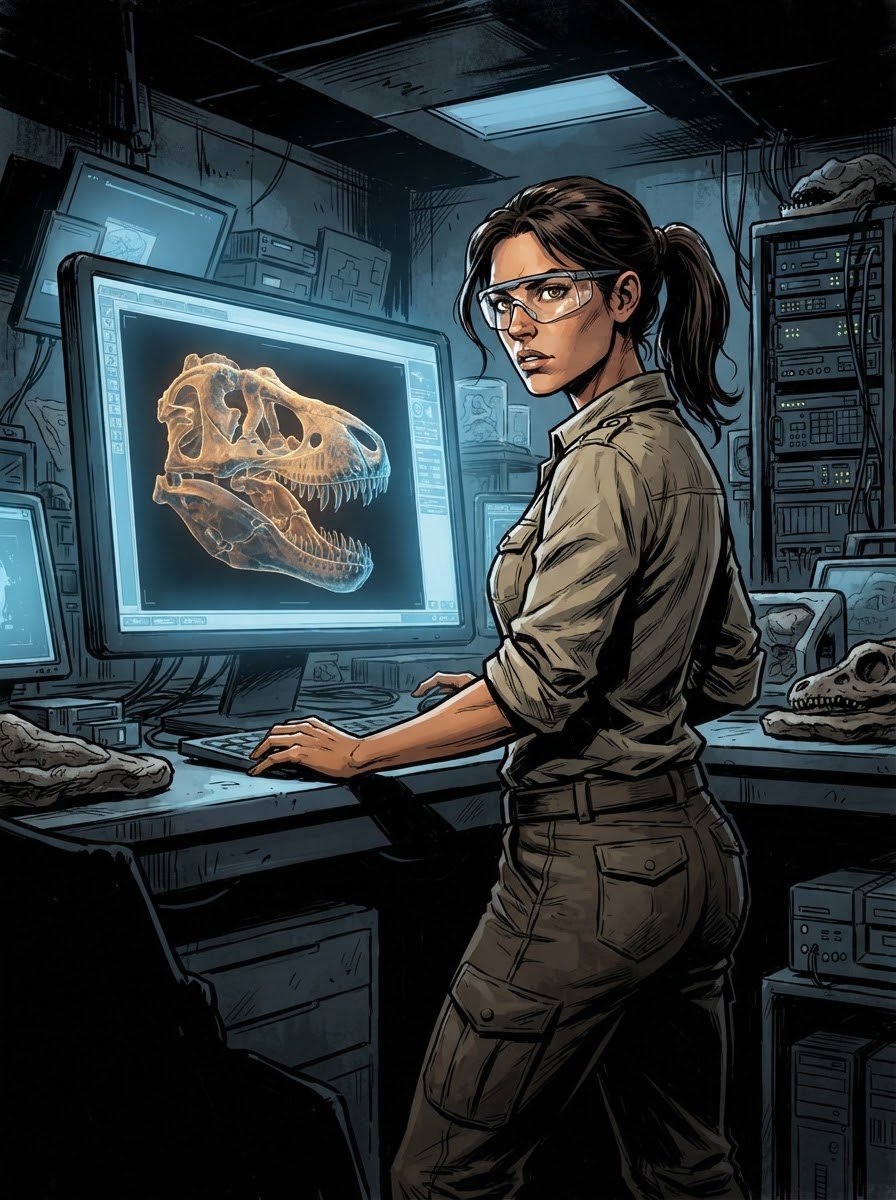
Modern paleontology goes far beyond shovels and pickaxes. By subjecting fossilized bones to high-powered CT scans, scientists can digitally reconstruct the internal brain cavity, nerve pathways, and vascular systems of Tyrannosaurus rex. Furthermore, osteohistology—the study of microscopic bone growth rings—allows researchers to determine exact ages, growth rates, and sexual maturity of individual specimens. Remarkably, soft tissue fragments and red blood cell signatures have even been isolated from inside fossilized tyrannosaur femurs.
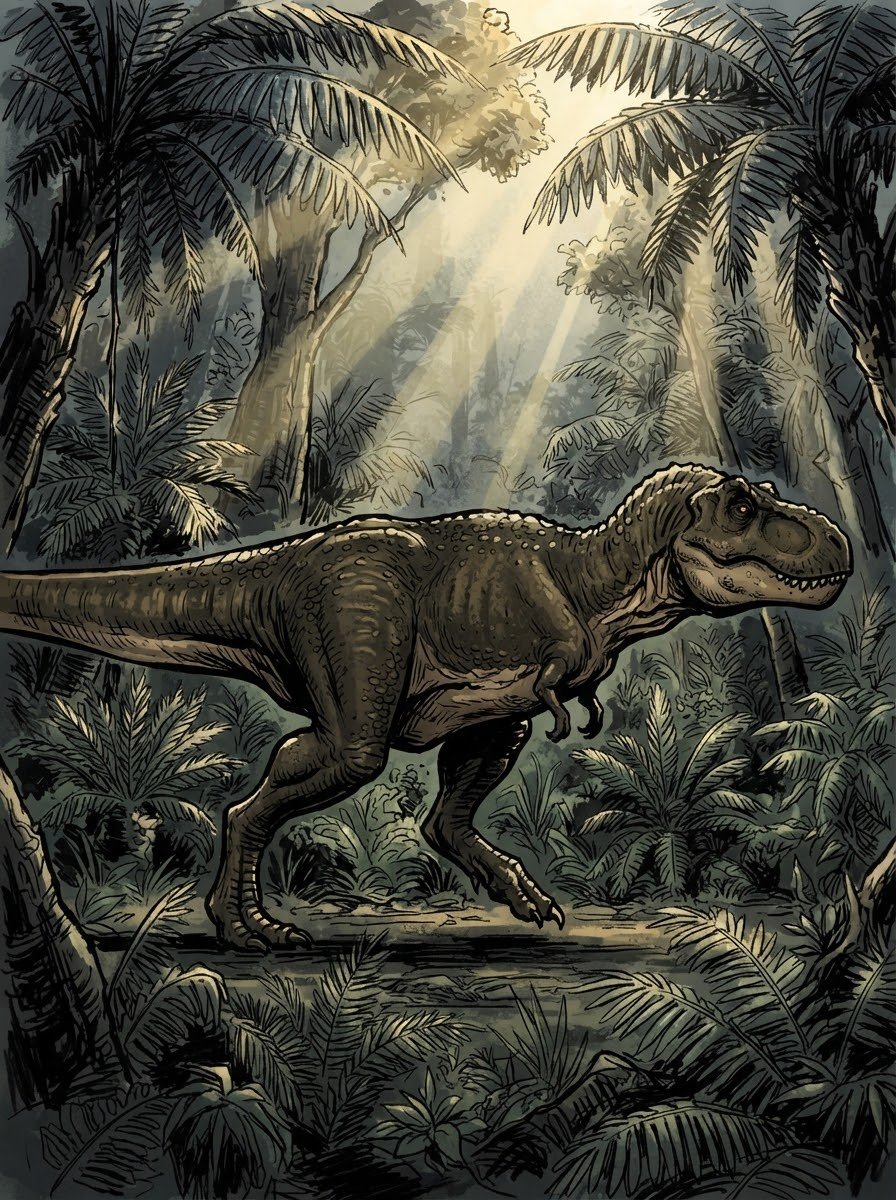
Pop culture often depicts Tyrannosaurus rex as a roar-heavy, tail-dragging monster with terrible eyesight that could only see movement. Science paints a radically different portrait. T. rex held its spinal column horizontally, balanced by a muscular tail held clear of the ground. Its vision was exceptionally keen, its hearing tuned to low frequencies, and instead of roaring like a lion, it likely produced deep, closed-mouth vocalizations similar to modern crocodilians and emus—vibrations felt in the chest long before they were heard.
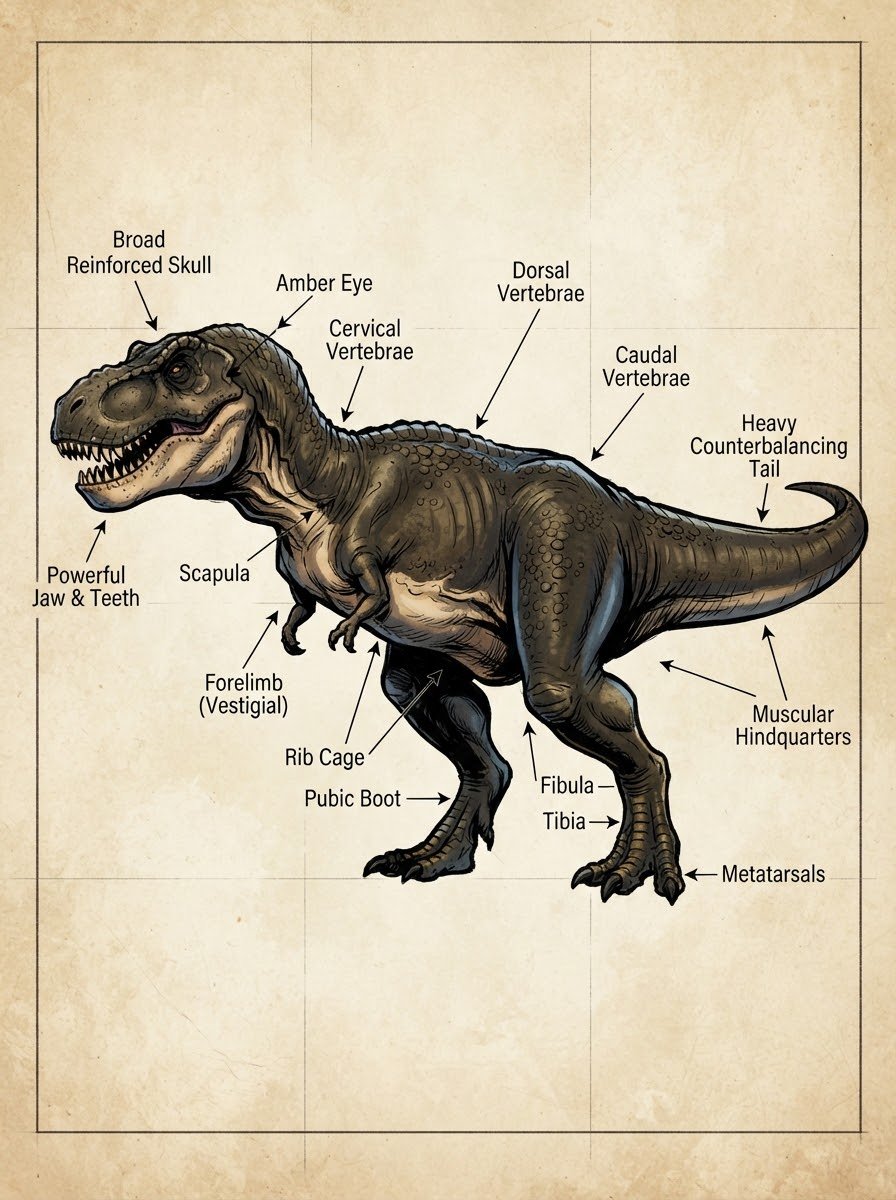
TYRANNOSAURUS REX — ULTIMATE FACT FILE • Classification: Theropoda; Tyrannosauridae • Time Period: Late Cretaceous (68–66 Million Years Ago) • Geographic Range: Laramidia (Western North America) • Length: 38 to 42 feet (11.5–13 meters) • Weight: 7 to 9 metric tons (15,000–20,000 lbs) • Top Speed: 12–15 mph (Adults); 25 mph (Juveniles) • Bite Force: Up to 12,800 lbs (57,000 Newtons) • Lifespan: Approximately 28–30 years • Key Adaptation: Serrated bone-crushing teeth & stereoscopic binocular vision.
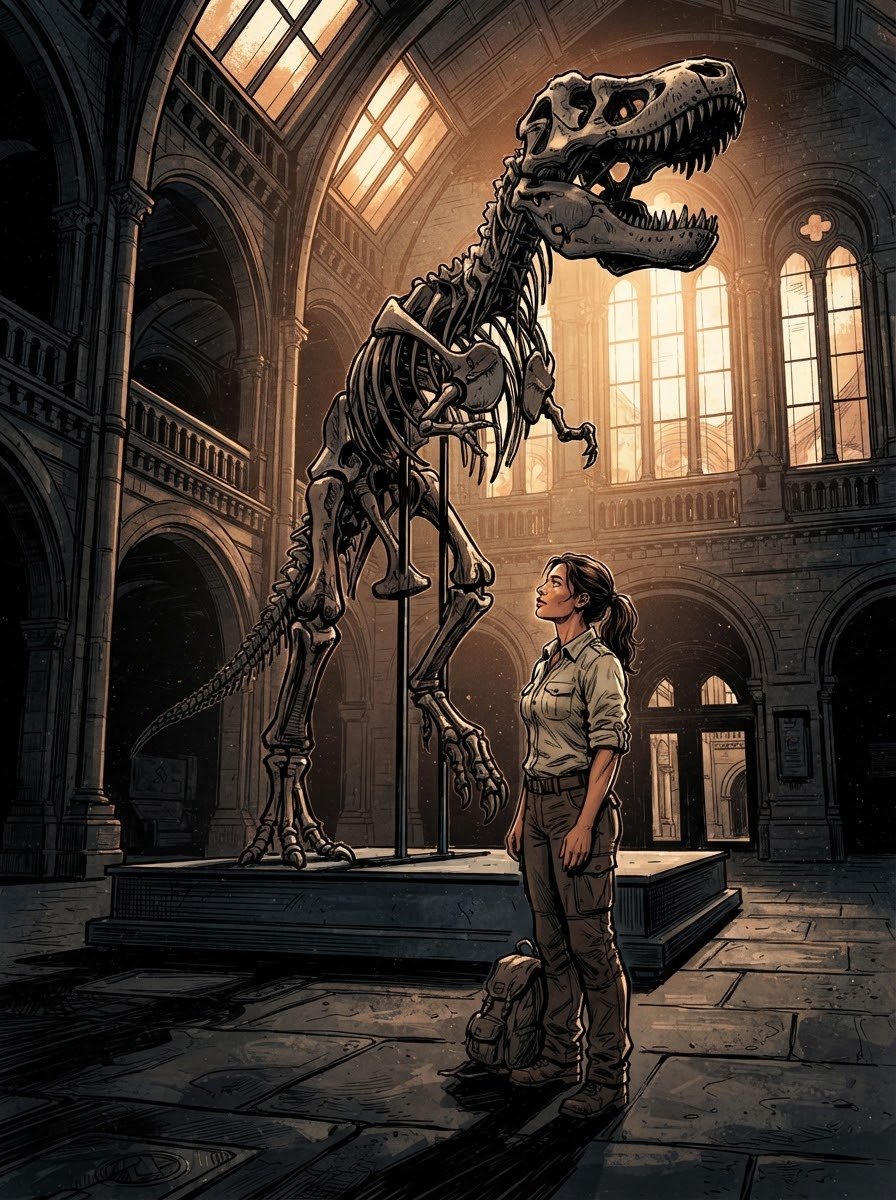
The saga of Tyrannosaurus rex reminds us that Earth's history is vast, dynamic, and ever-changing. For over two million years, this magnificent creature ruled as the indisputable monarch of the Cretaceous continent. Though an asteroid brought an abrupt end to their titan reign, tyrannosaurs are not entirely gone. Every modern bird soaring through our skies carries the lineage of avian theropods. In studying T. rex, we glimpse both the immense power of deep time and our own fragile place in the magnificent story of life on Earth.