
TITAN OF THE ANCIENT OCEANS: MEGALODON
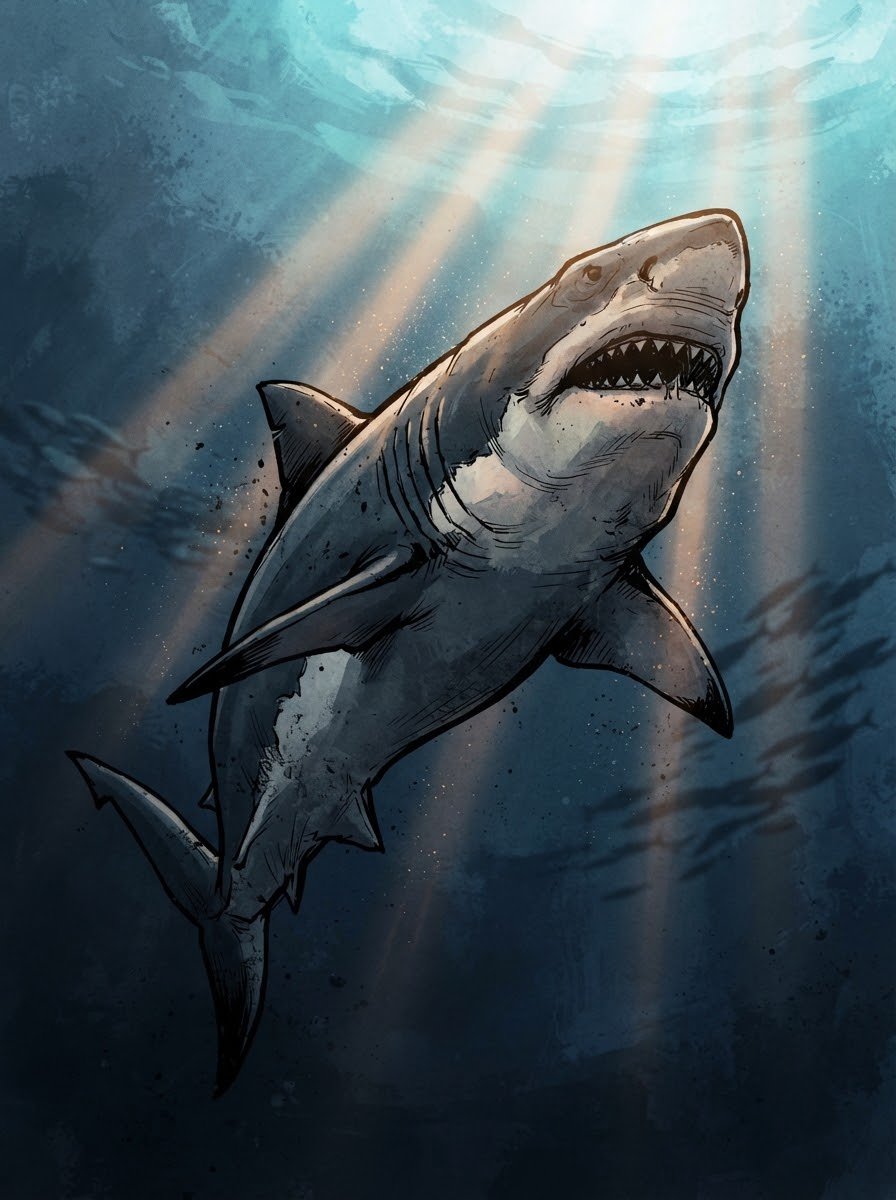
Titan of the Ancient Oceans During the Miocene and Pliocene Epochs, between 23 million and 3.6 million years ago, a colossal marine predator ruled the global oceans: Otodus megalodon. Striking with unmatched power, this apex mega-toothed shark dominated warm coastal waters and open seas long after the extinction of the non-avian dinosaurs. Step into the ancient deep and explore the thrilling natural history of the largest predatory shark to ever swim the planet.
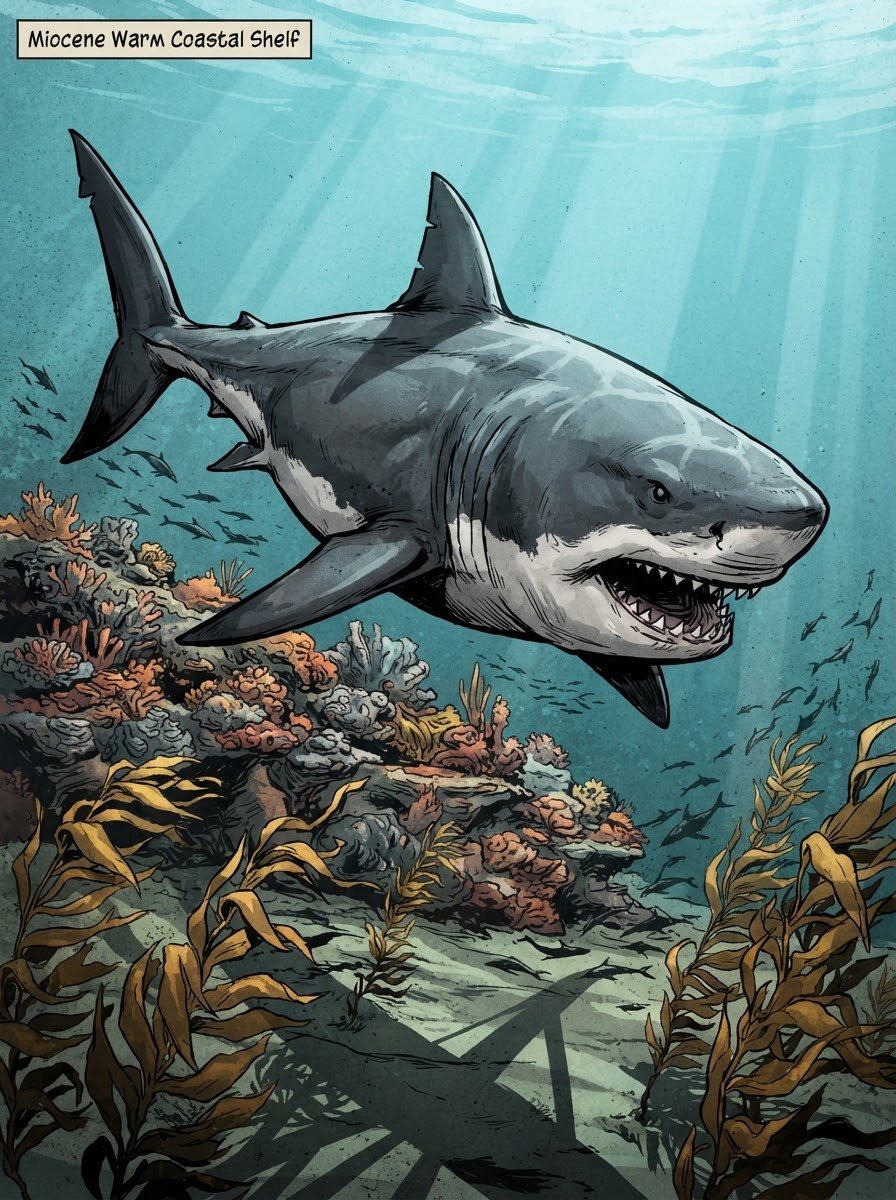
An Ocean from Another Age 15 million years ago, Earth's oceans were vastly different from today's seas. Ocean currents flowed freely through open channels connecting the Atlantic and Pacific across Central America. Warm equatorial waters fueled booming ecosystems filled with dense forests of kelp, expansive coral reefs, and unprecedented swarms of marine mammals. Cruising through these rich coastal shelves is Tethys, a fully mature Megalodon navigating her vast territory.
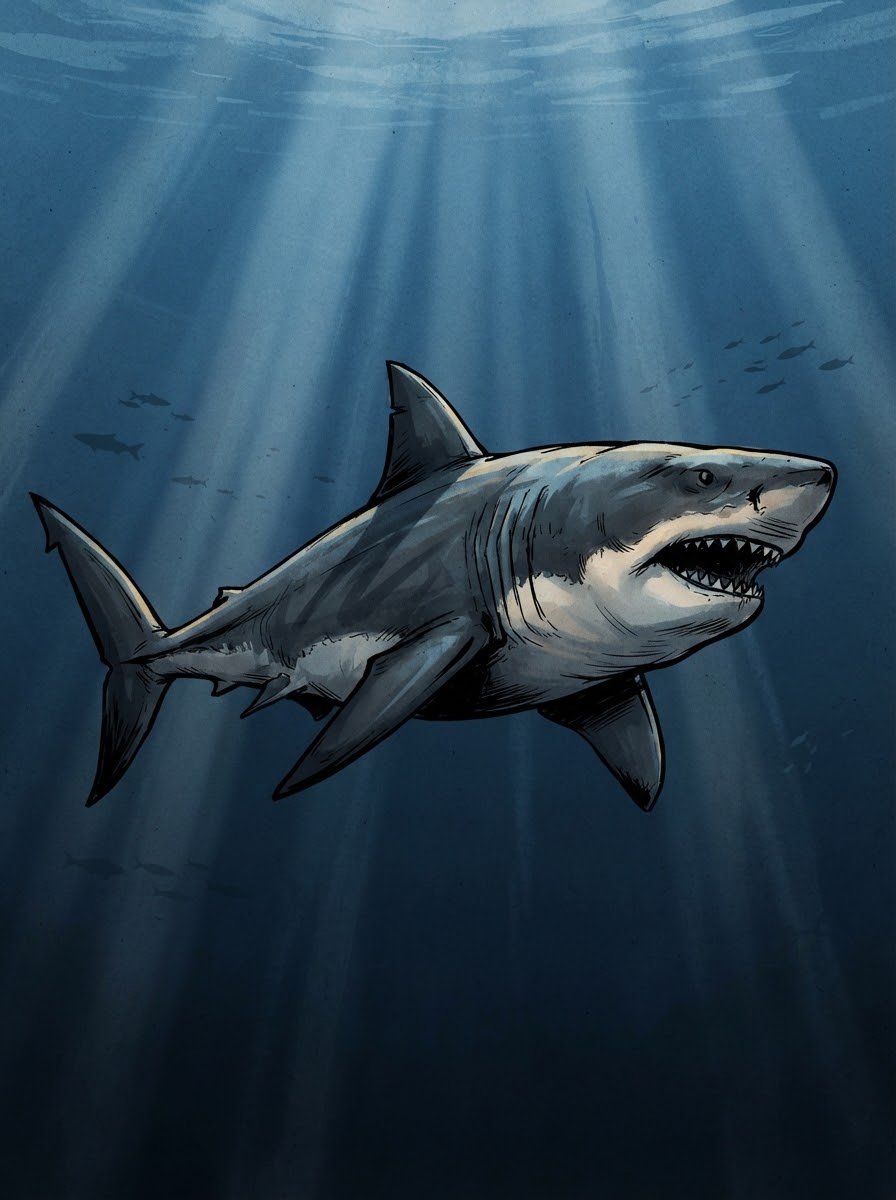
Meet Megalodon Gliding through the open sea with slow, rhythmic sweeps of her powerful tail, Tethys commands the ancient ocean. Spanning fifteen meters in length and weighing over forty metric tons, her sheer mass eclipses any marine predator alive today. Despite her immense bulk, Tethys moves with surprising hydro-dynamic grace, her muscular trunk cutting through water with minimal drag.
How Big Was Megalodon? Determining the exact size of an extinct shark presents a unique scientific puzzle. Because shark skeletons are made of soft cartilage rather than hard bone, full Megalodon skeletons rarely fossilize. Instead, scientists measure thousands of fossil teeth and rare mineralized vertebrae, using mathematical scaling models to estimate total body length ranging from 14 to 20 meters (45 to 65 feet).
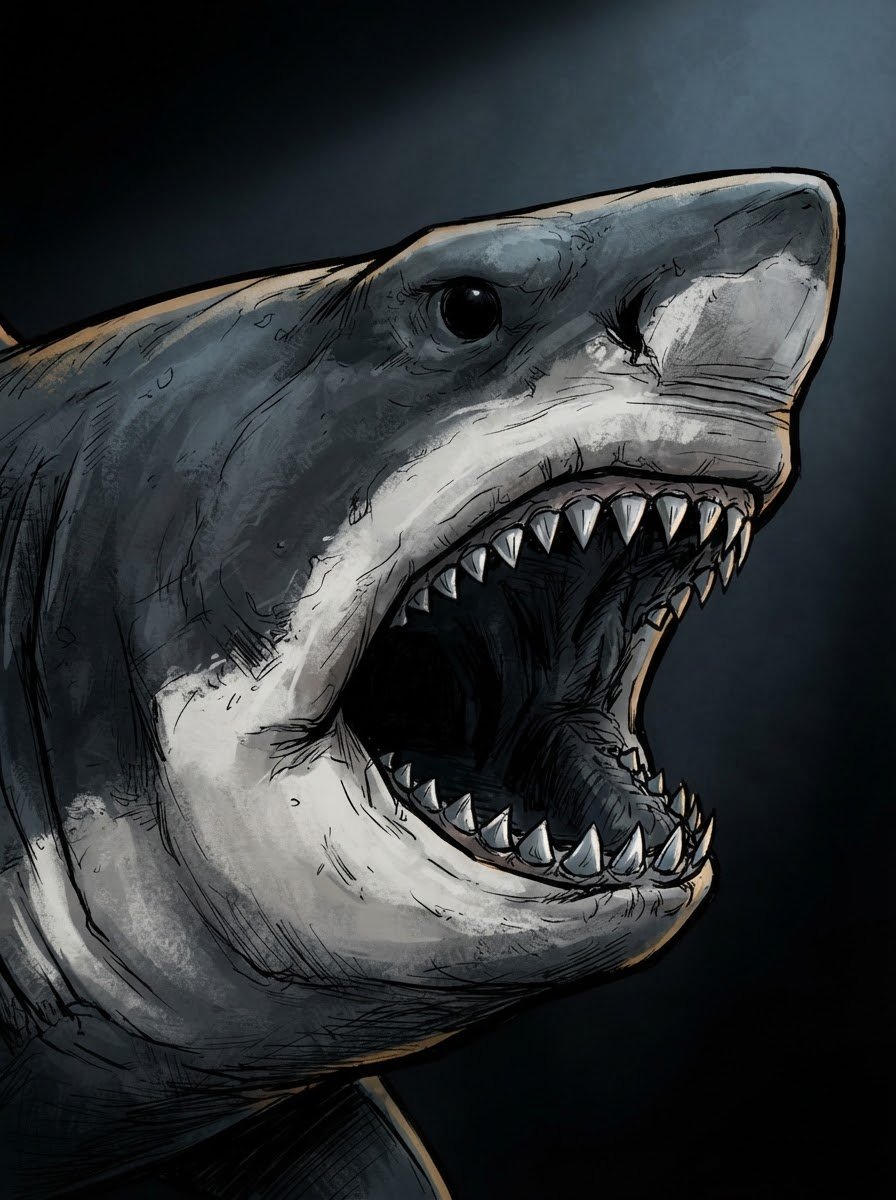
Built for the Ocean Every structural detail of Megalodon was engineered for top-tier predation. Behind Tethys's broad snout sits a formidable jaw lined with up to 270 serrated teeth arranged in multiple rows. Driven by massive jaw adductor muscles, her bite force is estimated at over 100,000 to 180,000 Newtons—the strongest biting power of any known animal in Earth's history.
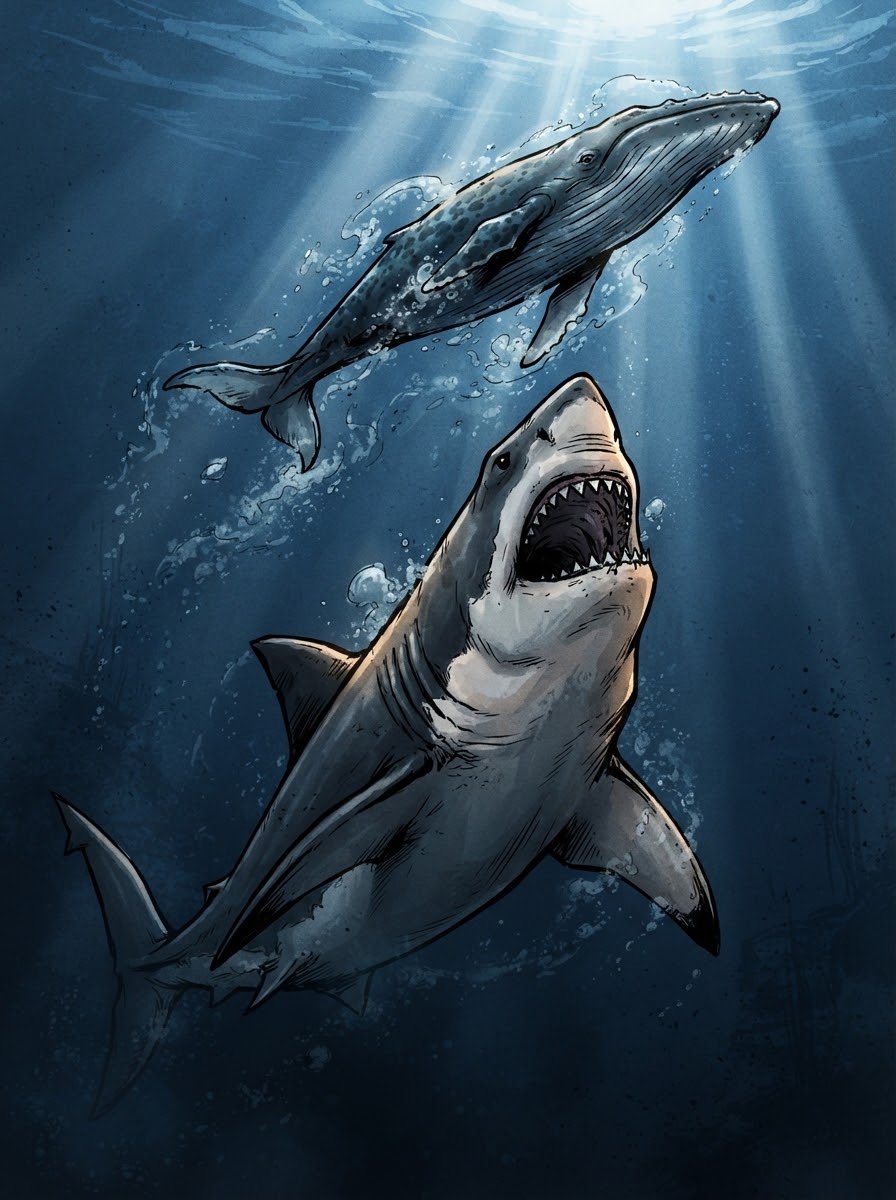
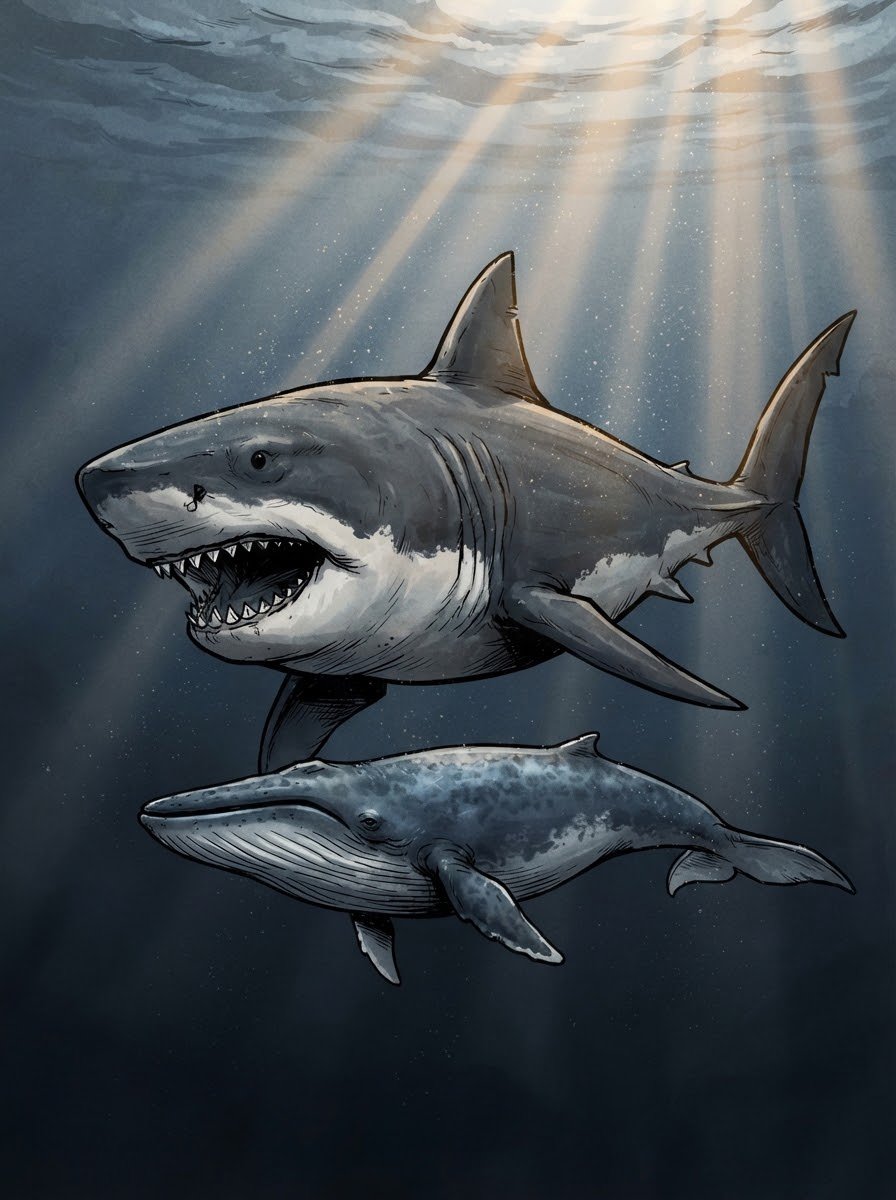
The Search for Prey To maintain her warm-blooded metabolism, Tethys requires huge quantities of high-energy food. She does not hunt tiny fish; instead, her target is thick whale blubber. Sensing a small baleen whale swimming near the surface, Tethys accelerates from below, aiming a devastating strike directly at her target's ribcage to crush vital organs and immobilize the animal instantly.
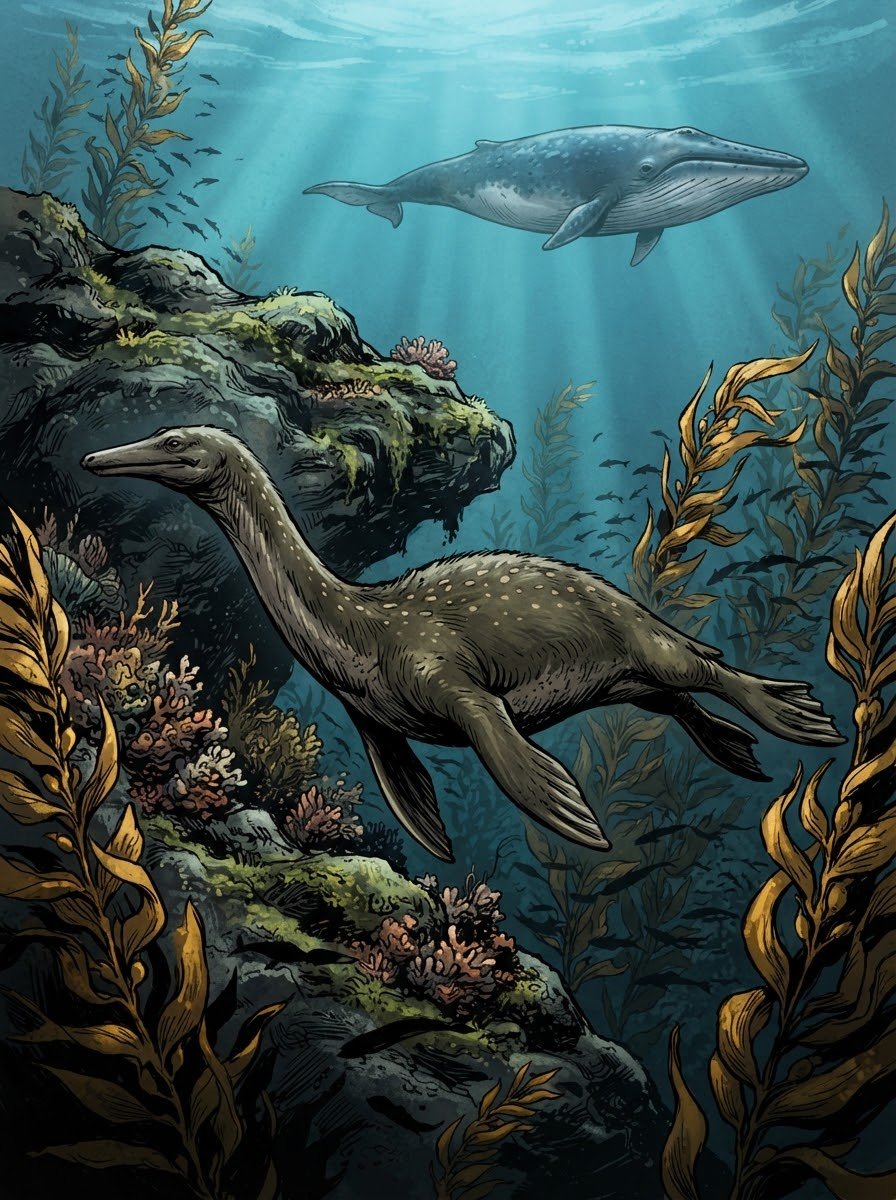
A World Full of Marine Life The ancient ocean was crowded with diverse marine creatures coexisting across complex ecological niches. Below Tethys's hunting grounds, a small baleen whale (Piscobalaena) filter-feeds on swarms of krill, while nearby, an amphibious seal (Acrophoca) resting on a rocky outcrop dives gracefully into coastal sea waters to chase small ocean fish.
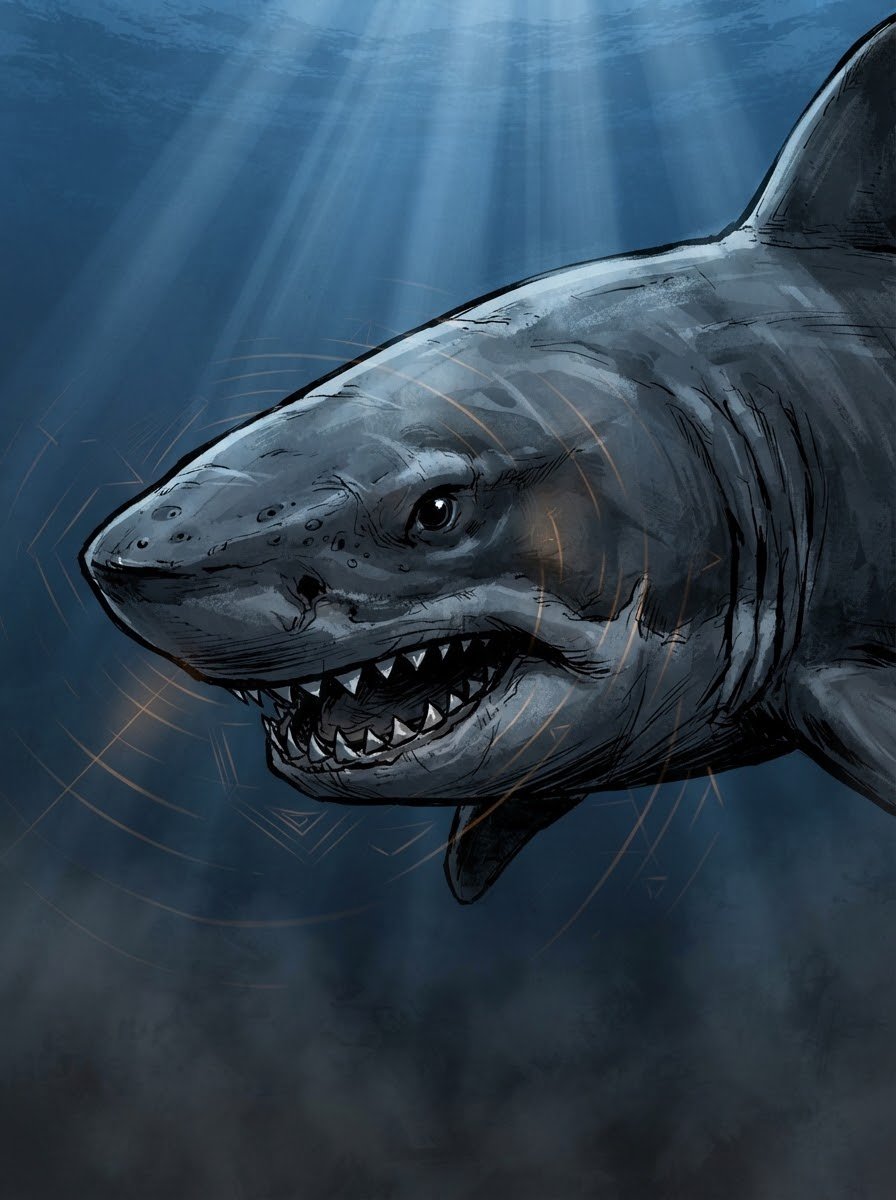
The Senses of a Giant Shark Long before Tethys sees her prey, her specialized senses detect its presence across miles of ocean. Tiny pores on her snout, called Ampullae of Lorenzini, detect tiny bio-electric fields generated by swimming animals. Meanwhile, her lateral line system picks up subtle pressure waves and vibrations caused by struggling marine life.
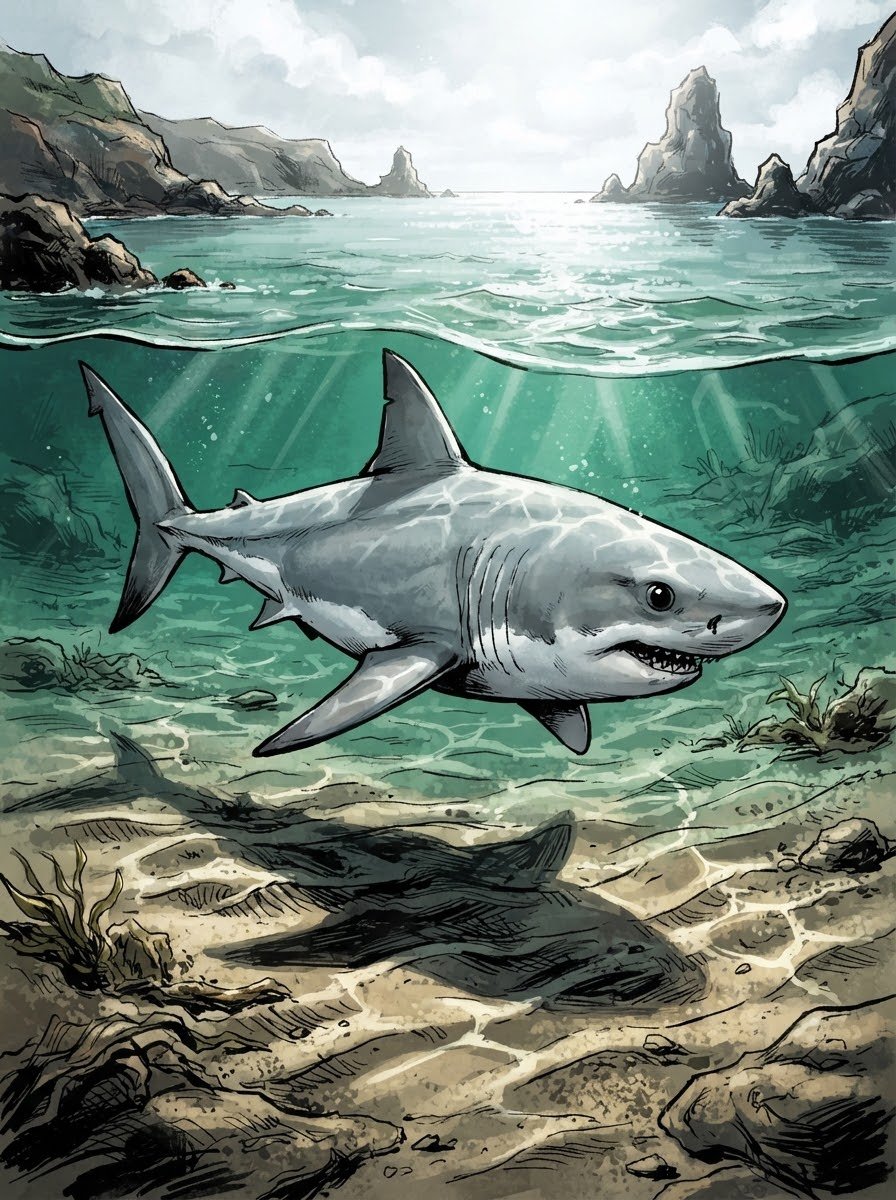
Growing Into a Giant Megalodon life began in shallow, protected coastal bays known as shark nurseries. A juvenile Megalodon, Nerida, swims through warm, shallow waters abundant with fish and small marine mammals. In these sheltered nursery zones, young sharks enjoyed rich food supplies and protection from larger oceanic predators like adult Megalodons.
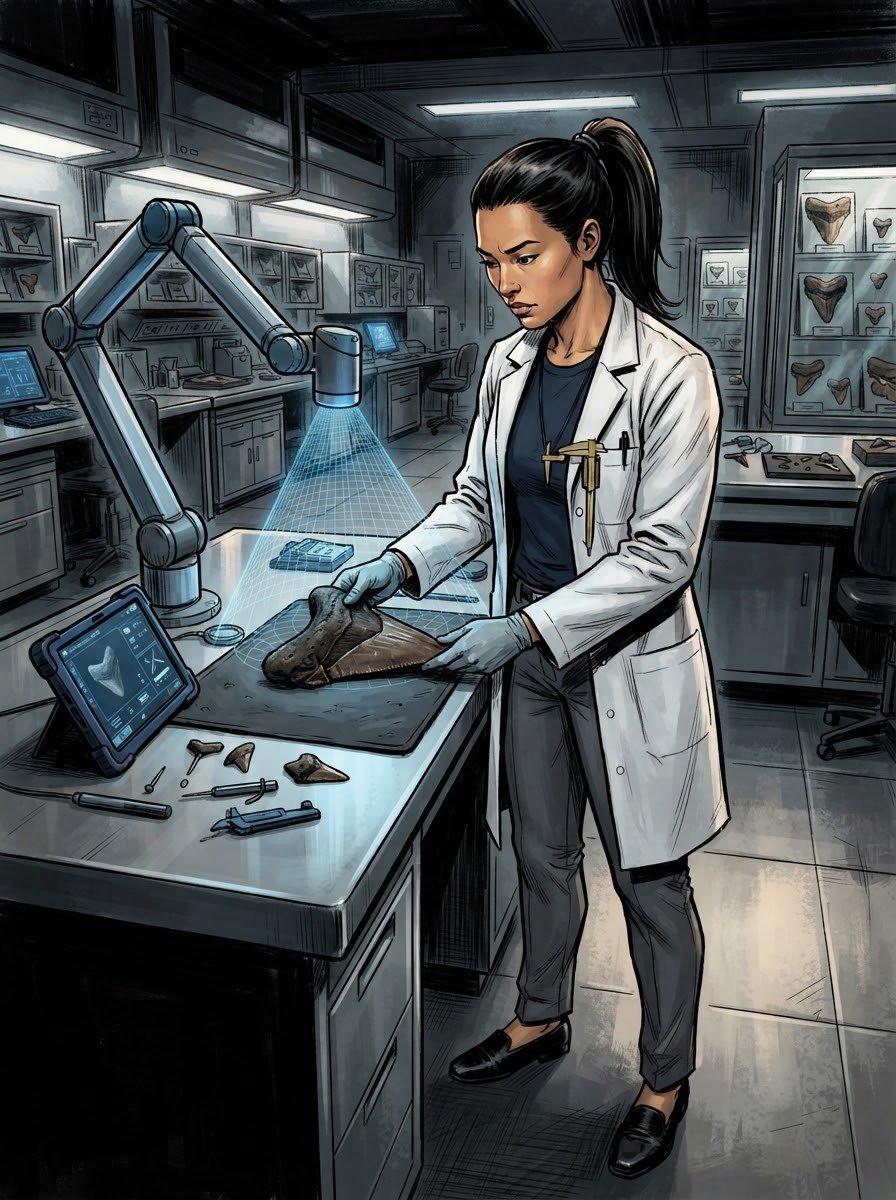
The Fossil Detectives Because cartilaginous skeletons break down quickly after death, paleontologists rarely find complete body fossils of giant sharks. Instead, scientists rely on durable, heavily mineralized teeth and fossilized vertebrae. Dr. Maya Lin carefully examines a massive seven-inch Megalodon tooth, using digital 3D scans and micro-CT imaging to reconstruct the shark's growth rate and diet.
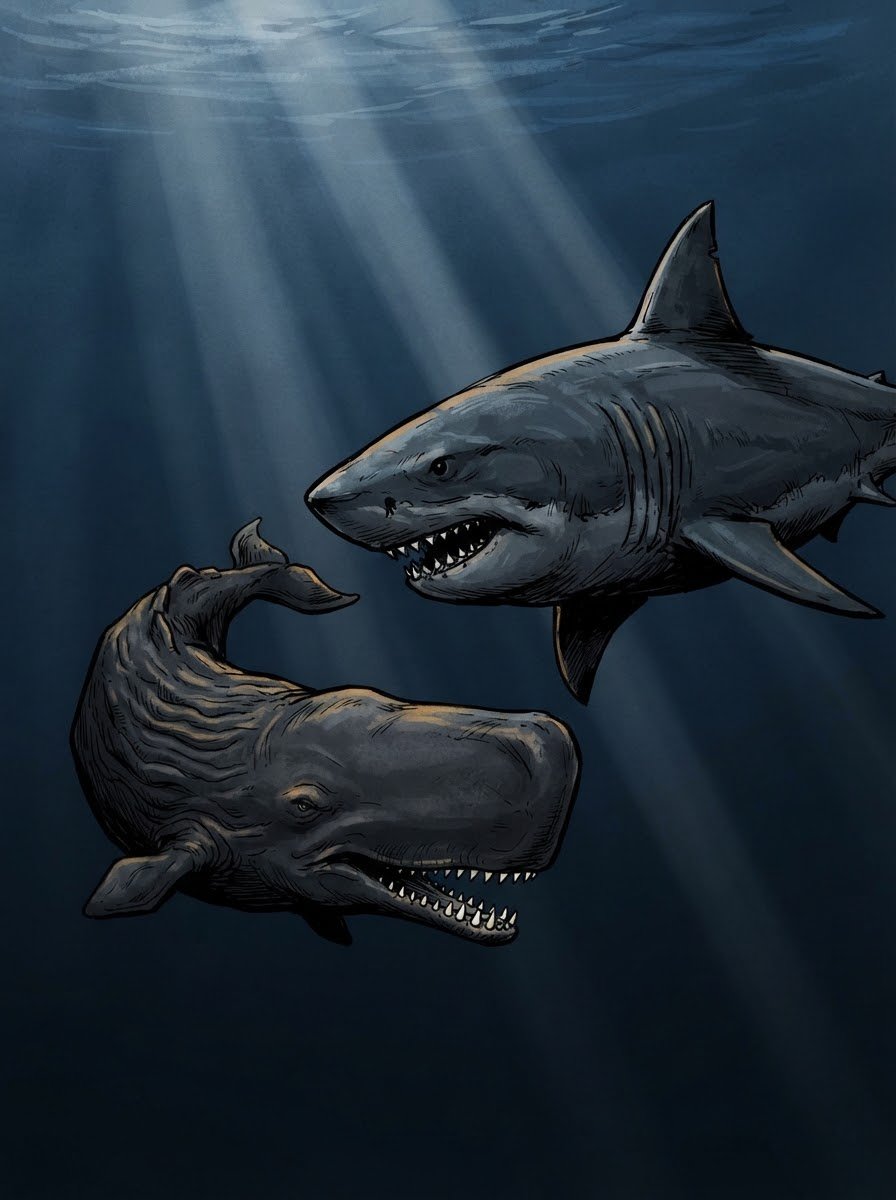
The Ocean Food Web As the ultimate apex predator, Megalodon stood at the absolute top of the Miocene marine food web. Her presence regulated populations of medium-sized whales, predatory seals, and smaller sharks. However, Tethys shared the open ocean with rival apex predators, including giant raptorial sperm whales (Brygmophyseter) armed with massive deep-rooted teeth.
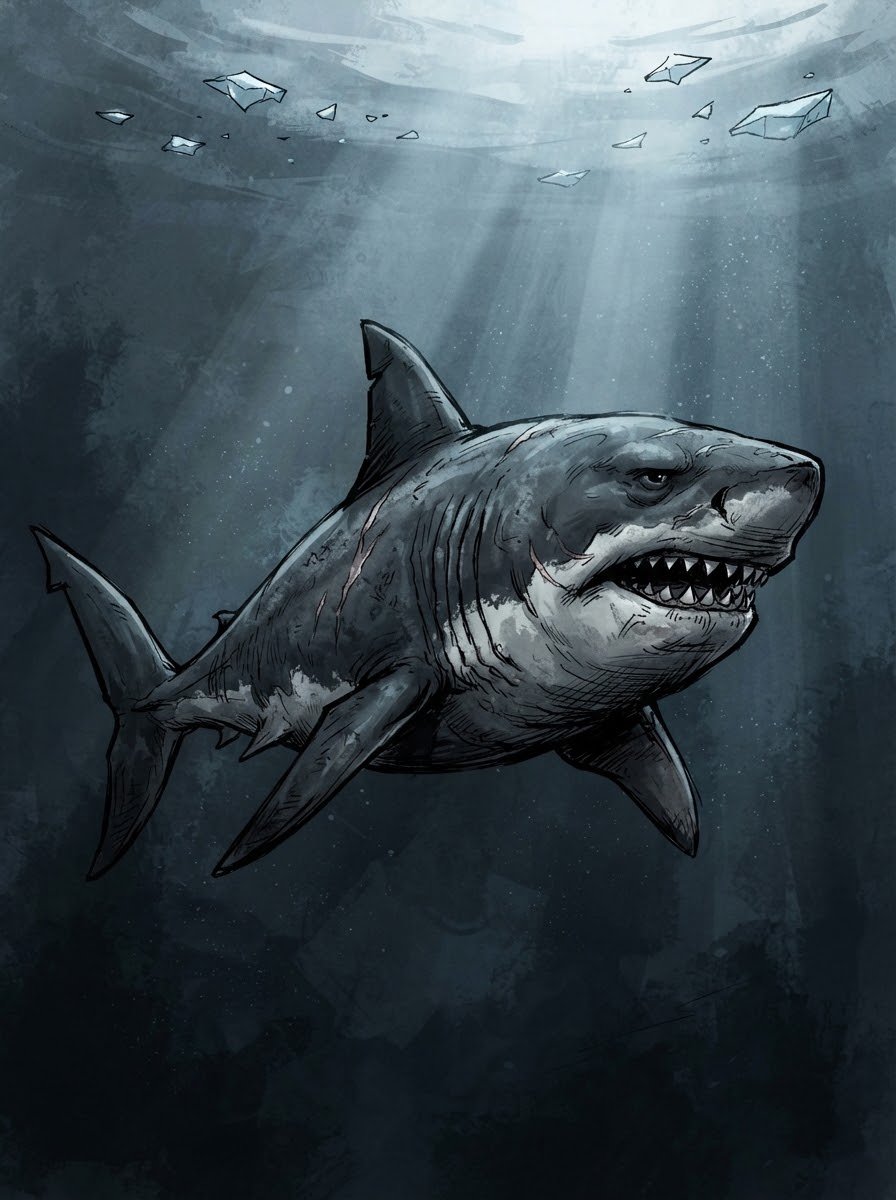
When the Ocean Changed As the Pliocene Epoch progressed toward 3.6 million years ago, Earth's climate underwent massive shifts. Tectonic activity closed the Central American Seaway, re-routing global ocean currents and cooling polar waters. Glaciers expanded, sea levels dropped, and warm shallow coastal seas vanished, altering the environment that Tethys depended on for survival.
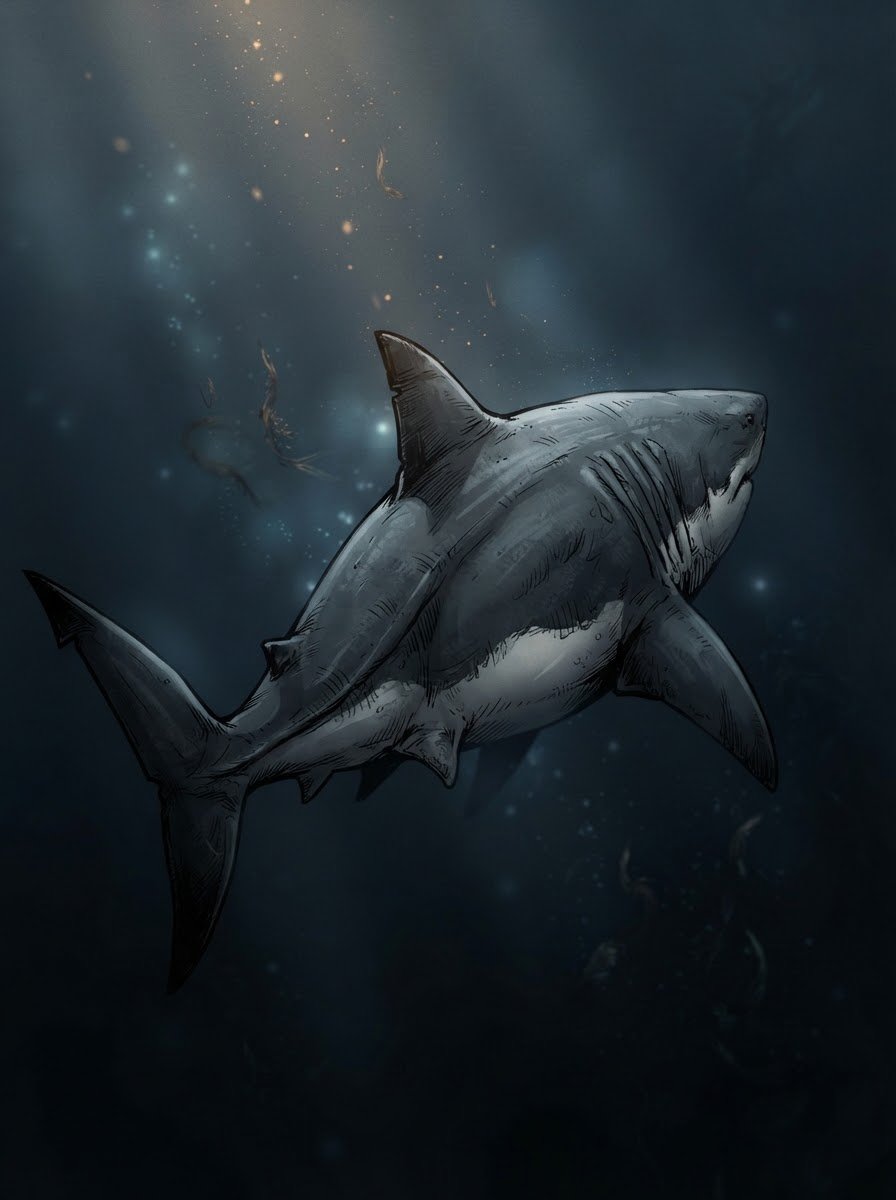
The Disappearance of a Giant The combined impact of cooling oceans, loss of coastal nurseries, and the decline of small baleen whale prey pushed Megalodon into irreversible decline. Simultaneously, new energetic competitors—such as ancestors of modern Great Whites and early killer whales—emerged. Around 3.6 million years ago, Otodus megalodon went extinct, leaving behind only fossilized teeth in ocean sediments.
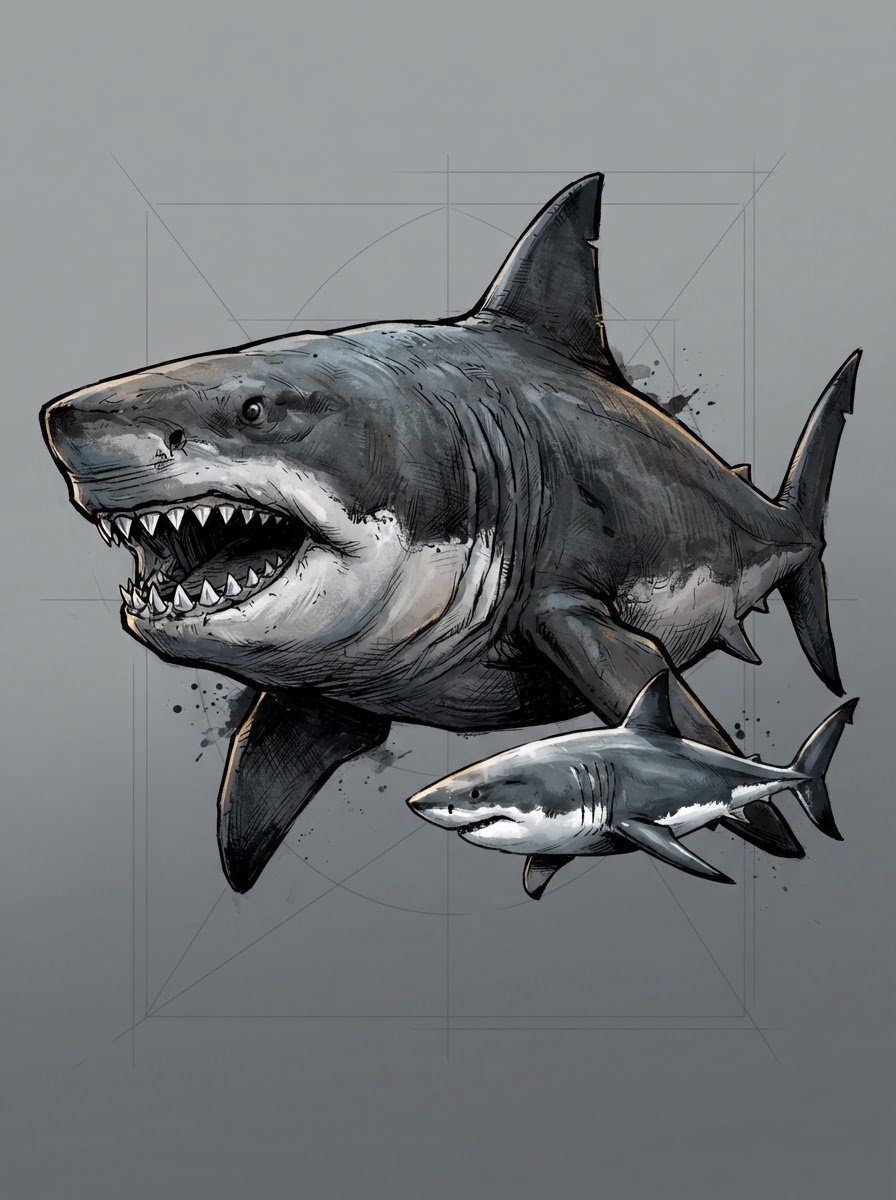
Megalodon: Myths vs Facts Separating scientific reality from sensational fiction is essential to understanding Megalodon. Over the years, internet rumors and monster movies have generated numerous misconceptions regarding the giant shark's true nature, size, and survival status.
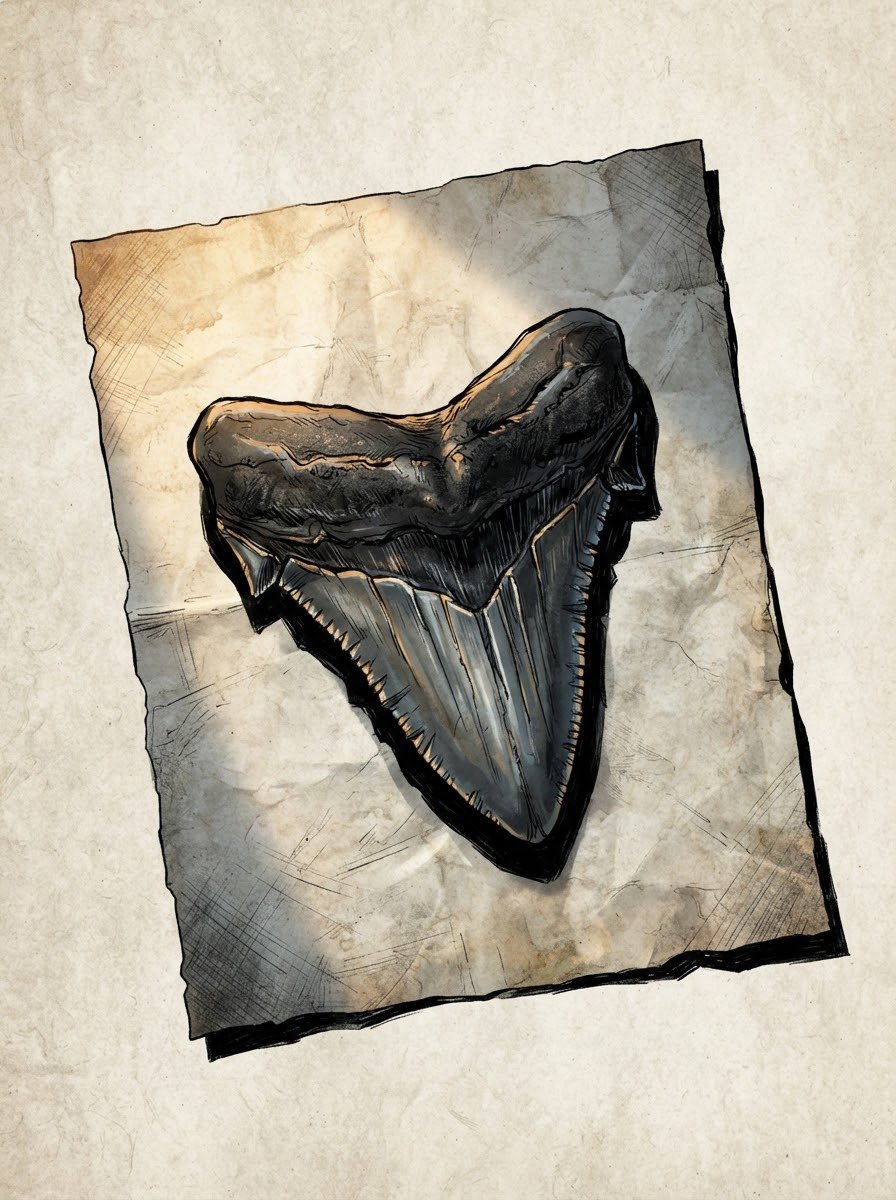
Megalodon Fact File MEGALODON — SCIENTIFIC FACT FILE • Scientific Name: Otodus megalodon • Temporal Range: Early Miocene to Late Pliocene (~23 to 3.6 million years ago) • Classification: Class Chondrichthyes, Order Lamniformes, Family Otodontidae • Estimated Length: 14 to 20 meters (45–65 feet) • Estimated Weight: 40 to 70+ metric tons • Diet: Marine mammals (baleen whales, seals, sea cows), large fish, sea turtles • Bite Force: Estimated 100,000 to 180,000 Newtons • Key Fossil Evidence: Fossilized enameloid teeth (up to 7.1 inches / 18 cm), calcified vertebral centra, bitework on fossilized whale bones.
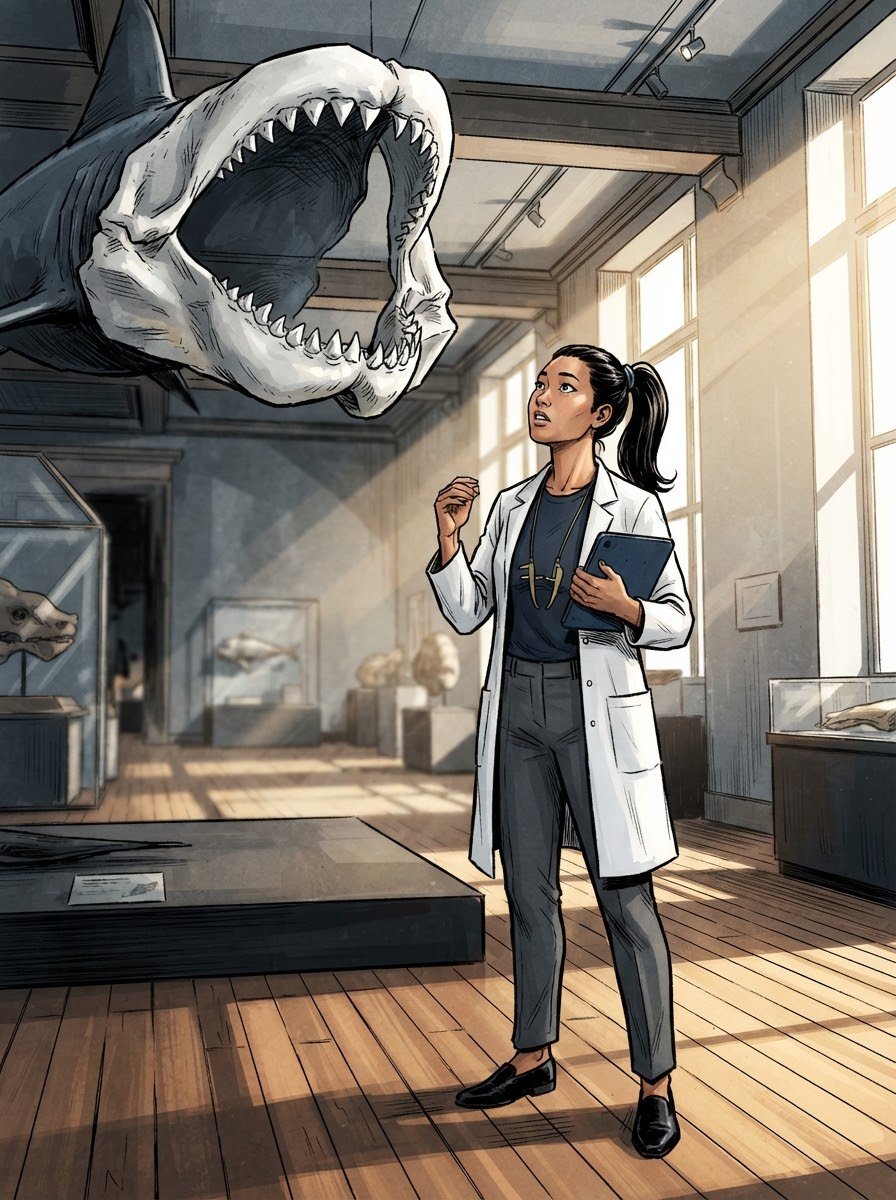
Echoes of the Ancient Ocean Though Otodus megalodon disappeared millions of years ago, its legacy continues to captivate human curiosity and illuminate the dynamics of marine evolution. Today, Dr. Maya Lin stands inside a sunlit museum gallery before a full-scale reconstructed Megalodon jaw cast. Studying these ancient titans deepens our appreciation for ocean ecosystems, reminding us that life on Earth is ever-changing and profoundly interconnected.